அவன் · அது · அவ
Avan. Adhu. Ava.
He. It. She.
Tamil makes you rule on a person in the first syllable of the sentence.
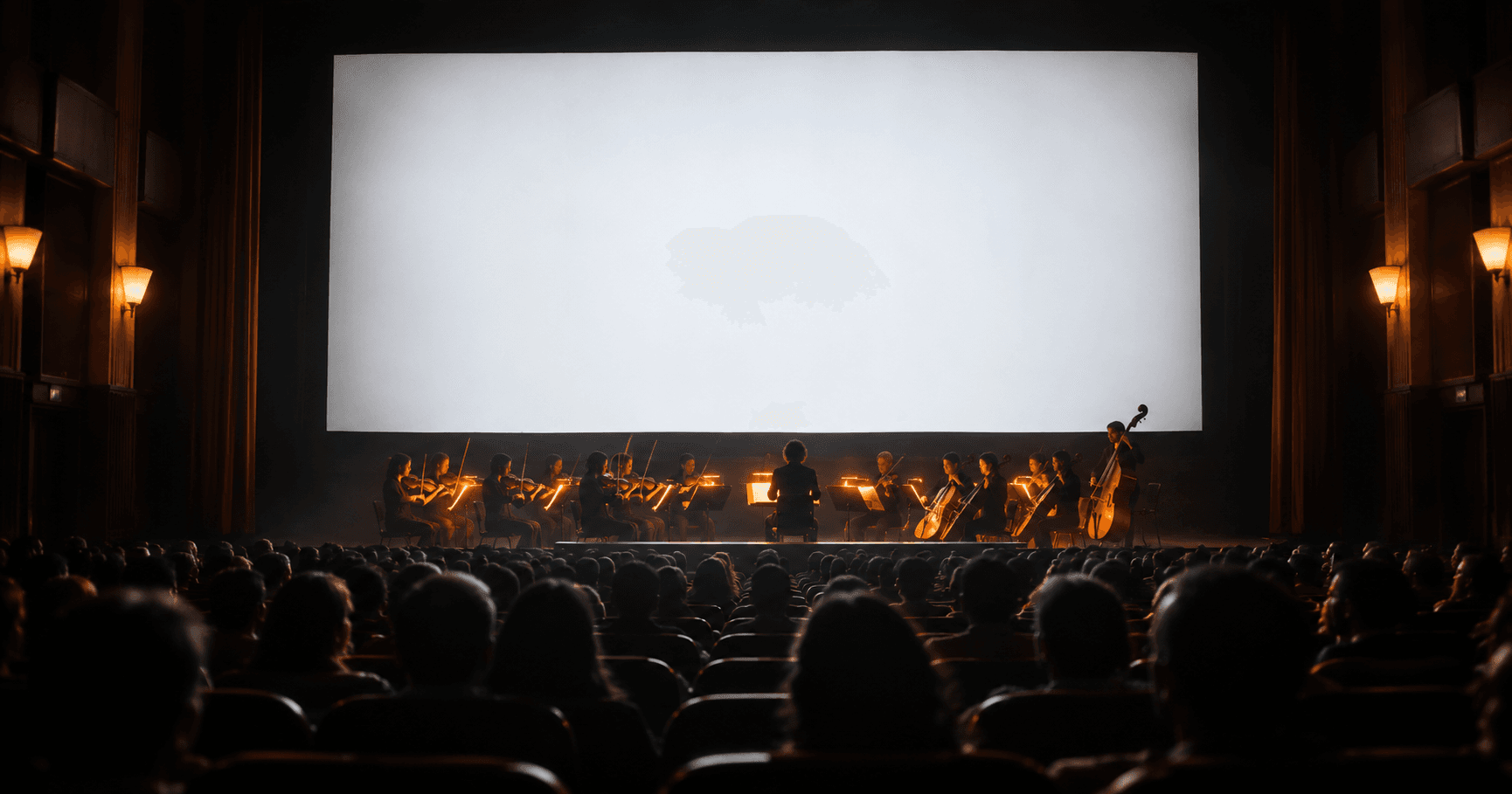
On the fifth of September, three weeks before anybody outside a festival had seen the film, an auditorium in Chennai sat in the dark and listened to forty minutes of music written for a story nobody in the room knew yet.
Eighteen tracks had gone up online that same morning — the background score, the stuff that is meant to stay underneath, the part of a film's music that in a century of Tamil cinema almost never gets released at all, put out as an album in its own right and then played live with the composer sitting there.
The idea was his. Karthik Subbaraj had walked in with a finished cut and a hope. What he walked out with was a release strategy, and a reason four words long, which the director has quoted several times since.
"Songs and all you leave."
He was eighty-three years old when he said it.
| Date | What happened |
|---|---|
| 5 September | The score — 18 tracks — released, and forty minutes of it performed live in Chennai |
| 11 September | World premiere at Toronto, in the Centrepiece section. Standing ovation |
| 25 September | Theatrical release |
| October | The songs album, released once the film was already running |
| 23 October | Netflix, in five languages |
That order runs backwards. Songs lead a Tamil release, three months early, cut to thirty seconds and pushed into every reel on the internet, while the score stays a line in the end credits that no listener hears twice. Here the invisible half went first, with no images attached to tell anybody what to feel about it.
Then the film opened, and the thing everybody had been braced for arrived on schedule. Boycott calls. A kiss leaked out of context and passed around to be furious at.
By then it was too late. The music was already in, and music takes no position you can screenshot. There is nothing in a string arrangement to be offended by. Subbaraj's own verdict afterwards was that the controversy helped the film, and he is probably right, but the sequencing is the part that interests me. The country had been handed something to love about this film before it was handed anything to fight about.
An eighty-three-year-old man arranged that.

The First Half Is the Disease
For an hour, Dorothy is a Madurai gangster film, and it is an unpleasant one on purpose.
Rams driven into each other's skulls. Cockfights. A village where a man's standing is settled by what he is willing to do to a body, and where the arithmetic of virility is openly discussed, measured, and bet on. Blood that the camera does not cut away from. Veeraiya the moneylender at the centre of it, a man who has turned cruelty into a business model, with sons and henchmen arranged around him by usefulness.
And here is the thing that most descriptions of this film quietly leave out, because it spoils the shape people want the story to have.
Subbu is one of them.
For the whole first half Subbu is a participant — violent, fluent in it, good at it, collecting the standing that violence pays. The moneylender's son doing the moneylender's work on the moneylender's terms. The film makes you watch two young men beat people for a living and lets you find one of them likeable, and then spends its second half making you sit with what that first hour cost the person doing it.
That is the structural nerve of the film and the reason the flip lands. A story where the soft one is soft from frame one is a story about an exception — a nice boy in a bad village, and the village stays a backdrop. This one takes the most willing enforcer in the house and reveals that the enforcement was the costume. Suddenly the first hour reads differently. All that blood was somebody performing a self for an audience of men who would have killed the other version on sight, and the performance was working, which is the horror of it.
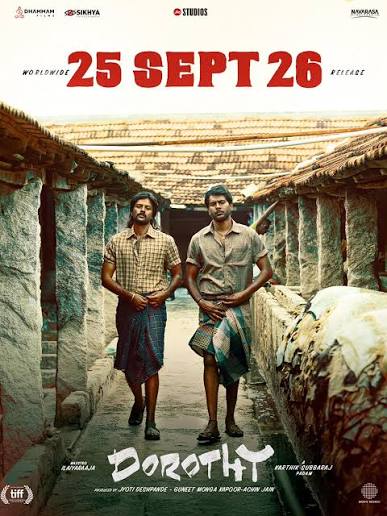
Tamil cinema has been selling that first hour straight for fifty years. Subbaraj shoots it exactly as it is normally shot, with the same energy and the same pleasure, and then pulls the floor out. You cannot indict the genre from outside it. He indicts it from inside, at full volume, using its own grammar, which is a kind of thuggery and I mean that as praise.
பொட்டச்சி மாதிரி அழுகாத
Listen to what the men in this film actually say, because the vocabulary is the whole ideology and it is a vocabulary every Tamil man reading this already owns.
பொட்டச்சி மாதிரி அழுகாத. Pottachi mathiri azhugaadha. Don't cry like a woman — and pottachi carries no neutrality — it is the word that turns womanhood into a demotion.
ஒம்போது. One of the slurs Tamil keeps on hand for trans people, and which gets thrown at any man who shows a crack.
Look at the engine inside both. A boy weeps, or flinches, or is kind to somebody for no profit, and the punishment that arrives is to be called a woman, or to be called a trans person. Nothing else is needed. The insult functions only because everybody agrees in advance that those are the two worst things a person can be, and that agreement is reaffirmed every time the insult is used, by men who think they are talking about crying.
So the lesson passes down the line like contraband: kindness is weakness, weakness is femininity, femininity is contamination. Every man who has been given that sentence is relieved to find somebody below him to give it to. That is how it has survived.
And it means the boy in that house who is actually a woman has grown up inside a vocabulary with no word for her that is not an attack. She learns the slurs before she has anything to apply them to. By the time she understands what she is, she has already spent fifteen years hearing it described as the bottom of the world, in her own language, by her own father, in a tone that was treated as a joke.
That is the cage. The film builds it carefully for an hour before anybody touches the lock.
And it sets the whole thing in 1995, which lands differently once you notice that the vocabulary has not moved an inch since. Those words are in daily use today, in the mouths of people born long after that film's last scene — group chats, school corridors, comment threads — and in the mouths of the elders who issued them to the rest of us in the first place. Everything else about that village has changed. The insults are intact.
Vadivu Anna
The choice I keep going back to is who this film puts in charge of the truth. The man who finally helps Karthi understand what he is feeling is Vadivu Anna — the godfather of both boys, the most violent presence in the picture.
A lesser film gives that job to a kindly schoolteacher. A doctor. A liberal cousin who went to Chennai. Somebody already outside the system, so that acceptance arrives from the one place the village was never going to listen to anyway, and the audience gets to feel that tolerance is an import.
Subbaraj puts the wisdom in the mouth of the hardest man in the district. The one who has done the worst things. The one nobody in that world can dismiss. And what he offers Karthi is the plain observation of a man who has spent a lifetime around people pretending, telling a younger man that he knows exactly what he is looking at and had better stop lying about it.
The effect of that casting choice is political and completely deliberate. It takes away the exit. You cannot file this under outsiders telling us how to live. The permission is coming from inside the house, from the man who built the house.
The Well They Could Talk Across
Keerthy Suresh is in this film for under half an hour. She said as much when the casting was announced — a title role shorter than the interval, taken knowing it was shorter than the interval, because the length and the importance were never the same measurement.
Dorothy arrives as the elder brother's wife, which in that household means she arrives as property with a function. What she does instead is treat the strange, violent, frightened young man in the house like a person, and the film is careful to show that she does it without a programme. No speeches. No enlightenment. She cooks, cleans, talks, and lets somebody be someone next to her.
The place they do their talking is a well.
And somewhere in this film Subbu tells Karthi, without raising his voice and without making an occasion of it, that the only bodies ever found in that world were his mother's and his sister's. Found in that well.
Sit with the arrangement inside that sentence. This family disposes of inconvenient men so completely that nothing is ever recovered — no body, no case, no paperwork. The two that did surface were the women of its own house, and the well is where the matter was settled. The film lets the line go by in passing, with no music sting and no reaction shot, and trusts you to catch what it has just told you about how honour is kept in that compound.
So hold the two facts next to each other. The well is where this family's women end up. And the well is where Subbu goes to sit and talk with the one woman in the house who treats him like a person, a few feet above the water that closed over his mother.
He already knows exactly what is done to women here who cannot be placed. He becomes one anyway. Every description of this film that calls the ending brave is aiming the word at the wrong scene.
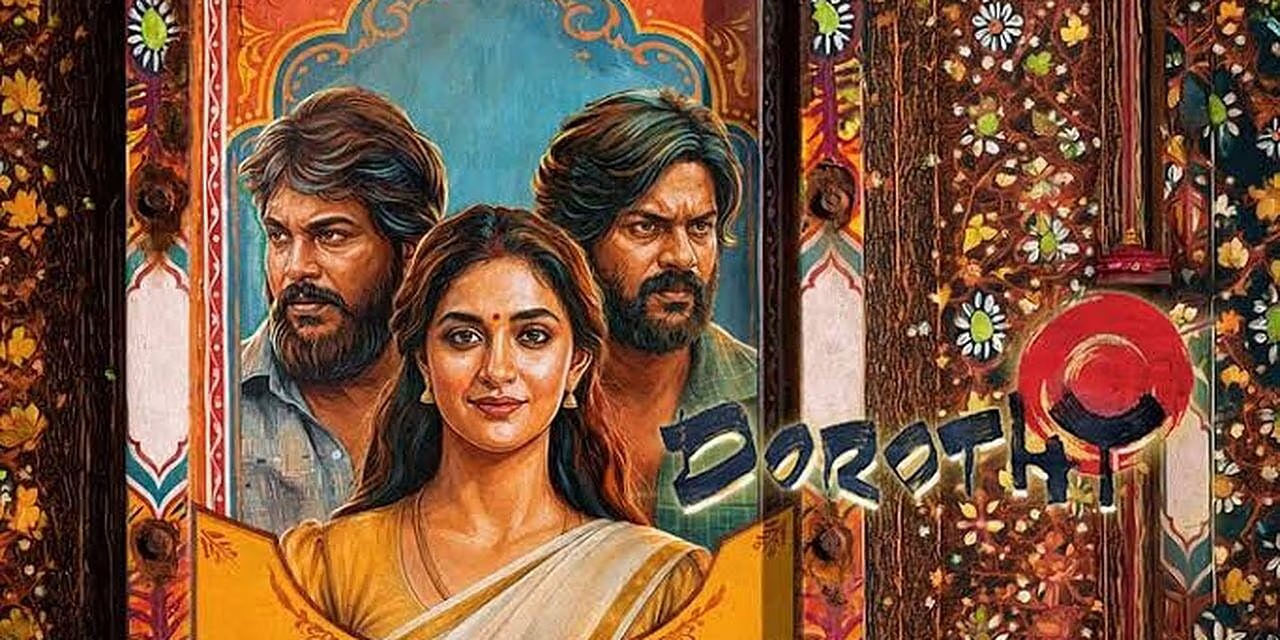
Then Dorothy is found hanging in the barn. The police write suicide. Subbu points at everything that says otherwise and gets nowhere, because the paperwork in that district was never for people like her.
The picturisation of that discovery is the best thing in the film, and I would hand it a prize over anything else in Tamil cinema this year. It denies you the two things the industry always serves with a dead woman — the slow revelation and the swell of strings that tells you how to grieve on cue. What you get instead is the plain fact of her, in a working building, on an ordinary morning, with a household already deciding what the official version will be. The violence is in the administration of it.
She gets under thirty minutes and the film is named after her. We will come back to why.
Women Are the Synonym of Acceptance
Chart who accepts Subbu in this film, in order, and the pattern is unmissable.
Dhanalakshmi, the friend. The one Subbu goes to see, which gets her beaten by her own brother, and the fight that follows ends with the brother dead at the hands of the two friends. Think about the position that leaves her in — the men who killed her brother are the only people she has, and the one she is closest to is the one she cannot name to anybody. She takes him in anyway. He goes to her, and holds her, and is finally open with somebody, in the house of a woman whose family he helped destroy. The film does not resolve that or apologise for it. It just lets the two of them hold on to each other in the middle of it, which is more honest than any speech.
Karthi's mother. Under a road bridge, on the ground, Subbu comes to her in a woman's clothes — and what she says is that she should have been told, that she would have taken care of her. Then Subbu lies down and sleeps in her lap. A person who has wanted a mother since childhood, asleep in the lap of somebody else's, under a bridge, while the house she was born in is paying her closest friend to kill her.
Dorothy, the sister-in-law, who gives her a self and then a name.
And the trans woman the credits call Amma — mother — played by a trans actor, Jeeva Subramanian. This is the one the film should be most ashamed of and most proud of. Subbu and Karthi assault her when she mocks their manhood, early, as part of the ordinary cruelty of that first hour. She curses them. And later, when the person who beat her is out in the world with nothing, she is the one who takes her in, teaches her, carries her through the transformation, and lifts what she laid on them.
Mother. The credits could have said friend, or neighbour, or ally. They say parent, because she does the thing the actual family refused to do. In this film the people who have nothing extend acceptance, and the people with land and money and sons measure out exactly how much of a person they are willing to keep.
Caste runs on the same rail and the film knows it. Karthi's birth decides which rooms he may stand in and whose life is cheap enough to be spent on the family's honour. The house that has looked down on him since childhood turns to him the instant their own child needs disposing of — a killing they can hire out because the hireling's own worth was settled before he was born. Queerness and caste run here as one machine with two outputs, and the machine is named honour.
அவன், அது, அவ
Here is the thing I will be thinking about for years, and it only works in Tamil.
Karthi's love story is told through his pronouns.
Tamil will not let you talk about a person without ruling on them. அவன் for a man, அவள் or spoken அவ for a woman, and அது — adhu — for a thing. There is an honorific, அவர், that steps around the question with respect, and the men in this village would never dream of using it on their own. So every single sentence Karthi says about Subbu is a verdict, delivered in the first syllable, whether he means it to be or not.
He begins with அவன். His friend. The other half of his childhood.
Then Subbu steps out of that house as a woman, and Karthi's language collapses into அது இது — adhu, idhu, it, this, the vocabulary you use for furniture. A person he grew up beside becomes a thing in his mouth, and it happens fast, because the slurs were waiting and ready and he had been fluent in them since he was nine.
And the cruelty escalates the way real cruelty escalates, in small administrative decisions. He takes money to kill her. He punches her in the stomach. He tells her not to look at his face. He puts her in the open back of a truck while he rides inside, so that she takes the sun and the rain and the dust for however many hundred kilometres, because proximity is now contamination and he has to be seen by himself to be managing the distance. He fails to kill her repeatedly and keeps the contract, which is its own confession — a man who wanted it done would have had it done.
Then a scorpion gets him, and she is the one who gets him to a hospital and keeps him alive. Her, choosing the man who was hired to kill her.
Somewhere after that the pronoun changes. அவ.
That is the whole arc, in one syllable, and it is devastating precisely because Tamil gave him no way to be vague. English would have let him hide in they for an hour. Tamil makes him stand up in every sentence and say what he has decided she is. The slur is a grammatical choice. So is the recognition.
And the recognition arrives in the right order, which is the part the film gets most right. Karthi's hands reach the conclusion before his head does. He fails to kill her, he lets her go, he hands over money and a set of bangles, and only a month later, far away, does the sentence finally assemble itself: he loves her. The feeling was in place long before the vocabulary caught up, which is how it goes for everybody.
Subbu, I think, was in love the entire time. From the schoolyard. The film is the story of the other one taking fifteen years and a thousand kilometres to arrive.
One more thing, and it is mine rather than the film's. Writing out that scene under the bridge, I put down he sleeps in her lap, and then immediately she sleeps in her lap, and sat looking at the two of them. I have left the correction visible here on purpose. That wobble, in somebody who has already decided where he stands, is the smaller cousin of the thing Karthi spends a whole film doing — the grammar arriving late to a conclusion the heart reached earlier. A stumble made while reaching for the right word has nothing in common with a word chosen to wound, and Tamil, which forces the choice into the first syllable of every sentence, makes both of them audible. The film's position is settled, and so is mine: she.
What He Changed in the Old Track
Subbaraj did not go to Ilaiyaraaja at the script stage. He went after the shoot, with a first cut in hand, and the cut was fifteen to twenty minutes longer than what eventually shipped.
Raaja watched the whole thing in one sitting. Then he said he had enjoyed it, and told Subbaraj to come back at eight the next morning. Twenty-five days followed that the director has described as magic, and in fifteen years of making films he says there was not one moment where he had to tell this composer that a cue was wrong.
Two stories came out of those twenty-five days.
The first. Subbaraj had a favourite from his college years — Do Anything, off How To Name It, the instrumental album Raaja built decades ago out of Bach and Thyagaraja and his own stubbornness. He asked whether they could use it. Raaja sat down, wrote out the notation from memory thirty-odd years after composing it, and recomposed it with one deliberate change.
Subbaraj noticed the change and asked about it. The answer he reports is that "the music blends to his moment" — meaning the actor's. A body moves across a frame in a particular way in one particular shot, and the thing he wrote in the eighties did not quite move with it, so he altered it.
The second. There was a sequence already cut to an old Raaja track as a placeholder, and Subbaraj asked to keep it. Raaja said it did not suit the scene and wrote a new song instead — composed it, wrote the words, sang it himself. Muthumani. Then he let a pair of electronic producers working out of Basel lay a trance pulse under it, because the director had loved their work for years.
And Muthumani is where the film ends.
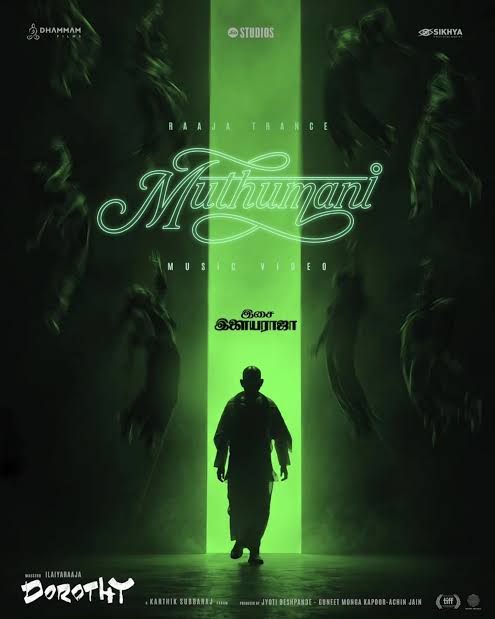
I have no interest in describing that climax to somebody who has not seen it. What I will say is that the song and the images do one single thing there, rather than taking turns at it, and the thing could not be done by either of them alone, and I cannot think of a better version of it. A film that spent two hours inside a vocabulary of slurs closes on a melody written by the man whose music taught three generations of Tamil people what tenderness sounds like, and the melody is the argument. Nothing has to be said. Nothing could be said, in that language, in that village, by those people.
Everybody over a certain age here owns a version of this man. Four decades of film music used to feel things nobody had permission to say out loud. In March of last year he stood in London and performed a full Western classical symphony he had composed and recorded himself, the first Asian film composer to do it, at an age when the kindest request anyone would make of him is a greatest-hits tour.
And here he is, declining to hand a young director a photocopy of his own past. The easy, generous, entirely forgivable move would have been to say yes, take the old track, it is yours. What he did instead was listen to where an actor's shoulder turns and change the music to meet it.
Attention this fine, this late, with nothing left to gain by it, is what the word love is supposed to be reserved for.
மீனாட்சி நீதாண்டி
This essay exists because of my partner, Bhagyashree. We were listening to Muthumani and she said, flatly, that the words had to be Raaja's own — that nobody else writes like that.
She was right. He composed it, he sang it, and he wrote it.
Now listen to what he wrote.
The song opens in a woman's voice with a chorus of women behind her, and what they are singing is a list of tasks.
முத்து மணிச்சரம் கோக்கணும் கோக்கணும் மாலைய சூடணும் தங்கத்துக்கு மஞ்சளும் குங்குமம் சந்தனம் பூசணும் பூசணும் பொன்மணிக்கு
String the pearls, string them. Garland her — she is gold. Turmeric, kumkumam, sandal: anoint her, anoint her, she is the jewel.
Every verb in that is a ceremony. கோக்கணும் — string it. சூடணும் — garland her. பூசணும் — anoint her. These are the words of a wedding morning and of a temple morning, the vocabulary of preparing a bride and of preparing a goddess, and they are being sung over the becoming of Dorothy. The film shows the ritual. Raaja scores it as a sacrament.
Then the line that stopped me.
மண்ணில் உள்ள தாய்களுக்கெல்லாம் ஒரு மகளாகப் பிறந்தவளே
Born a daughter to every mother on this earth.
Think about who that is sung over. A child whose own mother was pulled out of a well. Somebody who has been crying for a mother since he was small, and who in the end is mothered by three women who owe him nothing — his friend's mother under a bridge, his brother's wife at a kitchen fire, and a trans woman the credits call Amma.
The family that produced her wants her dead. And an eighty-three-year-old man writes: every mother alive is your mother. You were born a daughter to all of them.
He keeps going.
நம் குலம் தான் உலக உயிரைக் காக்குமடி தவிப்பவரின் துயரை எல்லாம் போக்கும்மடி
It is our kulam that keeps the life of the world. It takes away the suffering of everyone in torment.
குலம். In that village the word means lineage, clan, the thing Karthi is beneath and the thing the family kills to protect. Sung here, by these women, over this person, it means the people who took her in. The word is simply taken back, in the middle of a film where it has been a weapon for two hours.
And then the man's verse arrives, and it is the whole film in four lines.
அக்கம் பக்கம் போனபோது உன்ன பார்த்தவன் நான் பக்கம் பக்கம் இருந்தபோது உன்ன பாக்கலியே அருக இருந்தபோது நானும் வெகு தூரத்திலே தேடுகிறபோது என் நெஞ்சு பாரத்திலே
Going here and there, I was the one who saw you. When you were right beside me, I did not see you. When you were near, I was very far away. Now that I am searching, my chest carries the weight.
Read the architecture of the song and then look at the film again. The women sing the adorning. The man sings the arriving late. The acceptance belongs to one voice and the catching-up belongs to the other, exactly as it does in the story, and Raaja worked that out and built it into the structure of a four-minute song.
Then he crowns her.
முத்துமணி பவளமணி மாலைகளைச் சூடி மின்னும் பொன்னும் வைர கிரீடம் சிரசில் தகதகவென ஜொலிக்கும் மாதங்கி மரகத மணி மீனாட்சி நீதாண்டி
Wearing garlands of pearl and coral, a crown of shining gold and diamond blazing on your head — Mathangi, emerald jewel. Meenakshi, that is you.
Three names, and the order of them is an argument.
மாதங்கி. Mathangi, the Mahavidya who stands outside the purity order — the goddess called Chandalini, the one who is given what is left over, the one whose worship breaks the rules the village in this film kills to enforce.
மீனாட்சி. Meenakshi. The goddess of Madurai, in a film set in Madurai district, worshipped a few hours up the road from the house that hired a man to murder her. In the Srividya tradition she is Mathangi's own form, so the second name follows from the first rather than sitting beside it.
காமாட்சி. And at the close, வாடி மீனாட்சி வழித்துணையாய் காமாட்சி — come, Meenakshi; be my companion on the road, Kamakshi.
A trans woman walks out of a Tamil village that tried to have her killed, and the composer addresses her as the goddess of that village's own city. He begins the sequence with the outcaste goddess and ends it asking her to walk with him.
There is exactly one act of nerve in this production bigger than Karthik Subbaraj's, and it belongs to the man who wrote those lines at eighty-three. Between the two of them they have put out a lesson on equity that no policy document in this country has managed, and they did it inside a commercial film, in the language of the people who most needed to hear it, set to a tune that will outlive everybody arguing about it.
What It Gets Wrong
The last stretch is hurried, and the film ties a bow where the honest thing would have been a long unresolved awkwardness between two people who have hurt each other beyond repair. Prejudice does not evaporate in a month. The coda believes it can, and the film is a little pleased with itself for the ending it has engineered.
There is a cop near the end who gets a line about how if you can't kill it, you marry it. Delivered as a joke, received as a resolution. Something in the film's own instincts is still comfortable there.
And the assault on Amma is the real cost. Queer reviewers made this point when the film opened and they were right about it. It happens, it is played for the easy laugh of that first hour, and the film later arranges for the man who did it to understand himself — which makes her suffering a stage in somebody else's education. She is also the only trans character with a trans actor behind her, carrying the smallest part. That ordering says something about the industry, and the film does not escape it by being kind to her in the third act.
None of that moves the verdict for me. A film about this subject, in this language, aimed at this audience, got made, got seen, got argued about, and got paid for — profitable off its theatrical run, 88% of sixteen critics positive on Rotten Tomatoes, five languages on Netflix. The flaws are the flaws of something that went out into the market and took the hit. Nobody has ever been able to say that about the cautious version.
The Name She Left Behind
Dorothy dies in the first act and the film is named after her, because at the end, in a temple far from everything that happened, the person who loved her is living under her name.
That is an inheritance, and the word is exact. Dorothy walks into a house full of men keeping score, is kind to the one person in it who is drowning, demonstrates that another way of being alive exists, and is dead by the interval for reasons nobody in authority can be bothered to examine. What she leaves behind is the proof that it was possible, plus a name. Somebody picks up both and walks out of the district wearing them.
There is a smaller gesture I like even more. At the parting, before Karthi has worked out a single thing about what he feels, he gives her money and he gives her Dhanalakshmi's bangles. Bangles in a Tamil household work as a sentence rather than as ornament — the thing a woman is handed at the moments when her family is declaring what she now is. He hands them over while still believing he has come to kill her.
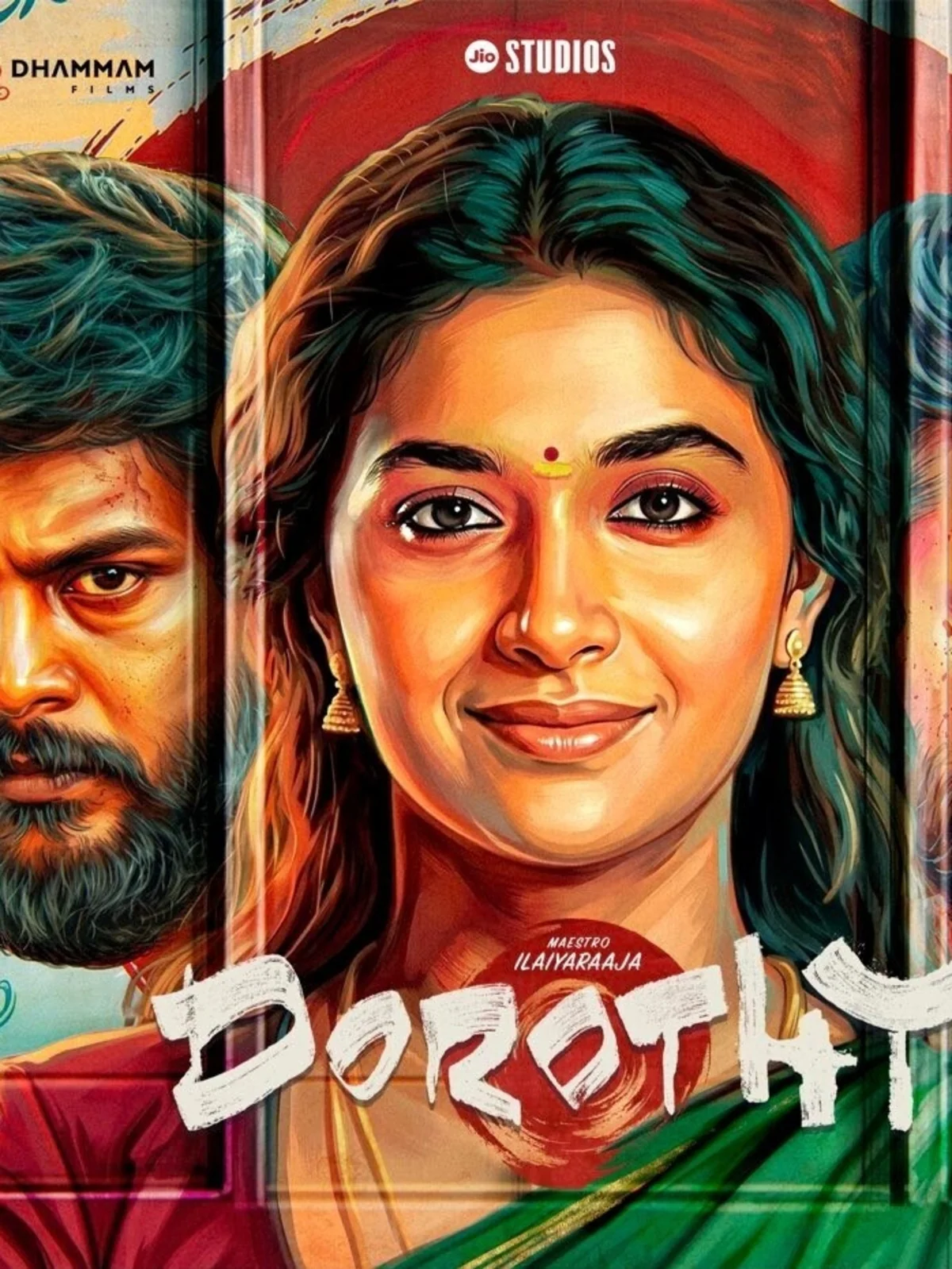
The hands know first. The pronoun catches up a month later.
That is almost always the order, and it is the whole argument of this essay in one image. The feeling arrives, and the reasoning assembles itself behind the feeling and then claims to have led.
Which is exactly what a score does to an audience.
Thozhan, Thozhi
Tamil has been ready for this story for about two thousand years, and the readiness is sitting in the grammar.
தோழன் — thozhan, the male friend. தோழி — thozhi, the female friend. One stem, தோழ-, holding the entire meaning: the companion, the one who stands with you. The gender lives in the ending, one character doing one job, which is to say who happens to be standing in the role today.
Subbu's whole life, the part this film is about, is a change of suffix on a stem that never moved. The friendship was never in the ன் or the ி.
And in the old poetry those are precisely that — roles. Akam verse is staffed by positions rather than by people: the thalaivan, the thalaivi, and the thozhi who hears what neither of them can say to the other's face. A position in a poem belongs to whoever is standing in it, and whoever is standing in it speaks the lines. Red Earth and Rain opened this series by arguing that Tamil had already named every shade of love we keep rediscovering. This is a smaller and stranger version of the same claim: the grammar was built so that the occupant of a role could change without the role losing its meaning.
A language that relaxed about who stands where produced a society that, in September 2026, organised to have a film pulled over it.
The language was ready. We were the ones who were not.
The Part That Is Mine, and Probably Yours
I did not need this film to tell me that first hour is a sickness. I had it at home.
Those words were ambient in my childhood the way weather is ambient — spoken by elders, in ordinary conversation, about anybody who fell short of the standard. Some of them were aimed at me, at the ages when a boy cries about things, which is all of them. You break down over something, and there is a word already waiting for you. The word is a woman, or it is a trans person, and what is being handed to you is the news that you have slipped a rung and the whole room can see it.
I never liked it. Not once, not even in the years before I could have explained why. And I never used it on anybody, which I want on the record, because essays like this one are usually written in the key of confession and that confession would be a lie. By my mid-teens I could name the thing plainly — this is what masculinity looks like when it has gone bad, and the men enforcing it are frightened of something.
So the film converted nobody here on the principle. That was settled thirty years ago. It landed somewhere else, and the somewhere else is the part worth writing down.
Fear is the wrong word for what it found. So is phobia. Hate is not even in the neighbourhood. I have argued for individual freedom my whole adult life, this included, and I hold without any qualification that what a person is belongs to that person and to nobody else in the room.
The hesitation sits somewhere further in, and it is about proximity. Being close. Being somebody's friend, walking into their world, sitting in it for an evening, being known there and seen there by people who know me.
I have also never had a friend who would have put that to the test, and I have stopped believing that is a coincidence. A society that keeps a category of person at the edge of every room makes certain the friendship never gets the chance to happen, and then hands you the absence back as proof that you have nothing to work on. One such friend at nineteen and I think the hesitation would have died of exposure. There was no such friend, so it survived, quietly and politely, for decades, underneath a position I would have defended against anybody in any argument you like.
Which is why the person this film is actually about is Karthi.
We are all Karthi, before the realisation. Everyone holding the correct opinion inside a life arranged so that the opinion never costs anything. Look at what he does while loving her — and he does love her, he has loved her since the schoolyard, the film is explicit about this. He takes the money anyway. Throws the punch anyway. Puts her in the open back of the truck and rides inside, because the distance has to be visible to be real. His hands know the whole time. His vocabulary refuses.
And here is the harder thing, which I believe. Put a Dorothy into the life of the average Indian man and he would still not admit to it. He would hold the position in public, say the correct sentence at the correct moment, attend nothing, and keep the person at exactly the distance that costs him no standing with other men. Karthi needed a thousand kilometres of forced proximity and a scorpion sting before his pronoun would move. Almost none of us will ever be cornered that thoroughly.
That is the slap, and it is aimed past the village of 1995 and into the row you are sitting in.
Because knowing has never been the scarce commodity in this country. Plenty of people know. Plenty of us have known for thirty years and built lives in which the knowledge never had to meet anybody. The scarce thing is whatever reaches the ones who do not know — and they will never be argued across the line, because the position was never arrived at by argument. It was issued to them at nine years old by somebody they loved, in a tone that was treated as a joke, and it has been reinforced every day since by everyone around them.
Nothing with a proposition in it gets past that guard. A melody has no proposition in it.
An eighty-three-year-old man understood that about his own country better than its critics did, and he built the release schedule around it.
Songs and All You Leave
Songs and all you leave.
He meant it as a plain fact about his trade. The film will date. The discourse already has — the hashtag is gone, and whoever leaked that clip has moved on to being angry about something else. The eighteen tracks are still sitting there, and in forty years somebody will put one of them on without knowing a single thing about September 2026, and will feel, correctly, that something frightened and tender and brave was happening in that music.
That is the long way round, and it is the only route that has ever worked on people like us. Nobody argues a village into tenderness. You hand it a melody and wait.
The man has been doing that to us since 1976.
Bhagyashree heard the writing in Muthumani before I did, and this essay started there. The account of the scoring — the single sitting, the eight o'clock start, the altered note, the live concert — comes from what Karthik Subbaraj has said in interviews since the release, and the quoted lines are Ilaiyaraaja's as relayed by him. All images on this page are promotional material for the film, reproduced here for commentary and credited to their owners. Karthik Subbaraj wrote and directed it, produced by Guneet Monga Kapoor's Sikhya Entertainment with Achin Jain and Jyoti Deshpande. Sananth plays Subbu and Dorothy, Rishikanth plays Karthi, Keerthy Suresh plays Dorothy, Ramachandran Durairaj plays Vadivu Annan, Merlin plays Dhanalakshmi, and Jeeva Subramanian plays the trans woman the credits call Amma. S. Thirunavukarasu shot it; Ganesh Siva cut it. Ilaiyaraaja's score ran to 18 tracks, released on 5 September 2026 and performed live in Chennai the same day; the songs followed after the film was already in cinemas. It premiered at Toronto on 11 September, opened on 25 September, and reached Netflix on 23 October in five languages. A short-film director has since filed a complaint alleging the story was taken from his 2020 short, which is unresolved and worth knowing about.
This essay lives in the Love series. The Mountain at Midnight is the one before it, on first love and a flower that only does this once. Don't Give Me a Voice is the other film here where the music is the argument. A Lifetime to Prove It sets the test this film passes — does loving her cost you anything. This one is about a man learning, one pronoun at a time, what he had been looking at since he was nine.
"The OST of this film should be released before the film." — Ilaiyaraaja, after watching the first cut once