அன்பே எந்தன் காதல் சொல்ல நொடி ஒன்று போதுமே அதை நானும் மெய்ப்பிக்கத்தானே ஒரு ஆயுள் வேண்டுமே
My love — to say I love you, one second is enough. To prove it, I need a lifetime.
That's the first thing you hear in the song. Before the melody settles, before you've worked out who's singing to whom, Vairamuthu has already put the whole argument on the table and walked away from it.
Most people hear it as romance. It isn't, particularly. It's an accounting.
Anyone can say it. Saying it costs a second and a bit of nerve. What it costs to demonstrate it — across decades, through illness and money trouble and the slow accumulation of small resentments, on the mornings when you don't feel it and have to act as though you do — that bill arrives for the rest of your life, and it never stops arriving.
We hand people the first line at weddings and pretend it's the achievement.
One separation before we go further, because it cannot be left unsaid and I would rather say it once than have it hang over everything.
The man Vairamuthu is his own subject, and he is not mine. What follows is about the lines. The lines are extraordinary, and they will still be extraordinary after you have finished thinking whatever you think about the person who wrote them — which is a thing poetry does, uncomfortably, and has always done.
The Sister Nobody Looks At
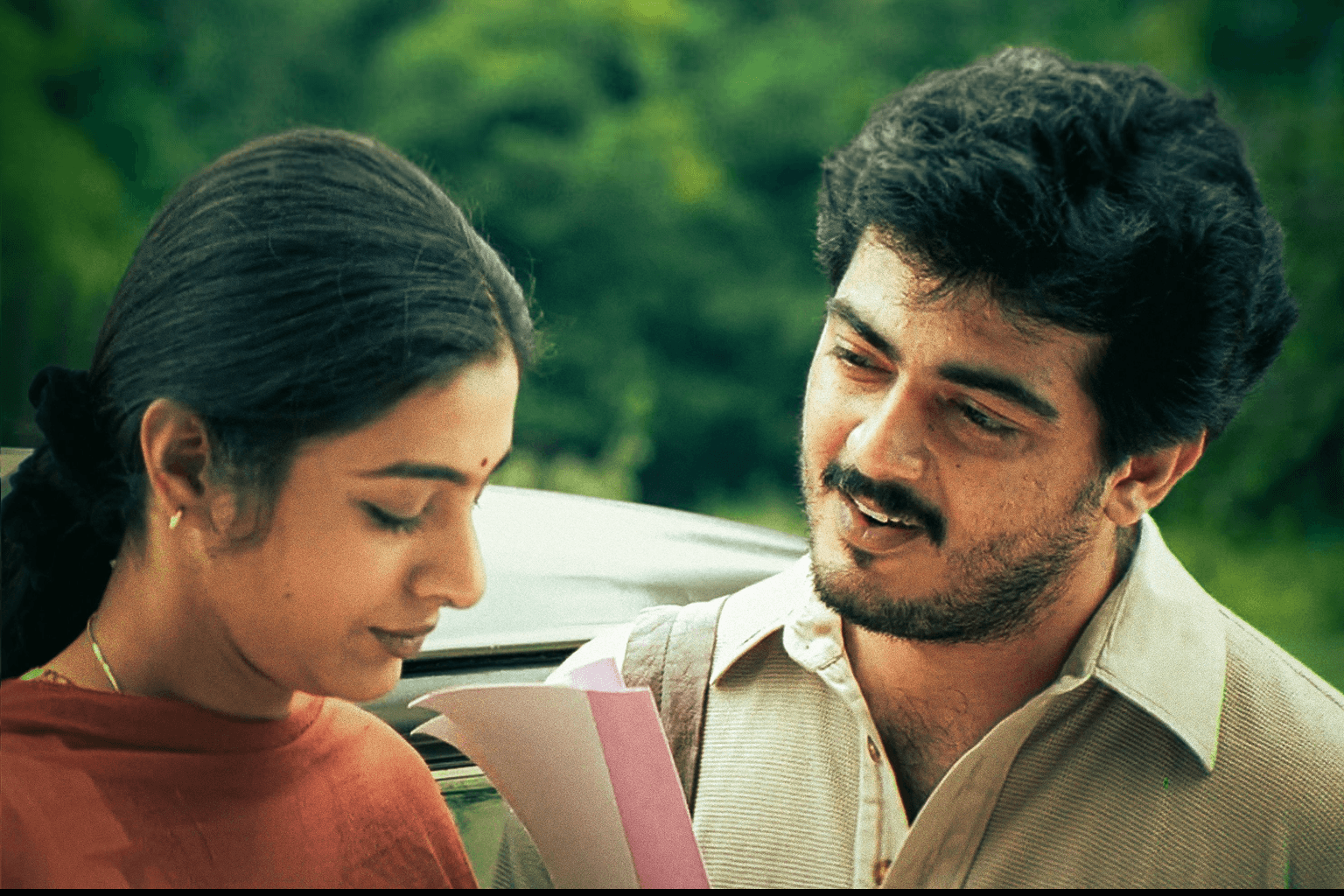
Kandukondain Kandukondain — Rajiv Menon, 2000 — is Sense and Sensibility transplanted to Tamil Nadu, and it keeps Austen's central cruelty intact.
There are two sisters. Meenakshi is the one everyone has agreed to look at: romantic, musical, luminous, the one who believes in grand feeling and gets destroyed by it. Sowmya is the other one. The eldest. The one who takes the job, manages the household, absorbs the family's humiliations, and holds everything together while nobody asks how she is.
In Austen she's Elinor. In every family, she's somebody you know.
And here is the thing Menon does that I still find astonishing. He casts Aishwarya Rai as Meenakshi — the reigning Miss World, arguably the most photographed face India has produced — and he casts Tabu as Sowmya. Then he hands Vairamuthu's most extravagant line about beauty not to Aishwarya.
To Tabu.
பல உலக அழகிகள் கூடி உன் பாதம் கழுவலாம் வாடி என் தளிர் மலரே, இன்னும் தயக்கமென்ன என்னைப் புரியாதா, இது வாழ்வா சாவா
Let all the beauties of the world gather and wash your feet. Come, my tender blossom — why do you still hesitate? Do you not understand me? Is this life, or death?
There is a lazy version of that sentence and it is simply false. Nobody is calling Tabu the plain sister — look at her, and note that Ravi K. Chandran lights her with as much care as he gives anyone.
What stories do, and families do, and the world does, is assign. Meenakshi is cast as the beauty. Sowmya is cast as the capable one, and the capable one is the person nobody thinks to look at twice, whatever her face is doing, because she is busy and reliable and already accounted for.
A household that loves her has quietly reclassified her as furniture, and she has half agreed to it.
That's the position Vairamuthu writes into — the woman with the ledger in her hands, in the next room, keeping the household upright while the poetry happens elsewhere.
It takes some nerve, and it is doing considerably more than paying her a compliment.
Aishwarya Rai won Miss World in 1994; Sushmita Sen took Miss Universe the same year. India spent that year being told, twice, what beauty officially looked like.
Two Frames Somebody Else Put Together
There's a pairing of shots I've watched more times than I'll admit, and working out why it lands took me a while — and then working out where it came from took longer.
Two frames. The same room, the same light, a focus pull between them.
In the first, Sowmya is sharp in the foreground, in profile, eyes lowered. She is looking at nothing. Whatever she's carrying that day, she's carrying it inward. Behind her, soft and unreadable, there's the blur of a man.
Then the focus pulls, and the blur resolves.
Manohar is looking at her. Not glancing — looking. There is no strategy in it, no charm being deployed, nothing arranged for anyone's benefit. It is plain awe, and he is wearing it openly in a room full of people because it has not occurred to him that he should hide it.
And she has no idea. Her eyes are still down. She is not receiving this.
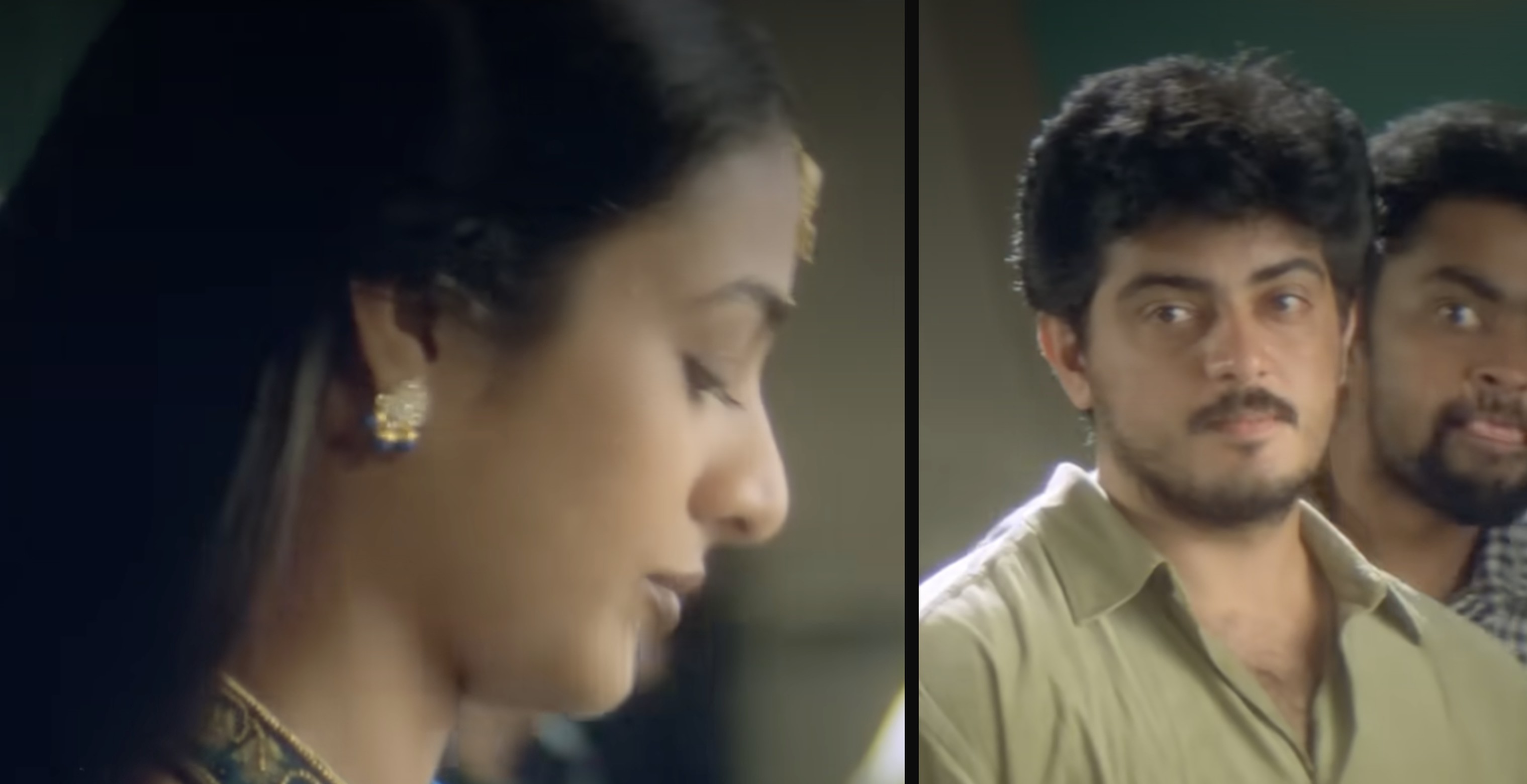
Now the honest part. That is not how the song is cut. Those frames aren't even from that song.
They come from Kannamoochi Yenada, somewhere else entirely in the film. I found them in a reel — somebody had lifted them out and laid them under பல உலக அழகிகள் கூடி உன் பாதம் கழுவலாம், a line that belongs to a different sequence, a different melody, a different night's shooting.
Two Rahman songs, cross-spliced by a stranger on a phone. And it is perfect.
The film shot the looking. Somebody else set it to the line. That the two fit this well says something no single shot could have said alone.
For a pairing that arbitrary to land, the film has to be saturated in the idea — so consistently that you can reach into one song, pull two frames, drop them under the lyric of another, and find they were always about the same thing. One clever shot is a flourish. A film you can re-cut at random and still find it is a film that meant it.
The frames sit one second apart, incidentally. 0:43 and 0:44. The whole transfer of attention from her face to his takes about as long as the other song says it takes to say I love you.
Nobody has run that comparison. Nobody assembled the beauties of the world and measured Sowmya against them. It's a report from inside one man's looking, and the reel puts you in front of the instrument rather than the reading.
A credit I can't properly give: the reel carries the handle @DIYA_.EDITZZ and nothing else. The frames belong to Ravi K. Chandran, the lyric to Vairamuthu. The argument the two make together belongs to somebody I will never be able to thank.
The Part That Should Frighten You
Here's what follows from that, and it's less comfortable than the romance.
If love is what makes someone beautiful — if the beauty lives in the looking and not in the face — then it can leave.
You've seen this. Everyone has, by a certain age. A couple who could not stop looking at each other, and then some years pass, and they are in the same room, and neither one looks up. Nothing happened to their faces. The features didn't rearrange. What went was the attention — and with it, quietly, went the beauty that the attention was generating all along.
This is the cost of Menon's shot being true. If beauty is located in the beholder, the beholder can put it down.
That is why the opening couplet matters, and why it was never sentimental. A second to say it, a lifetime to prove it. The proof isn't a grand gesture at the end. The proof is that in year nineteen, in an ordinary kitchen, on a day when nothing is happening, you still look up.
The question a love story asks is will she say yes. The question a marriage asks is will you still be looking at her that way when nobody is filming.
Only one of those has a climax.
The Other Sister
While all of that is happening quietly on one side of the house, Meenakshi is having the loud version.
She falls for Srikanth — Abbas, playing him exactly right — and what she falls for is not really a man. It's an arrival. He is rich, he is beautiful, he turns up with the whole apparatus of rescue, and she has been waiting in a collapsing house for someone to come and lift her out of it. Every girl who grew up on the story of the prince and the horse knows this feeling in her spine. The castle is a prison, the rescue is coming, and the person doing the rescuing is almost incidental to the shape of the fantasy.
Her love for Srikanth is made of wealth, beauty, music, deliverance. Not one specific thing about him.
And standing at the edge of all this, saying nothing useful, is Major Bala.
Mammootty plays him with a stillness that the film keeps refusing to reward. He loves her. She knows he loves her. She is dismissive of him, sometimes cruel about him, and mostly she simply does not see him — because he is not the shape the fantasy requires. He does not arrive. He is just already there, which is a much harder thing to notice.
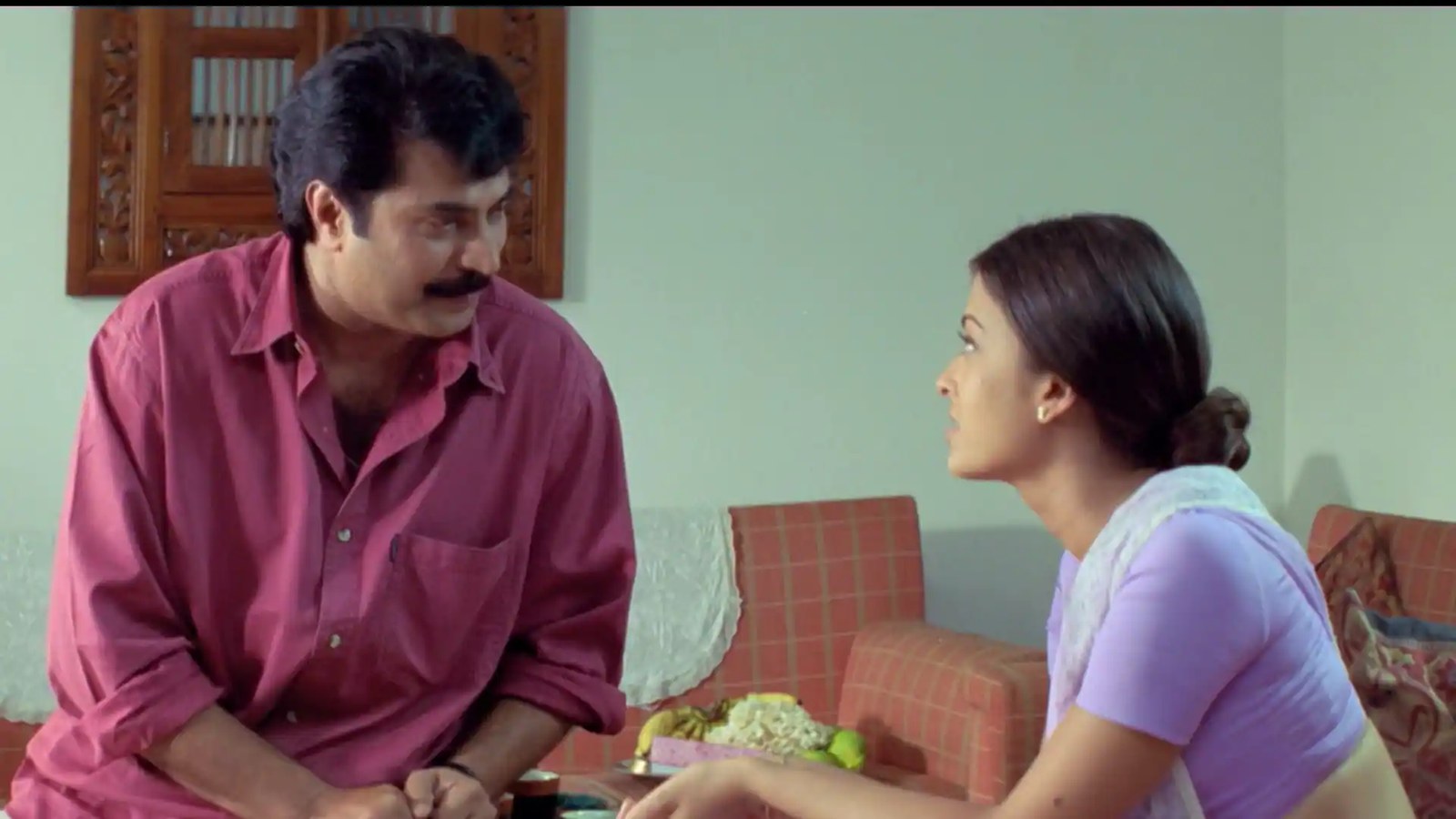
Then Srikanth's finance company begins to go under, and he marries a minister's daughter, and the bailout is the point. The prince turns out to have been running a business the whole time.
And Meenakshi, undone, walking through a flooded street, falls into an open manhole.
Bala is the one who sees. Bala is the one who goes in after her.
He never asked her for anything. He was simply the one still looking when she went under.
What Her Heart Actually Asks For
Then comes Enge Enadhu Kavithai. Chithra sings it, Srinivas answers, Rahman scores it in the rain — and hold one thing while you listen: she is not singing about Bala.
Srikanth has married his minister's daughter. He is gone, and he is not coming back, and this song is Meenakshi still looking for him.
மேகம் சிந்தும் இரு துளியின் இடைவெளியில் துருவித் துருவி உனைத் தேடுதே உடையும் நுரைகளிலும் தொலைந்த காதலனை உருகி உருகி மனம் தேடுதே
In the gap between two drops the cloud lets fall, it searches and searches for you. Even in the breaking foam, my heart melts and melts, looking for the lover it lost.
In the gap between two raindrops. Not in the rain — in the interval between two individual drops of it. She has narrowed the searchable world down to the space where nothing is falling, and she is looking for him in there.
Then உடையும் நுரைகள், the foam as it breaks. Anyone who has read The Shore of Longing knows this water — Tamil poets have been dissolving longing into sea-foam for two thousand years, and Vairamuthu drops it into a film song as though it cost him nothing.
But it's the next stanza that stopped me.
வேர்வை பூத்த உந்தன் சட்டை வாசம் இன்று ஒட்டும் என்று மனம் ஏங்குதே முகம் பூத்திருக்கும் முடியில் ஒன்றிரண்டு குத்தும் இன்பம் கன்னம் கேட்குதே
My heart aches for the day the scent of your sweat-flowered shirt clings to me. My cheek is asking for the pleasure of one or two pricks from the stubble flowering on your face.
Not the horse, not the rescue, not the estate. His sweat. The smell of a worn shirt. Her cheek scratched by two days of unshaved beard.
And look at the verb Vairamuthu uses twice — பூத்த, பூத்திருக்கும். To flower. He makes sweat bloom, and stubble bloom: the two least romantic facts about a man's body, handed the vocabulary we keep for jasmine.
Which is where it turns badly.
When Srikanth was available, what she loved was made of adjectives — and any sufficiently glamorous man could have filled that outline. It is only now, with him married and gone, that her love acquires nouns.
Grief is what taught her to be specific. She learned the language a season too late, and she is speaking it to a man who has already left the room.
And Bala is standing close enough to get wet.
Women love in whole sentences. In complete, specific, unglamorous detail — the kind that arrives as did you eat and gets filed as logistics. Men read the first word and call it the message.
I still believe every part of that. I simply had the failure in the wrong hands.
Enge Enadhu Kavithai is a whole sentence, spoken perfectly, in the rain, to a man who is already married to somebody else. The language was never the difficulty. Meenakshi speaks it fluently, and spends all of it on someone who was never going to be standing there to receive it.
Which is its own kind of misreading. This one is hers.
What Rahman Does With Silence
A.R. Rahman in 2000 was at the point in his career where he appeared to be doing this without effort. The two songs carry the whole emotional weather of the film between them, and they work by opposite means.
Enna Solla Pogirai is built as a question that refuses to resolve. Shankar Mahadevan pushes up and up, the orchestration climbs with him, and Rahman keeps withholding the landing — the phrase turns over, gathers, turns over again. By the time it reaches என்ன சொல்லப் போகிறாய் you are physically waiting for a chord that hasn't come. That's not decoration. That is exactly what it feels like to stand under a balcony having asked the only question that matters. The music is in the same suspended state the man is.
Enge Enadhu Kavithai does the opposite, and it is the finer piece of work.
It opens almost weightless — voice, atmosphere, and an enormous amount of nothing. What follows is a masterclass in placement rather than instrumentation. Instruments don't pile in because an arrangement is supposed to grow. They enter when they have something to say and leave when they've said it, like actors who only come on for their line.
The strings are the emotional architecture. They aren't sustaining chords underneath the melody — they arrive after vocal phrases, swell into the gaps, answer Chithra and withdraw. Which produces the peculiar Rahman sensation of hearing the lyric with your head and getting hit half a second later somewhere lower down.
The strings tell you what she is feeling, a beat after the words have told you what she is thinking.
Listen for the woodwind between vocal passages. Not decorative fill — a reply. Voice, then silence, then flute. The silence is part of the orchestration, and Rahman treats it as an instrument he can score.
The biggest flex is the restraint. There are moments where any competent composer would think lovely melody, put some strings under it. Rahman leaves the space. Then he introduces the instrument a phrase after you've started wanting something to fill it — so the final expansion, when the orchestra finally opens, feels earned rather than scheduled.
Then Srinivas enters, and the whole emotional perspective shifts. Until that point the song is one woman alone in the rain with her own head. A second voice arrives and it stops being introspection and becomes a conversation — not two singers taking verses, but two emotional worlds locating each other across the arrangement.
Remember who she is singing to, and that becomes quietly devastating.
There is nobody there to answer her. So the music answers instead — which is exactly what grief does, and exactly what it cannot keep doing.
Which is what he builds for her. The song is about searching for someone who is not there, and Rahman scores it by withholding the instrument until you feel its absence, then letting it arrive slightly too late. Sometimes he withholds it altogether, and the nothing is placed as carefully as the notes.
The arrangement is doing the longing. One song is a question. The other is weather, and it never borrows the first one's hope.
The Uncomfortable Bit About Persistence
There is a problem with everything I have just admired, and I built it myself.
Tom Hansen, in 500 Days of Summer, hears a woman say I don't want anything serious and silently appends the word yet. I have called that yet the most dangerous word a man adds to a woman's sentence, and I stand by it — it is the sound of a man deciding her position is a phase in his story.
And here I am admiring a man who spends an entire film being refused and not leaving.
The difference is real and it is narrow.
Sowmya never tells Manohar she doesn't want him. What stands between them is circumstance and pride — her family's collapse, the sister she is holding up, her own hard-earned suspicion of men who make promises. Every barrier is external, or it is fear. None of them is I have looked at you and I don't want this. Tom was told the actual sentence, and decided it had an expiry date.
Waiting on circumstance is patience. Waiting for a woman's no to expire is something else, and it wears patience as a costume.
Bala is the purer case, because Bala never asks at all. He isn't waiting out a refusal — Meenakshi never refused him, she simply never looked in his direction. He is waiting to be noticed, which has no timeline attached to it and no reasonable expectation of arriving, and which he appears to have accepted as a permanent condition rather than a phase. Then the water comes up and she goes under and he is the one who happens to be there.
A film can teach a bad lesson beautifully, so let me be careful. Kandukondain Kandukondain rewards both of its waiting men, and it is entitled to — that is the bargain Austen struck. But the reward is the story's decision, not a rule about the world. No woman owes a man her attention because he was patient, and plenty of men have called themselves Bala while behaving like Tom.
Strip the romance off and the film argues something narrower than persistence works. It argues that the men who kept looking were already the ones worth having — that the looking was the evidence, not the strategy. Waiting is simply what a man who loves like that does, and it would have looked identical if she had married Srikanth and he had gone on alone.
The only honest test is the one the film keeps applying: does her no cost you anything? If you can absorb it endlessly without pain because you never really believed it, you aren't being patient. You just aren't listening.
The Same Sentence, Turned Around
Then the film reaches its end, and Vairamuthu does the thing that makes this song architecture rather than decoration.
He writes the opening couplet again, with the polarity reversed.
இல்லை இல்லை சொல்ல ஒரு கணம் போதும் இல்லை என்ற சொல்லை தாங்குவதென்றால் எனக்கு ஒரு ஜென்மம் வேண்டும் என்ன சொல்லப் போகிறாய்?
To say no, a moment is enough. To carry that no, I would need a lifetime. What are you going to say?
It's the same asymmetry, seen from the other side.
The first version is the lover's burden: easy to declare, ruinous to demonstrate. The second is the same arithmetic pointed back at himself: easy for her to refuse, ruinous for him to survive. One second of her breath against one lifetime of his. He has done the sum, out loud, and he is asking anyway.
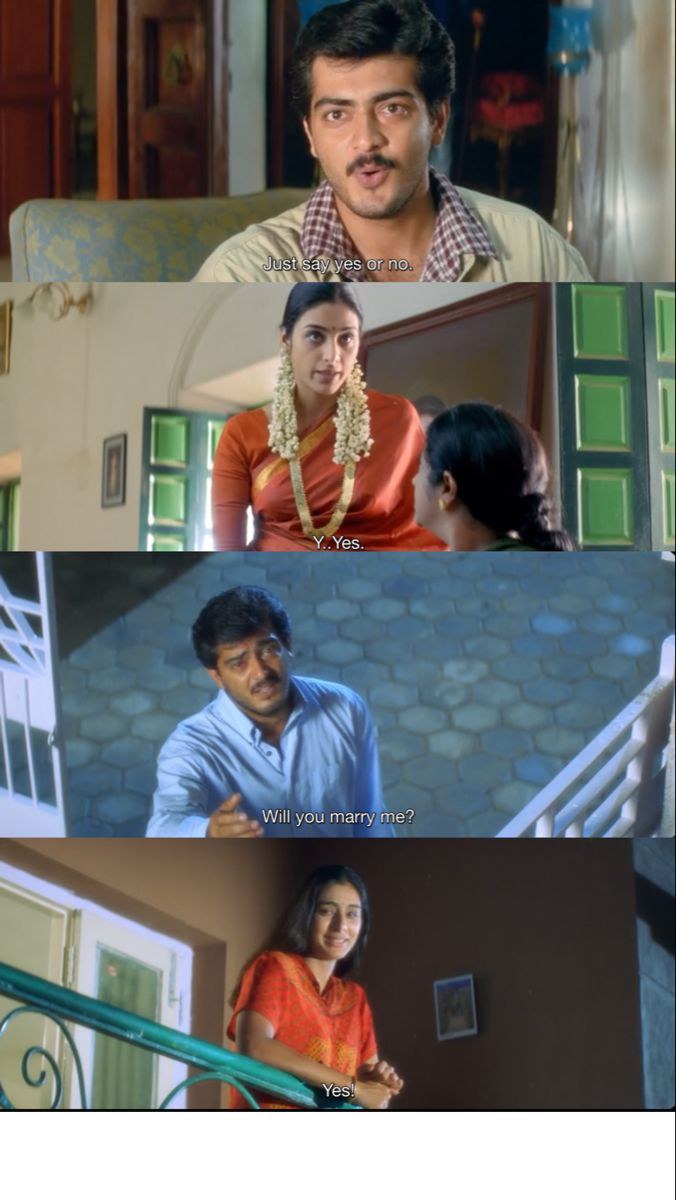
She is above him on a balcony. He is below, in the open, with everyone able to see. Rahman lets the orchestration climb and then holds it — that particular Rahman cruelty where the resolution is delayed exactly long enough to become unbearable.
என்ன சொல்லப் போகிறாய்? What are you going to say?
She says yes. They run. It is, I will admit, magnificent — and the theatre earns its noise.
The Film Ends Where the Work Starts
And then it stops. Wedding, credits, happiness.
And this is the honest place to notice that the film's last scene is Alaipayuthey's first one. Mani Ratnam took the ending everybody claps for and asked the follow-up question: and then what? Karthik wins Shakti in the first half and spends the second half discovering that winning was the easy part — that the rooftop leads to a kitchen, that the rain dries, that two proud people in an unfinished flat will find things to be proud about.
Menon's film doesn't lie about this. It just doesn't stay for it. And the strange thing is that the song already warned us, in its very first breath, an hour and a half before the wedding it's building toward.
To say it, one second. To prove it, a lifetime.
The wedding isn't the proof. The wedding is the second. Everything after it is the lifetime, and nobody scores that part.
Nothing worth keeping comes easy. But the harder truth is that nothing worth keeping stays kept. It has to be re-earned, quietly, on days when nobody is watching and there's no music playing.
The Second and the Lifetime
So we're back at the two frames. A woman with her eyes lowered, and behind her a man wearing an expression she will never see.
And her sister in the other half of the film, whose beauty is the most established fact in the story, and which does not save her. It attracts the wrong man, survives his leaving, and leaves her face-down in floodwater.
Being looked at by everyone is not the same as being seen by someone. One sister had all the looking and none of the seeing. The other had none of the looking, and one man who could not stop.
And that's the whole of it. Not the balcony, not the running, not the yes — the yes takes a second, and she's right that a moment is enough.
What Manohar promised was the unphotogenic part. The one with no crescendo, no orchestration, nobody filming. That in twenty years, in a kitchen where nothing is happening, when she is tired and the youth has gone out of both their faces and she has just said something sharp she'll regret by evening — he will still be the man in the second frame.
Which brings it to you, and I'm sorry, but it does.
There is somebody in your house you have stopped looking at. Not out of cruelty. Out of arithmetic — she is always there, she is already accounted for, she will still be there in an hour, and there is something on the phone. The looking got moved to the bottom of a list that never ends.
The Shore of Longing is about the ache of the one who never arrived. She Loved You in Whole Sentences is about the one who arrived, spoke plainly, and was misread for a decade. This one is smaller than both, and worse, because it costs nothing and almost nobody does it.
She is in the next room right now with her eyes down, carrying something she hasn't put down, and she has no idea whether anyone is looking.
Look up.
That's the lifetime. Not the vow, not the wedding, not the song. It is made almost entirely of looking up when you don't have to — and it has to be done again tomorrow, and the day after, by a man nobody is watching, in a room with no music playing.
A second to say it.
A lifetime to prove it.
This essay lives in the Love series — on how Tamil poets keep mapping terrain everyone else thinks they discovered. Its companion is She Loved You in Whole Sentences, which picks up exactly where this film stops: the morning after the wedding everybody clapped for. And Listen to the Reed carries the test this essay sets — does her no cost you anything? — up to a cave above Kodaikanal, to a man who arranged things so he would never have to hear the answer.
The People Who Made It
I've spent this essay on two songs and one focus pull, which is unfair to everyone else who built it.
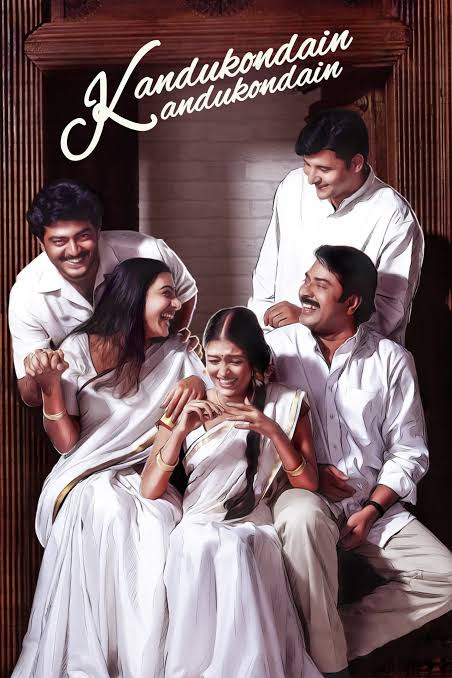
Rajiv Menon wrote and directed it, and the adaptation is the achievement. Austen survives the journey because Menon saw that the novel's engine was never English in the first place — property, marriageability, and the position of women in a household that has lost its man. It lands in Chennai without a seam showing.
Ravi K. Chandran shot it. The focus pull I spent a section on is his — the reel-maker chose where to put it, but somebody had to make the shot, and a hundred others like it, or there would have been nothing to find. Watch what he does with green. The film is graded like memory rather than the present tense.
The cast is faintly absurd. Tabu does the hardest thing in it — playing a woman the story has decided is not the interesting one, and making her the only person you want to watch. Mammootty holds a whole character in stillness and about forty lines. And Abbas has the least gratifying job in the film, be the fantasy and then be the disappointment, and never once tips into villainy. Srikanth isn't a bad man. He's a weak one with a balance sheet, which is worse and truer.