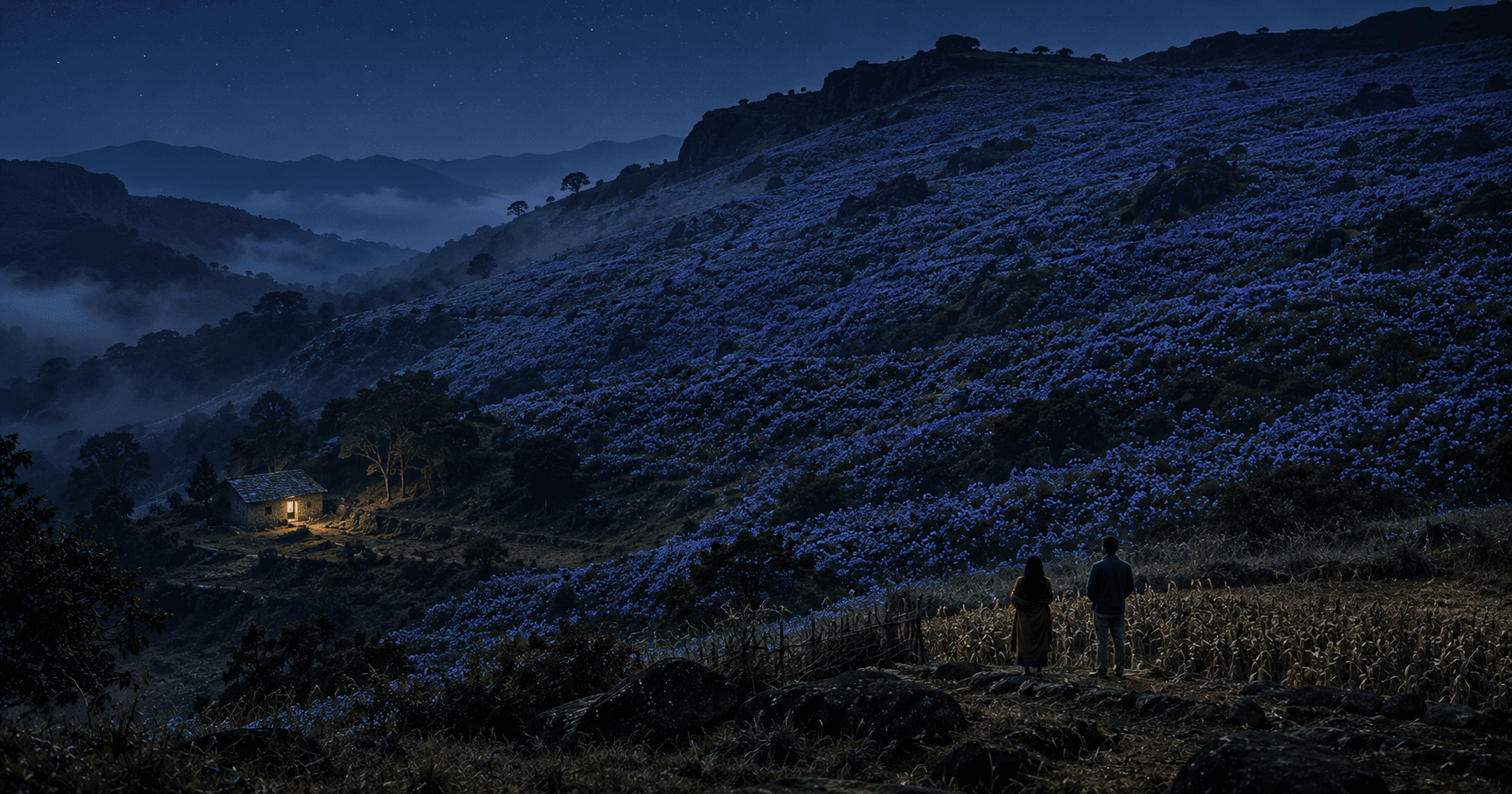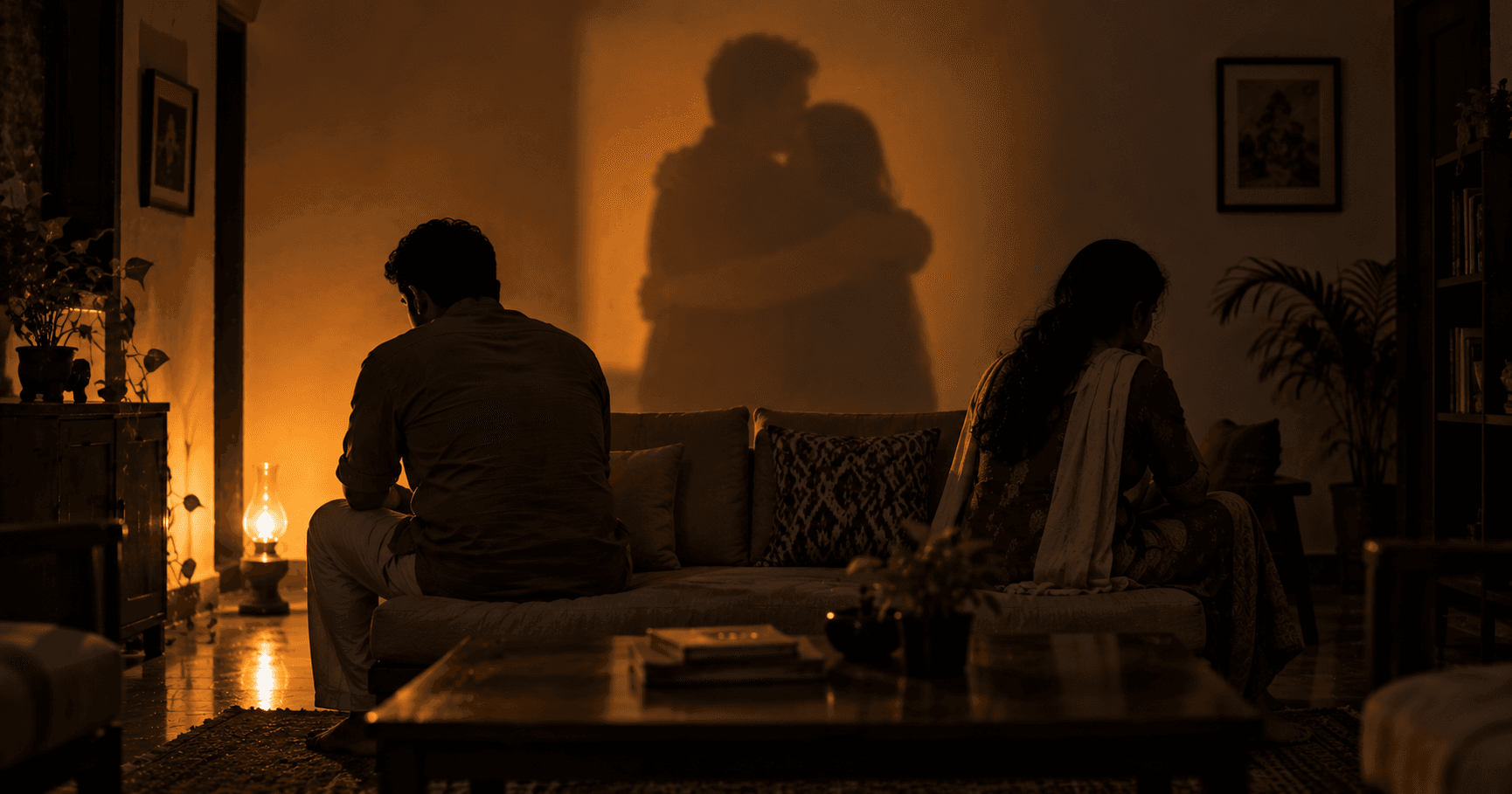
Konya, sometime in the 1260s. An old man is dictating. He has already lost the person who cracked him open — Shams of Tabriz, who arrived, wrecked his settled life as a respectable jurist, and then vanished. What comes out of him is fifty thousand lines of verse, and he begins it with an instrument.
بشنو این نی چون شکایت میکند
Listen to the reed, how it complains — telling its tale of separations.
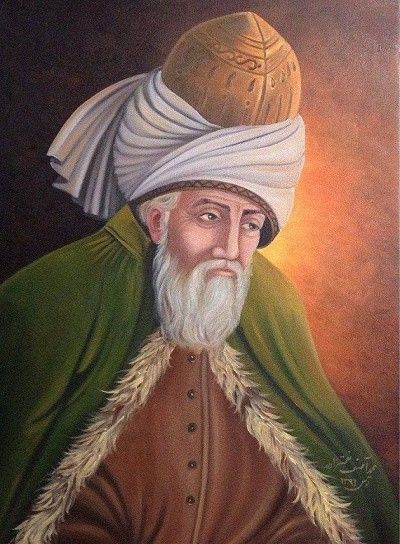
Rumi opens the Masnavi not with God, not with the Prophet, not with a doctrine. He opens with a flute complaining. And in the lines that follow he explains why the complaint is worth hearing: since they cut me from the reed bed, men and women have wept at my crying.
That is the whole physics of it. A reed standing in the marsh makes no sound at all. It has to be cut from the bed where it grew, dried out, hollowed through, and burned with holes before it can carry a single note. The music is a byproduct of the injury. Everyone who hears the flute is hearing their own severance played back, which is why they weep and cannot always say what for.
Eight hundred years later a man in Madras will build an entire cinema's worth of longing on the same instrument, and the joke of history is that nobody involved needed the metaphor explained to them.
The Poets Who Refused to Name Anyone
Two thousand years before Rumi, in the Tamil country, a body of love poetry was assembled under a rule so strange that it still stops me.
The akam poems — the interior poems, the ones about love — are not allowed to name the lovers.
Over two thousand poems survive. There is a woman, a man, her friend, her foster mother, a passing bard, sometimes the other woman. They are addressed by role: thalaivi, thalaivan, thozhi. Nobody has a name. Not one. The kings in the puram poems have names, genealogies, battle records, praise-singers on retainer. The lovers get a landscape and a season.
That was a decision. The moment you name a woman in a love poem, the poem is about her, and everyone else is a spectator. Leave her unnamed and the poem has a vacancy in it, and the reader — every reader, in every century — is obliged to fill it. The Sangam poets built anonymity into the form because they wanted the poem to keep working after everyone in it was dead.
Which it did. Here is Kurunthogai 3, spoken by a girl to her friend, in the mountain country:
நிலத்தினும் பெரிதே வானினும் உயர்ந்தன்று நீரினும் ஆரளவின்றே
Bigger than the earth, higher than the sky, harder to measure than the ocean — this love I have for the man from the hills, where black-stalked kurinji flowers are worked by bees into deep honey.
She does not tell us his name. She tells us the acreage.
Shakespeare found the same trick from the other end. In Twelfth Night, Viola is standing in front of the man she loves, dressed as a boy, unable to say a word of it. So she invents a sister — a fiction, a placeholder, a woman with no name and no existence — and describes her:
She never told her love, But let concealment, like a worm i' th' bud, Feed on her damask cheek.
That is a Sangam heroine walking onto an English stage. Unnamed, unheard, eaten from inside, sitting like patience on a monument. Shakespeare gets there by having his character lie; the Tamil poets got there by making the anonymity a law of the genre. Same result. The love that cannot be addressed to anybody in particular is the love that lasts longest in other people's mouths.
Keep that in your hand. We are going to need it in 1987.
The Album Nobody Read Properly
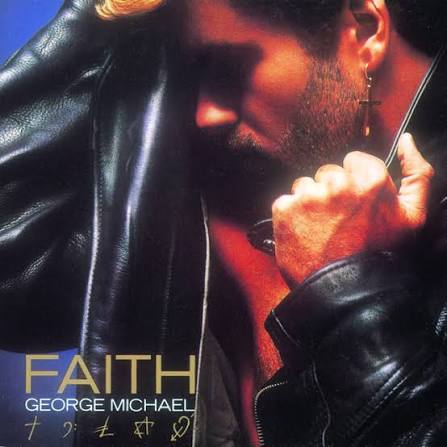
The cover is a black leather jacket, a cross swinging from one ear, three days of stubble, and a guitar. The lead single opens with a church organ playing "Freedom" and then a rockabilly guitar kicks the door in. Somewhere in the middle of the record there is a song called "I Want Your Sex" that gets pulled off daytime radio in Britain and turns into a tabloid weather system for a year.
So everybody filed Faith under sex, and moved on.
Read the tracklist as a document instead. "Father Figure." "One More Try." "Kissing a Fool." "Hand to Mouth." A twenty-four-year-old at the absolute commercial summit of pop music — four American number ones off one record, Album of the Year — is writing gospel-structured ballads about wanting to deserve somebody.
I will be your father figure Put your tiny hand in mine I will be your preacher, teacher
Set that beside Rumi and it stops sounding like a seduction. Sufi poetry runs on a deliberate confusion: the Beloved is a woman, the Beloved is the wine-seller, the Beloved is God, and the poem will not tell you which, because to the poet the distinction had stopped being useful. "Father Figure" runs the same grammar in a Los Angeles studio — the lover as guardian, preacher, teacher, the one who keeps you, sung in a voice already halfway to prayer.
And then "One More Try," which is the record's real centre and which George Michael himself rated above the song that made him famous. He called it the better ballad — the songs that came from things that actually hurt him. Listen to what the man in it is asking for:
Teacher, there are things that I don't want to learn And the last one I had made me cry
A man who has been damaged asking to be taught how to be loved, terrified of the syllabus. File that under breakup song if you like. It is the reed explaining what the holes are for.
And here is what the anonymity was doing. George Michael spent those years writing love songs with the pronouns filed off, because the person he was writing to could not be named in 1987 without ending him. The vagueness that critics heard as pop's usual laziness was the most Sangam thing on the record — a beloved with no name, no gender, no address, so that anybody could stand in the vacancy.
He was working under the akam rule. Nobody told him it existed.
The album is called Faith and the title track is about walking away from someone who wants him. That is the argument of the whole record, sitting in the title where everyone could see it: faith is the thing you need precisely when love is returning nothing. Nobody needs faith for a love that answers.
The Cave
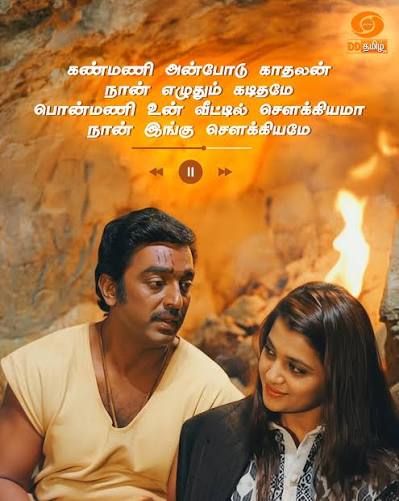
- Kamal Haasan makes Guna, and Tamil cinema produces its own Majnun.
Guna is a man whose grip on the world has come loose. He believes — completely, without irony, with the whole apparatus of his mind — that a woman he has seen is Abhirami, the goddess, and that she has come for him. He takes her to the hills above Kodaikanal, to a cave in the shola forest that visitors now call Guna Cave, because a film renamed a piece of geography.
And in that cave, Ilaiyaraaja and Kamal Haasan put down what may be the strangest hit song in the language. Every convention available said duet, or serenade. "Kanmani Anbodu" is composed as a letter. Beloved, with love, this letter I write to you — and it proceeds, verse after verse, in the voice of a man drafting correspondence to someone who is in the room and cannot receive it.
A love letter with no delivery address. Persian poetry has a word for the man who writes them; his name is Majnun, and the tradition has spent a thousand years arguing about whether he was mad or whether he was the only one seeing clearly.
Tamil cinema's answer, delivered by a leading man at the height of his stardom, is: both, and it kills him. The film ends on the cliff and does not let him keep her.
The Rumi tradition, and the Majnun tradition, and a great deal of Tamil film romance, all carry the same infection: they treat a man's overwhelming feeling as its own justification. Guna does not ask Rohini a single question. He has decided who she is, and his devotion is total, and none of it is addressed to the actual woman standing in the cave — which is what the men who misread love always do, just with better lighting.
A Lifetime to Prove It sets the only honest test for a man who keeps waiting: does her no cost you anything? Guna fails it on a technicality that is worse than failing it. He has built a love with no no available in it. He never asked, so there is nothing for him to survive, and the devotion runs on undisturbed forever.
The film knows. That is why it is a tragedy and not a romance. The cave is a diagnosis rather than a honeymoon, and a man who calls a woman a goddess has arranged things so he never has to hear her disagree.
Hold both. The song is one of the most beautiful things ever recorded in Tamil, and the man singing it is doing something indefensible, and Kamal Haasan built the film so you cannot have one without the other.
The Railway Station
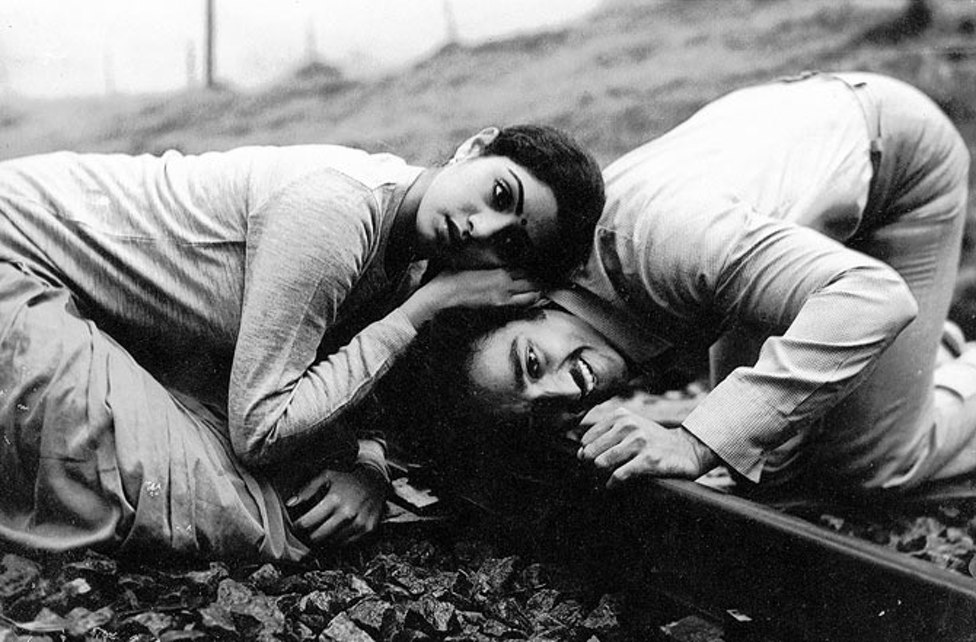
Nine years earlier, Kamal and Ilaiyaraaja had already made the harder version.
Moondram Pirai. Cheenu, a schoolteacher, finds a woman whose mind has been wiped back to childhood, and takes her to the hills, and cares for her for months — feeding her, hiding her, teaching her, loving her with no possibility of it being understood, let alone returned. Ilaiyaraaja scores it with "Kanne Kalaimane," a lullaby to an adult, one of the last lyrics Kannadasan wrote before he died.
Then her memory comes back. Her family collects her. And Balu Mahendra gives us the ending, on a railway platform, that Tamil cinema has never recovered from.
He does everything. Every clownish thing that made her laugh in the hills, every gesture, every private joke, performed in public in front of her relatives, faster and more desperate as the whistle goes. She watches a strange man behaving oddly near her compartment. She is polite about it. Then the train pulls out, and Kamal Haasan is left standing on the platform having spent months of his life on a woman who will never know it happened.
And the film has already told you, in two lines, exactly what is being carried onto that train.
என் வாழ்வில் நீ வந்தது விதி ஆனால் நீ எந்தன் உயிர் அன்றோ.....
That you came into my life was fate. But are you not my very soul?
Watch what happens across the line break. The first half hands the whole thing to vidhi — fate, destiny, the arrangement of circumstance. She arrived. It befell him. He was standing there when it occurred, and had no more say in it than a man has in weather.
Then the second half quietly withdraws that. உயிர். If she is his uyir, she stopped being an event that happened to him and became the thing the events are happening to. He starts the couplet describing an arrival and ends it discovering a constitution.
Rumi does the identical turn, in Persian, in the Divan-e Shams:
تو مرا جان و جهانی چه کنم جان و جهان را
You are my soul and my world — so what am I to do with soul and world?
Jān in Persian is uyir in Tamil. Life, breath, the animating thing. Both poets reach for the same word, and both then push it past endearment into a logical trap: if you are my soul, then everything I would ordinarily use a soul for has nowhere left to go. Rumi asks the question out loud and expects no answer. Kannadasan puts it as anḏṟō — the Tamil tag that pretends to be checking a fact both of you already know.
Which is the sentence a man ought to think very carefully about before he says it, because Balu Mahendra then puts it on a railway platform and lets the train leave. By the couplet's own arithmetic, the figure standing there when the last carriage clears is a body with the vowel taken out of it.
Sonnet 116 is usually read out at weddings by someone's uncle, which has ruined it. Read it against that platform:
Love's not Time's fool... it is an ever-fixèd mark That looks on tempests and is never shaken.
Shakespeare sets the test somewhere other than reciprocity, or convenience, or survival — does the thing hold when everything that produced it has been taken away? Cheenu passes. The train leaves anyway.
The reed does not get put back in the reed bed. Rumi is very clear about that, and it is the part people skip when they quote him on Instagram. There is no reunion in the opening of the Masnavi. There is a hollow tube making a sound about a marsh it will never see again, and a room full of people crying at it for reasons of their own.
The Silence Has a Raga in It

Mani Ratnam, 1986, names a film Mouna Ragam. The silent raga.
The title is doing something the film never stops to explain. A raga is a structure rather than a tune — a set of permitted notes, a shape of ascent and descent, an argument about which intervals may follow which. To call a silence a raga is to insist that it has architecture. The woman not speaking is producing a form, and it obeys rules, and if you knew the grammar you could read it.
That is the reed's claim, arriving in Tamil. The hollow is not the damage done to the instrument. The hollow is the instrument.
What happens between Divya and Chandrakumar — what his patience costs her, what it costs him, and the point at which he stops waiting for her grief to expire and starts reading it — is worked out elsewhere in this series, and I won't run it again here.
What belongs to this essay is the naming. A twenty-nine-year-old director looked at a marriage with a dead man sitting inside it, reached past every available word for emptiness — mounam on its own would have done — and attached a term from music theory instead. Grief as a mode. Absence with a scale.
He would later take a title from a kriti about Krishna's flute — alai payuthey, the waves surge — and hang it on a film about an unfinished flat and an electricity bill.
The flute keeps coming back. It is the one instrument that carries its own manufacture in its sound, and everyone who has tried to score longing has arrived at it independently, in every century, without conferring.
Rahman Closes the Loop
There is a detail about A.R. Rahman that is usually reported as biography and almost never as artistic fact.
He came to Sufi Islam at the end of the 1980s, took the name he now carries, and has spent his career inside the Chishti devotional tradition — the same tradition, the same lineage of practice, that produced the poetry Rumi is the most famous exponent of. In 2008 he wrote "Khwaja Mere Khwaja" for Jodhaa Akbar, a qawwali addressed directly to Moinuddin Chishti, and sang it himself, dropped into the middle of a big-budget romance where the audience had come for the love story.
So the circuit completes. A thirteenth-century Persian's grammar of love — where you cannot tell whether the Beloved is a woman or God, and the poet has stopped caring — arrives in the twenty-first century in the voice of a Tamil composer, inside a Hindi film, and nobody in the cinema finds it odd. They have heard him do it in Tamil for years — the melody addressed upward, always slightly above the head of the person it is nominally for. Every Rahman love song carries that same unresolved reach.
And it gives us the word.
Uyire
Listen to what a Tamil lover actually calls the beloved.
Not darling, not honey, not baby — the English endearments are all sweetness and ownership, food and infancy. Tamil says உயிரே. Uyire. My life. My breath. My soul.
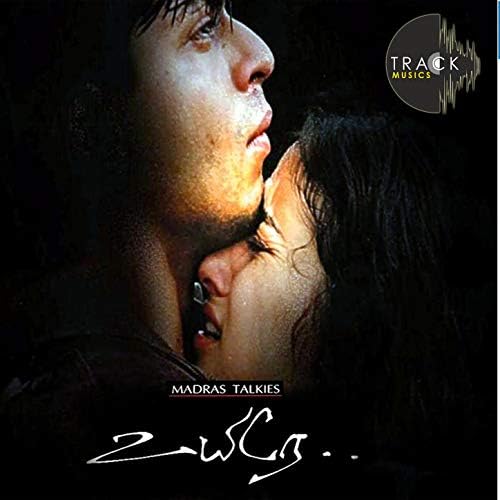
Rahman has a whole catalogue built on it. Sangam poets used it two thousand years earlier. Every third film song in the language reaches for it, and it has been repeated so often that it now sounds like nothing — the way sweetheart sounds like nothing.
Then Vairamuthu picks it up and shows you what has been sitting inside it the whole time.
என் உடல் பொருள் தந்தேன் சரண் புகுந்தேன் என் உயிரை உனக்குள் ஊற்றி விட்டேன் இதுதான் காதலின் ஐந்து நிலை நான் உன் கையில் நீர்த்திவலை
I gave my body, gave what I owned, and took refuge. I poured my life into you. These are the five states of love. In your hand, I am a droplet of water.
The separation this series made in Part 4 holds here too — the man is his own subject, the lines are mine — and I won't make it twice.
உடல், பொருள், ஆவி — body, wealth, soul. That triad comes straight out of saranagati, the total surrender a Tamil Vaishnava devotee makes to God, and சரண் புகுந்தேன் — I took refuge — is its technical verb. It belongs in a temple. Somebody put it in a love song and nobody objected, because in Tamil the border being crossed there has been open for a very long time.
Watch the order. Body and property go together in the first line, handed over in a single gesture, because they are the cheap part. The third item gets a line of its own and a different verb entirely: ஊற்றி விட்டேன் — poured. You hand over goods. You pour a liquid, and what you pour does not come back, and it takes the shape of whatever receives it.
Then the arithmetic — love's five states, counted out like a doctrine, in a language that has been numbering love in fives since the Sangam anthologies assigned it five landscapes.
And then the last line puts the whole surrender in perspective. நீர்த்திவலை. A droplet of water, in an open palm. Which is what a man who has poured out his uyir actually is: entirely held, and evaporating on a schedule that is no longer his to set.
That is Rumi's ambiguity made explicit and sung on a playback track. The Persians spent centuries refusing to say whether the Beloved was a woman or God. Tamil cinema borrows the liturgy for surrender, points it at a girl, and lets the theology stand.
Push on it and it stops being an endearment and turns into a claim about the structure of reality. If you are my uyir, then your leaving does not register as sadness, or heartbreak, or a bad season that time will handle. It registers as asphyxiation. Antony and Cleopatra again — there's beggary in the love that can be reckoned — because a love you can measure is a love with an outside, and uyir has no outside.
Which leaves the question of what survives it. Vairamuthu answers with weather, which is where Tamil has gone for this answer for two thousand years.
உன்னோடு நான் கண்ட பந்தம் மண்ணோடு மழை கொண்ட சொந்தம் காய்ந்தாலும் அடி ஈரம் எஞ்சும்....
The bond I found with you is the kinship rain keeps with the earth. Even after it dries, the damp stays underneath.
Kurunthogai 40 — the poem this series opened with — says that two hearts in love mingle like red earth and pouring rain. That is a statement about the moment of contact. It describes the mixing and stops.
Vairamuthu picks the poem up two thousand years later and asks the follow-up question, which is what happens in the dry season. காய்ந்தாலும் அடி ஈரம் எஞ்சும் — even when it dries, the damp remains underneath. The surface goes hard and pale and passable. A hand's depth down, the ground has not forgotten a thing.
Which is the reed again, put in agricultural terms. Cut it, dry it, burn holes in it, carry it a thousand miles from the marsh — and every note it produces is still describing water.
And Tamil built this into the language before it built it into the poetry. In Tamil grammar the vowels are called uyir — soul letters. The consonants are mei — body letters. A consonant on its own is a body with nobody home; it cannot be sounded. Put them together and you get uyirmei, soul-in-body, and only then does the letter speak.
A language whose grammarians decided that a vowel is a soul and a consonant is a body and that speech is the meeting of the two was always, eventually, going to call the person it loved uyire.
The word has been a diagnosis in an endearment's clothes all along, and Tamil has been handing it to lovers for two thousand years without warning them.
The Cut
Rumi's reed. The nameless girl in the hills measuring her love against the ocean. Viola inventing a sister so she can grieve out loud. A closeted twenty-four-year-old in a leather jacket writing hymns and letting the world hear a sex record. Guna in the cave, writing to a woman who cannot read the letter. Cheenu on the platform, doing the whole routine one more time for someone who has already forgotten it. Divya, married, in love with a dead man, given a year and no pressure. Rahman singing to a saint in the middle of a love story.
All of them are the same shape. Something was cut out. The music is what came through the hole.
The traditions that took love seriously — Persian, Tamil, Elizabethan, and one pop album from 1987 — all arrived at the same unglamorous finding, which is that the measure of love is what it costs you and not what it returns. Everything else is arithmetic, and Cleopatra already told you what she thinks of that.
The reed never goes back to the reed bed.
It just gets very good at describing it.
This essay lives in the Love series. The Shore of Longing is about the ache of the one who never arrived; She Loved You in Whole Sentences about the one who arrived, spoke plainly, and was misread; A Lifetime to Prove It about the looking that has to be done again tomorrow. This one is about what it costs to make the sound at all. The Last Couplet picks up the quarrel that comes after, and the thirty verses Valluvar chose to end on.