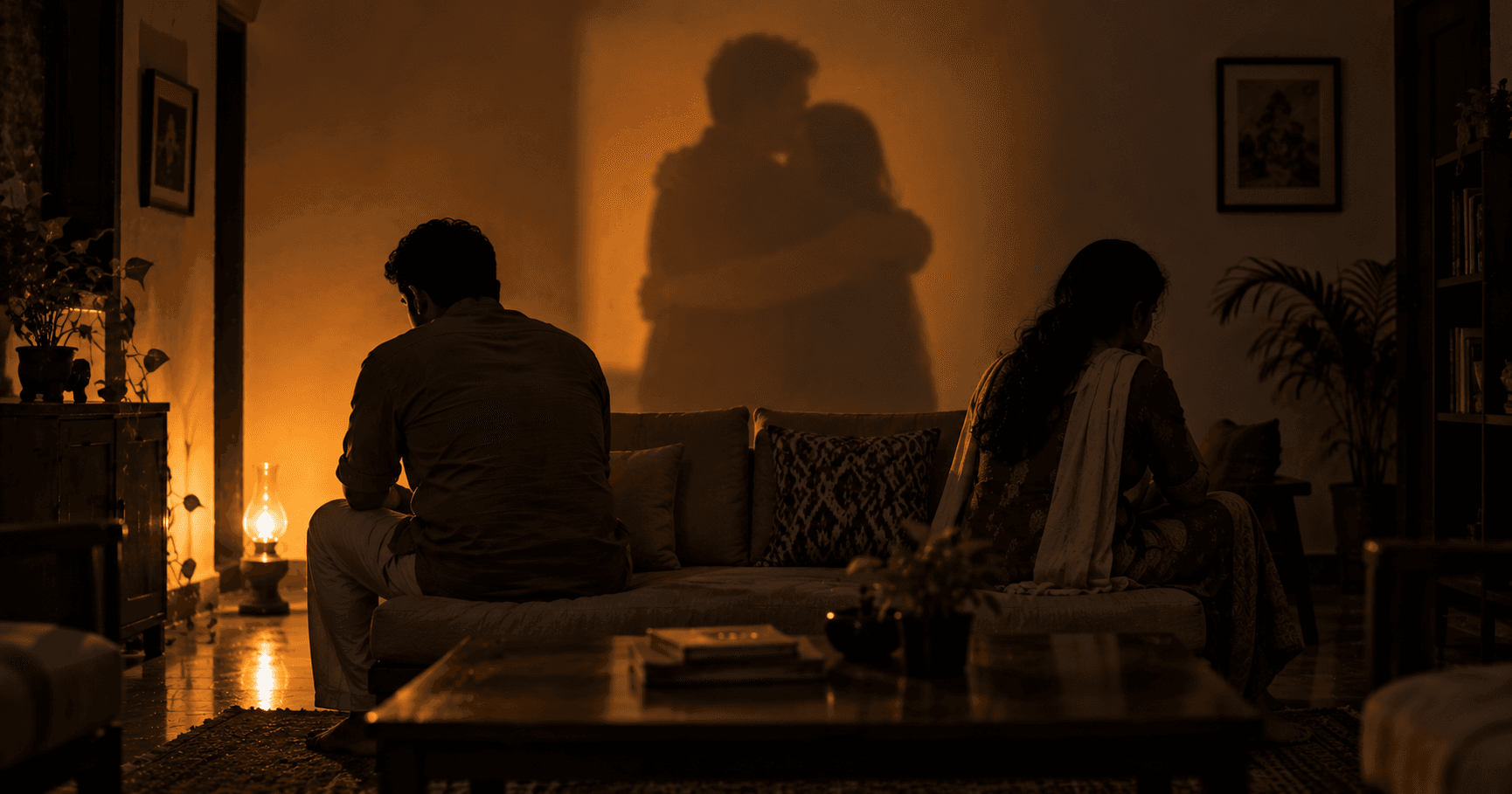
She told you. You just weren't listening.
Not because you're cruel. Not because you don't care. But because somewhere between the fairy tales and the film songs, you were taught to listen for the wrong things. You learned to listen for the confession — the dramatic I love you, the trembling lip, the violins swelling as the camera pulls back. You spent your whole life waiting for the subtitle.
You never learned to hear did you eat?
In Tamil, there's a word for it — sapttiyaa? It arrives without ceremony. Your mother says it when you walk in the door. Your grandmother says it before she says hello. It sounds like logistics. But it carries the entire weight of a woman's heart in two syllables — I noticed you exist, I've been counting the hours since your last meal, I will not rest until you are fed.
That's how women love. In whole sentences. In complete weather systems — the pressure, the humidity, the direction of the wind, the chance of rain at 4 PM. She hands you the entire forecast.
And you read sunny and pack shorts.
The Wedding and the Marriage

Mani Ratnam knew.
Mani Ratnam tells Alaipayuthey out of order — the wedding intercuts with the unravelling, the courtship bleeds into the fights, the timeline folds over itself like a letter read too many times. But inside that non-linear weave, there are two emotional halves, and every audience member knows exactly where one ends and the other begins.
The pre-marriage half is Karthik — Madhavan at his most charming, most reckless, most convinced that love is something you win. The rooftop. The rain. The chase through Chennai on a scooter, her dupatta flying, his grin widening, AR Rahman's "Snehithane" making the whole city feel like it was built for these two idiots to fall in love in.
And it works. Of course it works. Because Karthik is right about the feeling. He's wrong about what the feeling costs.
Shakti — Shalini, in the performance that should have won her every award that year — knows what he doesn't. She knows that the rooftop leads to a kitchen. That the rain dries. That the scooter runs out of petrol, and what's left is two people in an unfinished flat in Mylapore — no curtains, no furniture, just walls and pride — trying to figure out who pays the electricity bill when both of them are too stubborn to back down.
She marries him anyway. That's the devastating part. She sees the whole sentence — every clause, every comma, every footnote about what marriage actually demands — and she walks into it with open eyes. He walks in with a highlight reel.
And the song tells you everything about what Shakti actually wanted. Vairamuthu, writing "Snehithane," buried the truest lines beneath the melody's sweetness:
இதே அழுத்தம் அழுத்தம், இதே அணைப்பு அணைப்பு வாழ்வின் எல்லை வரை வேண்டும் வேண்டும்
This same intensity, this same embrace — I need it until the very edge of life.
That's all she asks. Not the rooftop once. Not the rain once. This same intensity, this same embrace — the exact same intensity, repeated, daily, until the end. She heard the song the same way he did. She just understood that Vairamuthu was writing a contract, not a chorus.
When the fights come — and Mani Ratnam makes them come hard, ugly, real — Karthik is bewildered. For him, love culminated at the wedding. The courtship was the whole movie; everything after was supposed to be credits rolling over a life that sorted itself out. Shakti knew the post-marriage half was coming. She just hoped he'd grow into it faster than he did.
The pre-marriage half of Alaipayuthey is how men love — in bursts, in grand gestures, in the conviction that the feeling itself is enough. The post-marriage half is how women love — in endurance, in daily choosing, in the quiet terror that the man who chased you through the rain won't stay for the drought.
The "Yet" He Invented
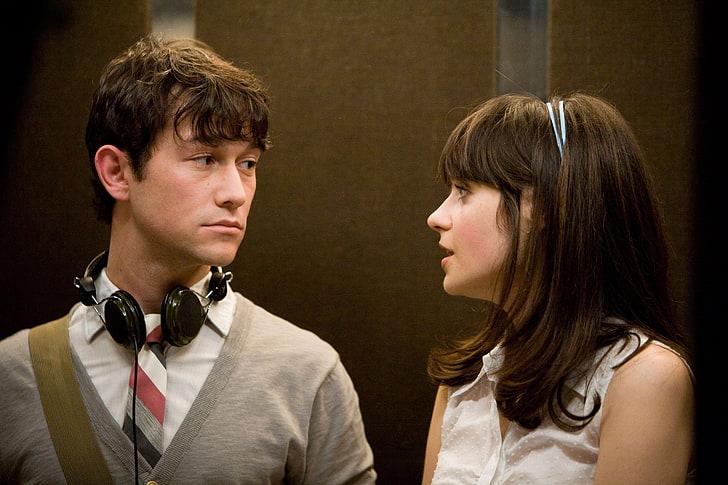
Cross the ocean. Los Angeles, 2009.
Tom Hansen meets Summer Finn at a greeting card company. She smiles at him in the elevator. The Smiths are playing on her headphones. He decides — right there, between floors two and three — that she is The One.
She tells him, clearly, on their first real conversation: I don't believe in love. I'm not looking for anything serious.
He hears: she doesn't believe in love yet.
That "yet" is entirely his invention. The most dangerous word a man adds to a woman's sentence. She says I don't want this. He hears I don't want this yet. She says I'm not ready. He hears I'm not ready but I will be, because I'm the one who'll change her mind.
Marc Webb splits the screen — Expectations on one side, Reality on the other. Tom arrives at Summer's party expecting the reconciliation scene. The door opens, the music swells, she smiles at him across the room. On the Reality side, she's with someone else. She's happy. The someone else is not a mistake or a placeholder. He's the person she actually chose when she was ready — which she told Tom she wasn't, and Tom decided was a temporary condition.
500 Days of Summer is a documentary about how men narrate women into roles they never auditioned for. Tom loves the version of Summer that exists in the movie he's been directing in his head since the elevator. When the real Summer — the one who told him the truth on day one — doesn't match the screenplay, he calls it heartbreak.
She calls it Thursday.
She Read the Whole Sentence
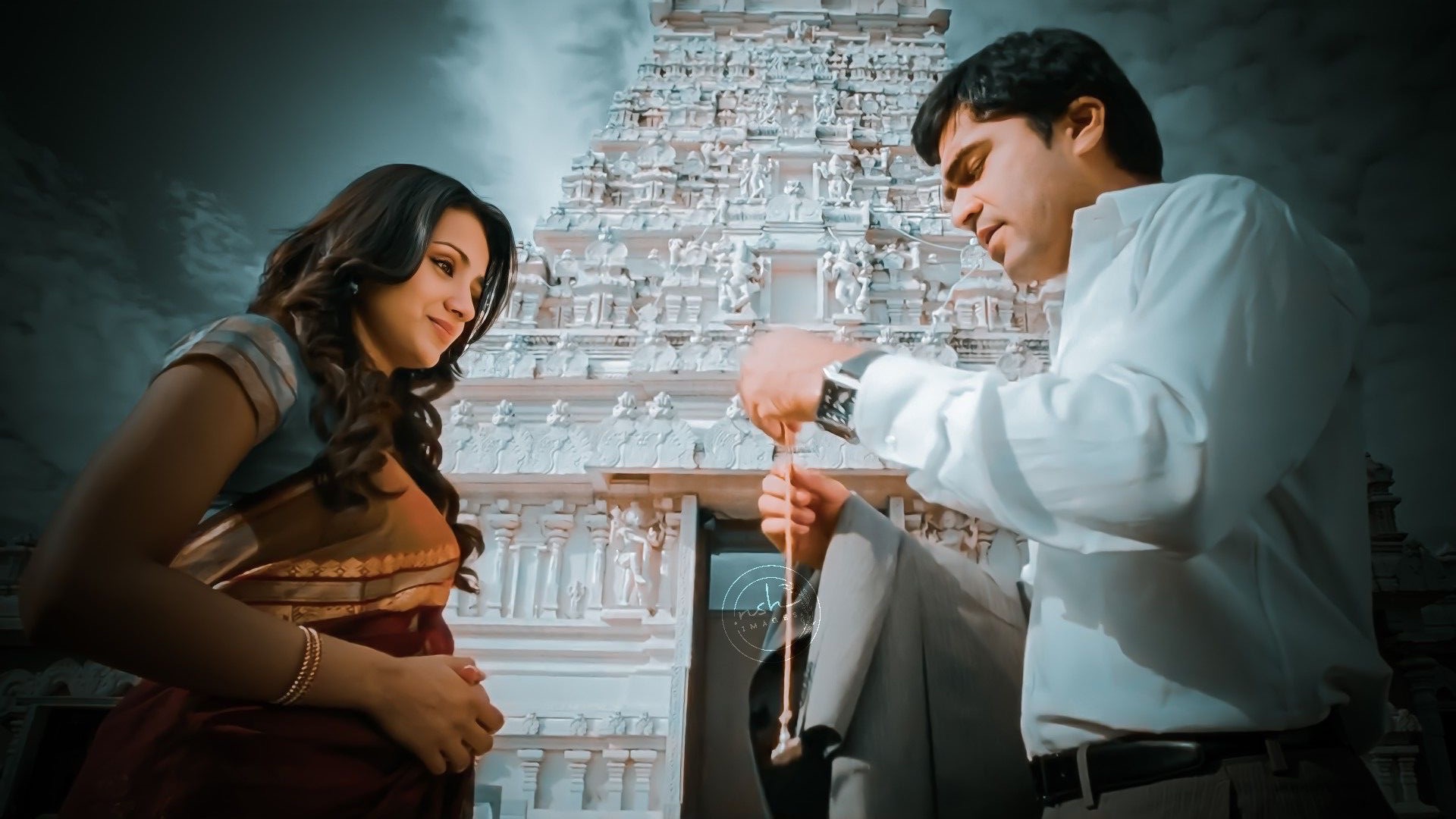
Back to Chennai. 2010.
Jessie stands on a balcony and looks at Karthik — Simbu, uncharacteristically restrained, playing a man who feels more than he understands — and she sees everything. She sees the love. She sees the talent. She sees the ambition that will consume him and the religion that will separate them and the family that will break before it bends.
Gautham Vasudev Menon's Vinnaithaandi Varuvaaya is often read as a tragic love story. Boy meets girl, religion divides them, life wins. But watch Trisha's performance again. Watch her eyes in the balcony scenes. Watch what she does when Karthik says he'll fight for them.
She sees past the love to his reading comprehension — and finds it wanting.
He sees one sentence: I love her and she loves me. She reads the whole paragraph: He loves me, and I love him, and my father will disown me, and his career will swallow everything, and we will be beautiful and broken within three years, and I will carry the weight of both families' grief while he carries the camera.
"Mannipaya" — will you forgive me — is the song that plays between them. Thamarai's lyrics tell you everything:
கடலில் மீனாக இருந்தவள் நான் உனக்கென கரை தாண்டி வந்தவள் தான் துடித்திருந்தேன் தரையினிலே திரும்பிவிட்டேன் என் கடலிடமே I was a fish in the sea. I crossed the shores for you. Trembling on the sands, I returned to my sea.
That's Jessie's entire arc in four lines — a woman who left everything familiar, stood shaking in the open air of love, and walked back into the water because she could see the shore wasn't safe. Both of them are asking for forgiveness, but for different things. He's asking forgiveness for not being enough. She's asking forgiveness for seeing too clearly.
That's the cruelty of how women love. They see the whole weather — the storm and the calm and the years of grey drizzle in between — and they have to decide whether to step outside anyway. Men only check if it's raining right now.
The Photograph and the Woman
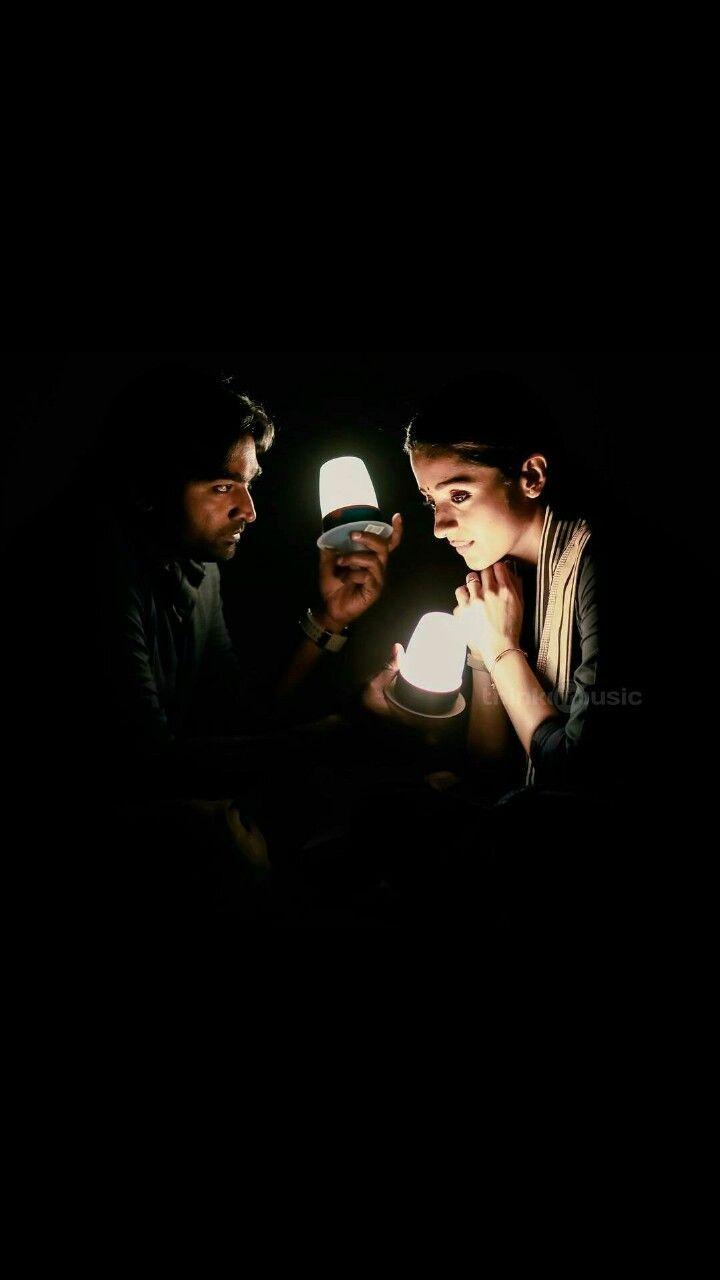
Now the one that cuts closest.
Ram — Vijay Sethupathi in 96 — has carried a photograph in his head for twenty-two years. Jaanaki as she was at sixteen. The girl who sat two benches ahead in class. The one he never told. The one who became the unit of measurement against which every other woman fell short — not because they weren't enough, but because they were real, and the photograph doesn't age, doesn't argue, doesn't ask you to take out the trash.
When they meet again — the school reunion, the hotel room, the night that stretches like taffy — Ram is looking for the photograph. He has rehearsed this meeting for two decades. He knows exactly how it goes.
Jaanu — Trisha, in the performance of her career — is not the photograph. She is a woman. She has married, raised children, buried the compromises that marriage demands, made peace with a life that is ordinary and sufficient and nothing like the love story Ram has been writing in his head since 1978. She has lived. He has remembered.
And here is the thing 96 gets so right it hurts: Jaanu still loves him. Twenty-two years later, the feeling is still there, alive and breathing under all that life. But her love has grown up. It has stretch marks. It has school fees and in-laws and the quiet exhaustion of being a woman who chose responsibility over romance.
His love is still sixteen.
She sits across from him and sees a man who preserved her in amber — beautiful, flattering, and completely disconnected from who she became. He loves his memory of her. And the tragedy is that she can see this, and he can't, and she loves him anyway, and she lets him keep the photograph because taking it away would destroy the only version of himself he's ever liked.
That is women's love. She protects even the illusion that erases her.
The Letter She Couldn't Read

Nicole Barber sits in a lawyer's office in Los Angeles, holding a letter.
The letter is about her marriage. About Charlie — Adam Driver, massive and gentle and oblivious in the way only brilliant men can be. About how she moved from LA to New York for his theatre company. How she stopped auditioning for the roles she wanted. How she decorated their apartment in his taste, laughed at his friends' jokes, became the sun in his solar system until she realized she had no orbit of her own.
Noah Baumbach's Marriage Story asks you to do the hardest thing a film can ask: hold two truths at once. Charlie loves Nicole. Charlie has also, over the course of their marriage, gently and thoroughly erased her. With assumption, not cruelty. He assumed she was happy because she was present. He assumed she agreed because she didn't fight. He assumed the life they built was theirs because it was built in his city, around his career, inside his definition of what a good life looked like.
She couldn't read the letter aloud. The lawyer read it for her. And in the courtroom, when the arguments got ugly and the lawyers turned their love into line items, the real wound wasn't infidelity or neglect. The real wound was this: she had been telling him for years, in sentences he never finished reading.
I'd like to direct.
He heard: she has a hobby.
I miss LA.
He heard: she's homesick, it'll pass.
I feel like I've disappeared.
He heard: she's having a bad week.
She spoke in paragraphs. He skimmed.
Patience Is Not a Lockpick
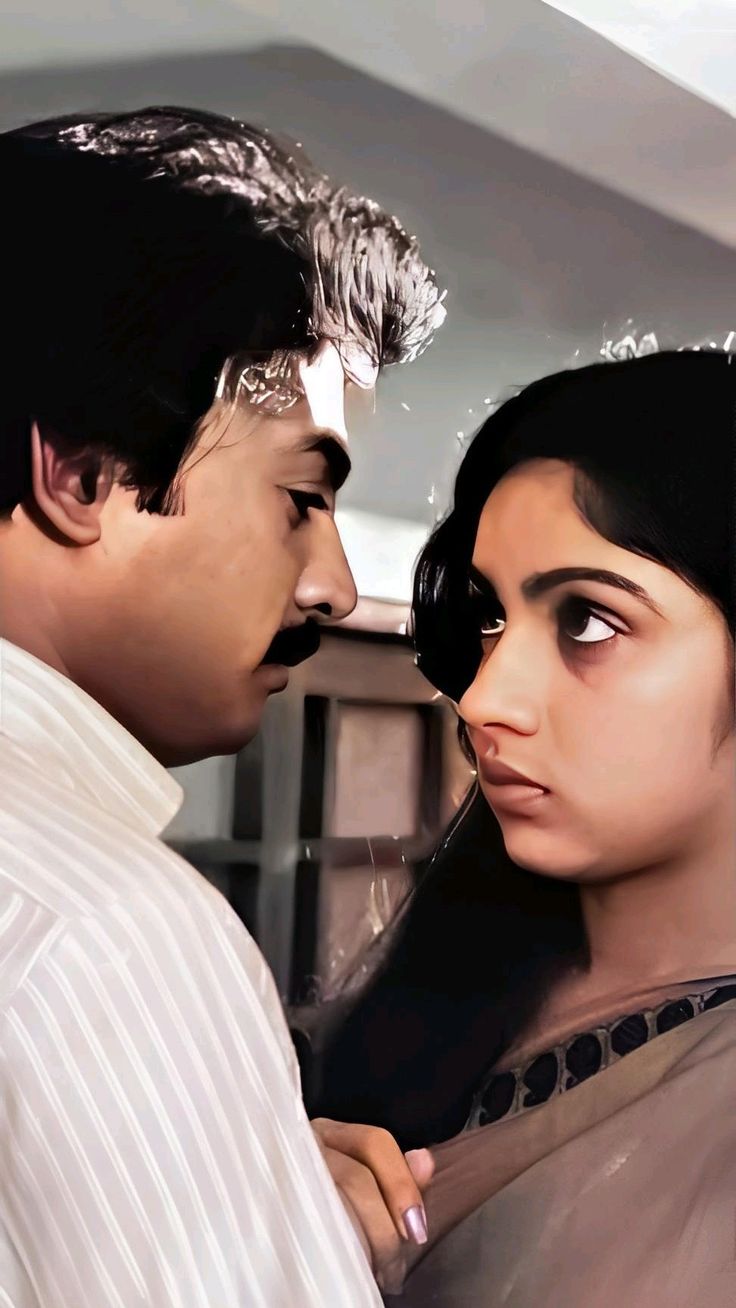
Chandrakumar — Mohan, quiet and decent and utterly lost — marries Divya in Mouna Ragam. She is in love with a dead man. He knows this. He marries her anyway, believing that patience and kindness will, over time, earn her love.
And here is where Mani Ratnam does something most filmmakers wouldn't dare. He makes Chandrakumar good. Genuinely, painfully good. He gives her space. He doesn't push. He waits by the jasmine, the Mullai hero of Part 1's tinai, believing that the evening breeze will eventually carry his name.
And Revathi — in a performance made of silence and held breath — makes you feel the cost of being on the other side of that patience. She tells him his touch feels like a caterpillar crawling on her skin. She doesn't say it to wound him. She says it because it's true, and because no one else in her life has asked her what she actually feels.
Here is what Mani understood that most love stories don't: Chandrakumar is doing nothing wrong. His patience is real. His love is real. He's not manipulating her — he is simply waiting in a language she hasn't learned to hear yet. And she is grieving in a language he hasn't learned to read. Two people speaking whole sentences past each other, both honest, both incomplete.
What makes Mouna Ragam extraordinary is that he eventually learns. He stops waiting for her and starts seeing her — not as a woman who will someday recover, but as a woman whose heart carries a garden he didn't plant. And when she finally turns toward him, it's not because she ran out of grief. It's because he finally read the whole sentence.
You See Her by the Hole She Leaves

Joel Barish — Jim Carrey without the mask, just a man standing in the wreckage of his own memory — decides to erase Clementine from his mind.
While he had her, she was too much. Too loud. Too impulsive. She dyed her hair blue and orange and green. She said exactly what she felt at the worst possible moments. She was exhausting and alive and he spent half their relationship wishing she would be quieter.
Michel Gondry's Eternal Sunshine of the Spotless Mind begins where most love stories end — in the decision to forget. Joel and Clementine go to Lacuna Inc. and have each other surgically removed from their brains. Clean. Efficient. No mess.
But inside Joel's head, as the memories dissolve — as the beach house crumbles, as the bookstore fades, as Clementine's voice gets softer and softer — he panics. He doesn't want to lose her. Not the edited version. Not the highlight reel. Her. The mess. The 3 AM fights. The blue hair he called ridiculous. The woman who was too much is suddenly not enough — there isn't enough of her left to hold onto.
He runs through his own memories trying to hide her in places the machine won't look. Under the kitchen table where he hid as a child. In the humiliation of a childhood bath. He smuggles her into his shame, his most private corners, because those are the only places the eraser hasn't reached.
Meet me in Montauk.
She whispers it as the last memory dissolves. Men love like this. They see the shape of what a woman gave them only by the hole she leaves. She was the weather, and he spent the whole time complaining about the rain, and now there's no weather at all — just a flat, sterile, temperature-controlled silence — and he'd give anything to be wet again.
Love as Condescension
England, 1813. A ballroom in the rain.
Fitzwilliam Darcy, dripping wet, stands before Elizabeth Bennet and delivers the worst proposal in the history of the English language.
He tells her he loves her despite her family. Despite her station. Despite everything she is and comes from. He has struggled with his feelings — struggled — because loving her is, by his own reckoning, an act of charity. A man of his standing, lowering himself to love a woman of hers. He presents this as the depth of his feeling. He expects gratitude.
Elizabeth hears what he's actually saying: You are beneath me, and my love is proof of my generosity, not your worth.
She destroys him with one question: Could you have expected me to rejoice in the inferiority of your connections?
Jane Austen understood — two centuries before Marriage Story, before 500 Days of Summer, before the therapist's office — that the most common way men get love wrong is by making the woman the object of their narrative instead of the author of her own. Darcy doesn't see Elizabeth. He sees the feeling she causes in him. The distinction is everything.
To his credit — and this is why Austen gave us one of the few men in literature who actually grows up — Darcy listens. He reads her letter. He reads every sentence. He doesn't add a "yet." He doesn't wait for her to come around. He changes. Not for her, exactly, but because of her — because she showed him who he was, and he didn't like the portrait.
That is the rarest thing a man can do: read the whole sentence and revise himself.
The Woman Who Loved Recklessly
And then there's Amy Winehouse.
Amy didn't love in whole sentences. She loved in confessions. Raw, unedited, blood-on-the-page confessions that made no attempt to protect herself or anyone else. "Back to Black" is a Neithal song stripped of all the shore's dignity — no punnai trees, no herons in the shade. Just a woman walking into grief like she's walking into a burning building, knowing exactly what's on the other side.
We only said goodbye with words / I died a hundred times.
Blake Fielder-Civil was the man. The specifics don't matter. What matters is this: Amy loved the way the Kurunthogai heroine dissolved — like sea-foam against rock, mella mella, bit by bit. But the heroine didn't choose it. Amy walked toward it. She read love perfectly — every clause, every cost — and decided the fire was worth the burn.
The world watched her destroy herself and called it a cautionary tale. But listen to "Love Is a Losing Game" — her voice on the word game, the way it breaks exactly once, in exactly the right place. That's precision. Knowing what love was costing her, line by line, and singing the invoice.
Men loved Amy Winehouse's music and pitied her life, which is the most male response to a woman's love imaginable: admire the art, miss the person.
She Saw the Exit and Stayed
Tracy Chapman sits in a car in 1988 and sees the whole escape route.
"Fast Car" begins with a woman who has every reason to leave — an alcoholic father, a dead-end town, a life calcifying around her. She meets a man. They drive. The car is freedom. The velocity is love. For three minutes, the song is a highway.
And then.
He doesn't drive toward somewhere. He drives in circles. He becomes the thing she was trying to escape — the bar every night, the television, the slow settling into exactly the life she was running from. She saw the whole sentence. She married the first word and hoped the rest would rewrite itself.
You got a fast car. Is it fast enough so we can fly away?
The "we" carries the whole tragedy. She never planned to escape alone. She wanted to take him with her. She loved him enough to build the exit for two. He loved her enough to stay — and staying, for him, meant stopping.
Every woman who has ever loved a man with potential knows this song by heart. You see the road. You see the speed. You see the man who could drive you somewhere extraordinary. And you wait. And you wait. And the car is still running, and he's still in the driver's seat, and you're both going nowhere, and the tank is almost empty, and you realize the fast car was always yours. He was just the passenger who convinced you to idle.
What Remains
The Kurunthogai heroine dissolved like sea-foam, and her lover probably thought the tide was just being dramatic. Shakti stayed in the marriage, kept the unfinished flat alive with her bare hands, and Karthik still wonders why the rooftop stopped feeling like it used to. Jessie — Thamarai's fish — crossed the shore, trembled on the sand, and swam back to her sea, and Karthik is still standing on the beach wondering why the water left.
Jaanu let Ram keep the photograph because she knew he'd never be able to carry the woman. Nicole wrote her whole marriage into a letter and couldn't read it aloud — not because she was weak, but because Charlie had never once sat still long enough for the full sentence. Divya told Chandrakumar his touch felt like a caterpillar on her skin, and he heard it, and he stayed, and he learned — slowly, painfully — to read the grief instead of waiting for it to expire. Clementine whispered meet me in Montauk as Joel was erasing her, planting a sentence inside a man who was busy deleting the whole paragraph. Elizabeth handed Darcy a mirror disguised as a letter, and for once — for once — a man read every line and revised himself.
Amy walked into the fire and sang the invoice. Tracy saw the exit and loved him enough to idle.
Every one of them said it clearly. In whole sentences, with grammar and punctuation and weather reports and footnotes. Some of them were heard. Most of them were not. The ones who were heard — Shakti, eventually; Divya, eventually; Elizabeth — were heard by men who stopped listening for the words they wanted and started reading the words that were there.
That's all any of them were asking. Not for grand gestures. Not for airport chases or boomboxes under windows. Just this: read what I wrote, not what you wish I'd written.
She loved you in whole sentences. You only ever read the first word.
And years from now, when the house is quiet and the jasmine has bloomed and faded a hundred times and the rice has gone cold on the stove, you will sit somewhere alone and try to remember what she said. You'll replay the conversations, the fights, the silences. You'll hear her voice saying I'm fine and finally understand she was handing you an entire weather system in two words. You'll remember the way she stopped fighting and realize she wasn't surrendering — she was packing, slowly, invisibly, one emotional suitcase at a time. By the time the door closed, she'd been gone for months. You just didn't notice because her body was still in the room.
The shore is still there. The jasmine still blooms at dusk. And somewhere, in a language you should have learned by now, a woman is saying the most important sentence of your life.
She won't say it twice.
This essay lives in the Love series — on how Tamil poets, French songwriters, and the rest of the world keep mapping the same terrain. If you haven't read The Shore of Longing, start there — it's where the sea-foam dissolves and the eyes refuse to sleep.