Rithanya was 27 years old. She died on June 28, 2025—seventy-eight days after her wedding.
Her family had given 300 sovereigns of gold and a Volvo worth ₹70 lakh. It was not enough. Her in-laws wanted 200 more sovereigns. When she could not deliver, she was tortured—locked inside the house, harassed, assaulted. Before she died, she sent her father seven audio messages. In one of them, she said: "I can't live with him. He and his family are criminals. They planned to destroy my life."
Two days later, in Ponneri, 25-year-old Logeshwari was dead. Four days into her marriage. Her in-laws had demanded ten sovereigns of gold. Her family could only provide nine. They harassed her over the missing sovereign and an air conditioner. She died in her parents' bathroom.
In August, Nikki Bhati, 28, was burned alive in Greater Noida. Her husband doused her with a flammable liquid and set her on fire while their young son watched. The boy later told neighbours: "They poured something on my mother, slapped her, and then set her on fire with a lighter." Her family had already given a Scorpio, a Bullet motorcycle, and jewellery. The in-laws had recently been demanding a Mercedes.
These are not isolated tragedies. These are data points in a system that runs on the bodies of women.
The Numbers Behind the Violence
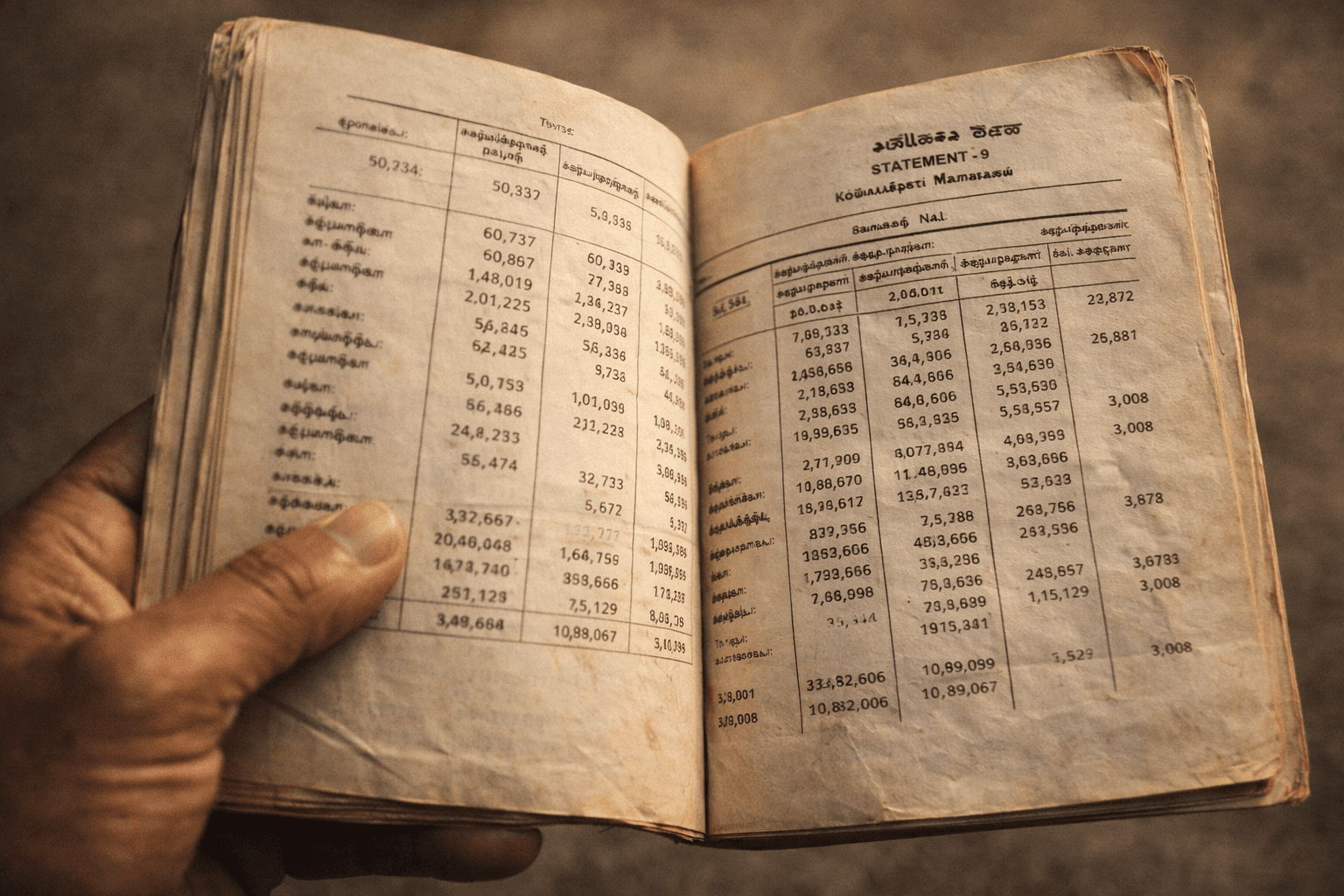
According to India's National Crime Records Bureau, 6,450 dowry deaths were recorded in 2022. That is roughly 18 women killed every day—one every 80 minutes. Between 2018 and 2022, nearly 35,000 women lost their lives to dowry-related violence.
An average of 20 women die every day from dowry-related violence in India. The practice has been illegal for over six decades.
Tamil Nadu, a state that prides itself on literacy and progressive politics, records at least two dowry deaths every month. In 2024 alone, 26 dowry-related suicides were documented. The victims are increasingly young and educated. Rithanya was an MBA graduate. Logeshwari was 25.
What makes these numbers worse is the impunity. Of the roughly 7,000 dowry deaths reported annually, only around 4,500 are even charge-sheeted by police. In Bengaluru, between 2011 and 2024, only 13 out of 610 cases ended in conviction—a rate of 2%. Sixty-seven percent of cases remain stuck at trial.
The law exists. Enforcement does not.
The Machinery of Control
Dowry was never about tradition. It was always about power.
In its earliest form—stridhan—wealth given to a bride was meant to be hers. Security. Independence. Over centuries, this inverted. By the medieval era, dowry had become a transaction between families, a price paid by the bride's side to secure a "better" match. Women were no longer the recipients of wealth. They became the collateral.
Colonial law hardened this. British codification largely excluded women from property inheritance, making dowry the only form of wealth they could expect. The rise of salaried jobs under the Raj created a market for grooms—civil servants, officers, clerks. A government posting could command an extravagant dowry. Marriage became a business.
This is the system we inherited. And this is the system that continues today, disguised as "gifts," normalised as culture.
A World Bank study of 40,000 marriages in rural India between 1960 and 2008 found that dowry was paid in 95% of cases. The Dowry Prohibition Act has been in force since 1961. It has not made a difference.
What Keeps the System Alive
Patriarchy is not abstract. It is granular. It is reproduced in the smallest acts of everyday life—who eats first, who speaks, whose education is prioritised, whose dreams are postponed.
Boys are raised to believe they are the centre of the household. Girls are raised to adjust, accommodate, sacrifice. By the time they reach marriage, women have been trained for decades to endure. And when endurance fails, they are blamed for not trying hard enough.
The families of the victims often become accomplices. Rithanya's father admitted to sending her back to her abusive in-laws multiple times because "samaaj"—the community—had given assurances. When asked why he paid such an extravagant dowry, he said: "We have to live by social norms."
This is how the system perpetuates itself. The fear of social judgement is stronger than the fear of losing a daughter. The shame of divorce is worse than the shame of death.
Violence within marriage is still largely viewed as a "private matter." Women are expected by their own families to adjust to the realities of the marital home—which is now their only home.
There is also something deeper at work. In one of her final messages, Rithanya said: "There is only one man for one woman. In this birth, I got married once, and my life is not good. That's all. It is over." She could not imagine walking away because she had been taught that chastity—remaining with one man—was worth more than her life.
This is not a failure of individual women. This is the success of a system designed to trap them.
The Myth of Progressive States
Tamil Nadu is often held up as a model of social progress. High female literacy. Better maternal health. More girls in school.
And yet, educated women keep dying.
Preethi was 24, from Tiruppur. Her family gave 120 sovereigns of gold, ₹25 lakh in cash, and an Innova car worth ₹38 lakh. When her in-laws learned that her ancestral property was to be sold for ₹50 lakh, they began harassing her for that too. She died in August 2025.
Priyadharshini was 28, from Madurai. Her family gave over 100 sovereigns of gold. It was not enough. She died in September 2025.
Education does not protect women if it does not teach them to leave. Economic development does not save women if the economy still treats them as burdens to be paid off. Welfare schemes do not matter if the underlying power structures remain unchallenged.
Progress is hollow when women are still dying in its name.
What Would Change Look Like?
Laws alone will not fix this. India has laws—Section 80 of the Bharatiya Nyaya Sanhita criminalises dowry deaths, Section 85 addresses cruelty by husbands and relatives. The problem is not the law. The problem is that society never intended to obey it.
Change will require something harder than legislation. It will require families refusing to give dowry. It will require grooms who reject the transaction. It will require parents who teach their daughters that walking away is not failure—it is survival.
It will require normalising divorce, normalising single women, normalising the idea that marriage is not the endpoint of a woman's life.
And it will require men who understand that their value does not come from what they can extract, and women who understand that their worth does not depend on what they can bring.
None of this will happen quickly. The system has been in place for centuries. It is embedded in rituals, reinforced by cinema, celebrated in weddings. It will not collapse overnight.
But it can be eroded. One family at a time. One refusal at a time. One woman who chooses to live instead of endure.
What Periyar and Bharathi Already Knew
We speak of this as though the ideas are new. They are not. Tamil Nadu had the thinkers. It chose not to listen.
Periyar saw marriage for what it was — a contract designed to transfer a woman from one man's ownership to another's. He did not just criticise it. He built an alternative. The Self-Respect Marriage movement, which he launched in the 1920s, stripped away the priests, the rituals, the Sanskrit verses that the bride could not understand and the groom did not care to. In their place: two people standing as equals, declaring their partnership in a language they spoke, before witnesses who respected them. No divine authority required. No intermediary between two human beings choosing each other.
Periyar's argument was precise: if marriage requires a priest to be valid, then the institution belongs to the priest, not to the couple. If it requires the father to "give away" the bride, then the woman is property being transferred. If it requires dowry, then the transaction is commercial, not emotional. Strip all of that away, and what remains? Two people. Mutual consent. That is enough.
Subramania Bharathi arrived at the same destination from the opposite direction — not through political confrontation but through poetry and longing. His Puthumai Penn, the New Woman, walks with her head held high, looks the world in the eye, and refuses to be diminished. "Seeking alms we shall not stand," he wrote. "Nor shall we bow our heads." He imagined a Tamil woman who was educated, fearless, and free — not because a man permitted it, but because freedom was her birthright.
Bharathi wrote about love the way it should be written about — as a force between equals. His Kannan and Kannamma are not master and servant. They are companions. They argue, they tease, they challenge each other. There is no submission in Bharathi's love. There is fire.
Between them, Periyar and Bharathi drew the blueprint for what marriage could be. One dismantled the cage. The other imagined the sky.
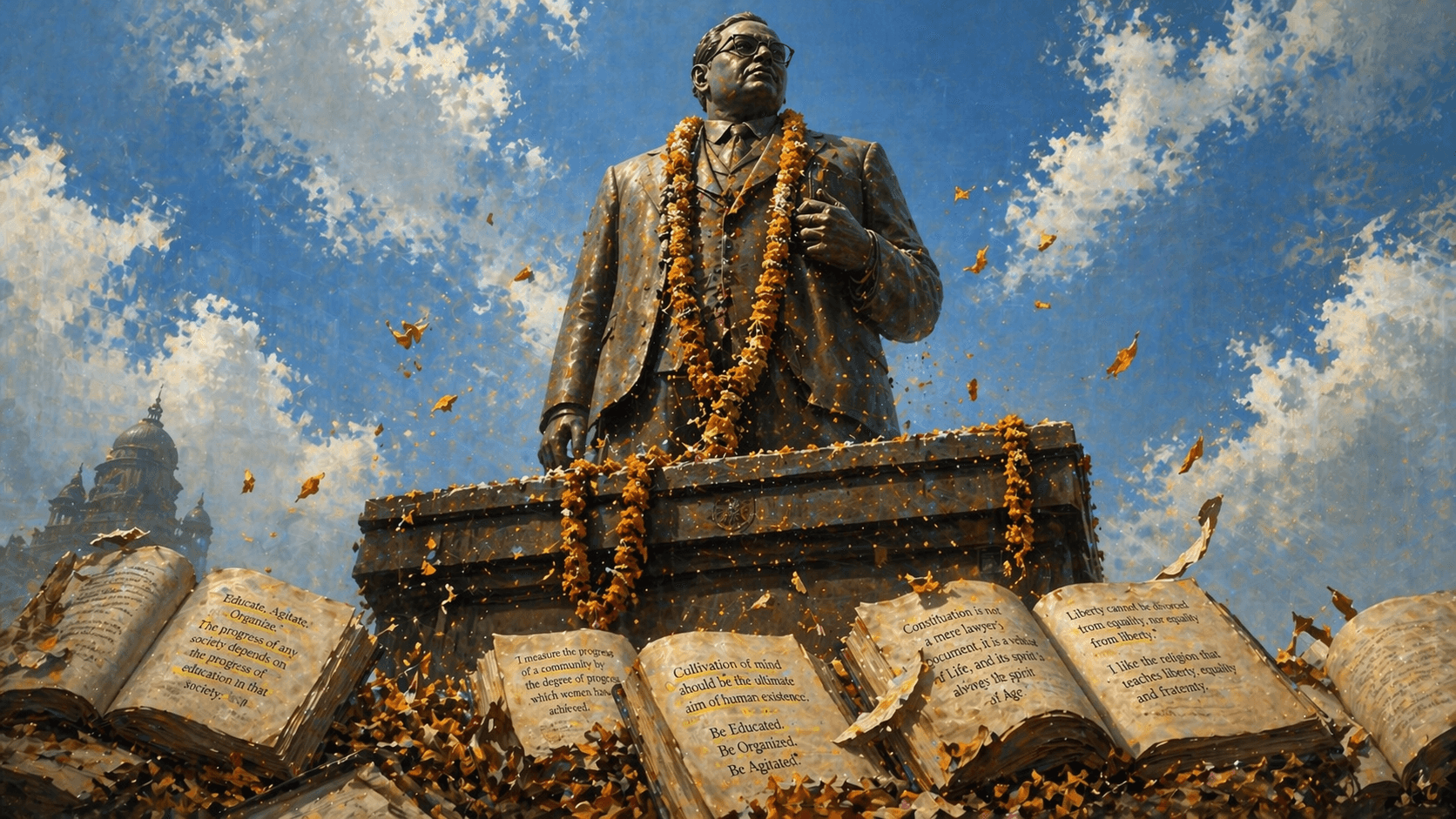
Tamil Nadu built statues of both. It followed neither.
What Love Actually Looks Like
Love is probably the most extraordinary emotion shared across living beings. Birds pair for life. Elephants grieve their dead. Wolves raise their young together. Across every species that bonds, the pattern is the same — presence, protection, partnership. Never ownership. Never control.
A relationship, at its core, is about mutual understanding, mutual love, and mutual respect. Two people, hand in hand, walking in the same direction. Partners — never master and dependent, never owner and owned. Equal human beings who chose each other and keep choosing each other, every day, because they want to, not because a contract or a ritual or a family's honour demands it.
If you want to legalise that partnership with marriage, go ahead. Celebrate it. Invite your families. Exchange rings or garlands or vows in whatever language moves you. Marriage can be beautiful when it is a celebration of something that already exists between two people.
But the moment marriage becomes a mechanism of control — the moment it is used to trap, to extract, to dominate — it has betrayed its only purpose. Any man who uses marriage as a tool of ownership over another human being is a disgrace to the institution and to himself. Any family that treats a daughter-in-law as a transaction has confused commerce with companionship. Any tradition that demands a woman's silence, her suffering, her life — that tradition deserves to die.
Love does not need a contract to be real. But it needs equality to survive.
A free woman is not a threat.
She is just free.
That should not be remarkable. That should be ordinary.
We are not there yet. But we must get there.
Because the alternative is more names. More audio messages. More daughters who sent their last words to fathers who could not save them.
And that is not a tradition worth preserving.
If you or someone you know is facing domestic violence or mental health crisis, reach out to these helplines: Sneha Suicide Prevention Centre (044-24640050), State Health Helpline (104), Tele-MANAS (14416), National Commission for Women Helpline (7827-170-170).