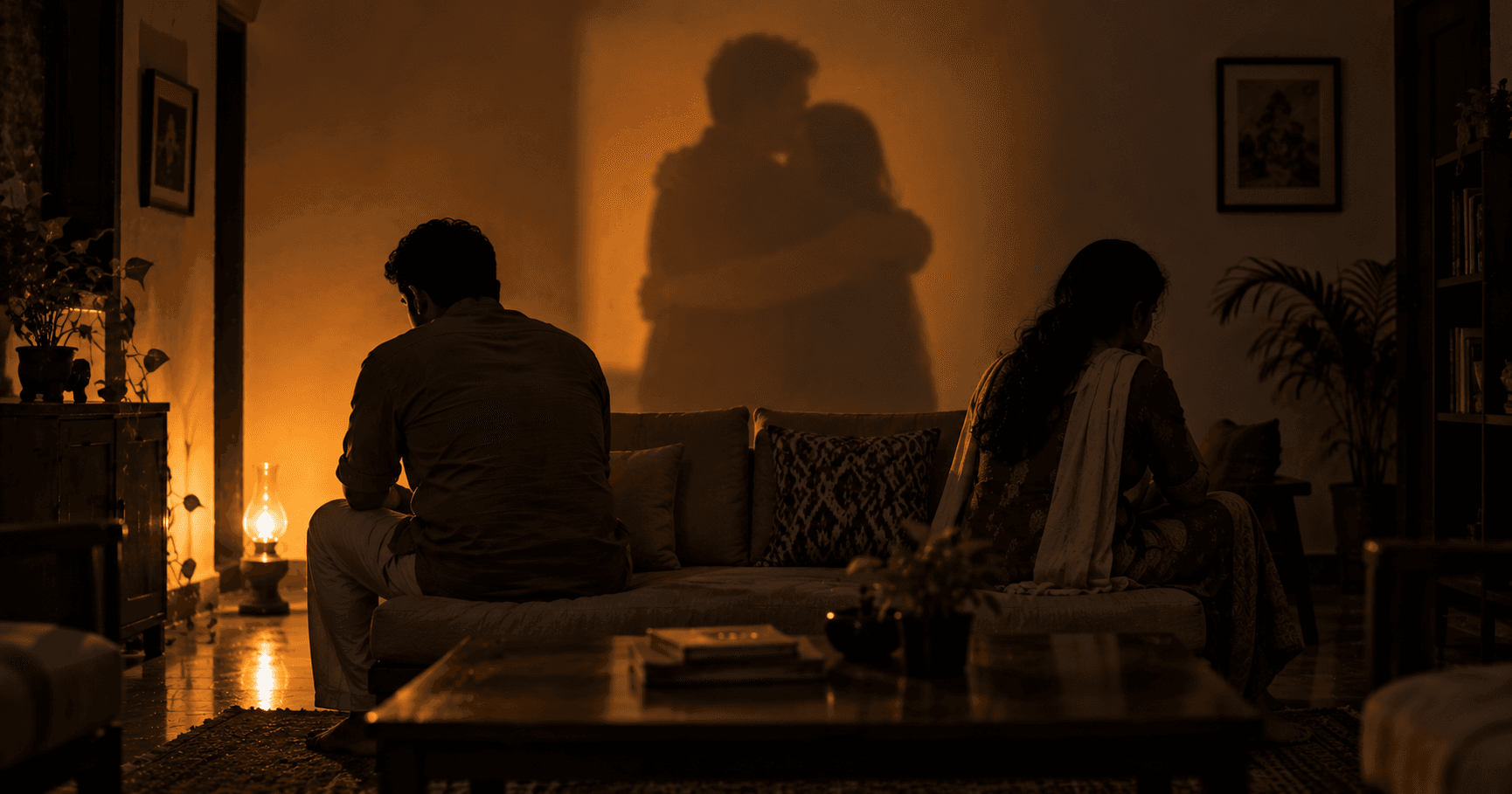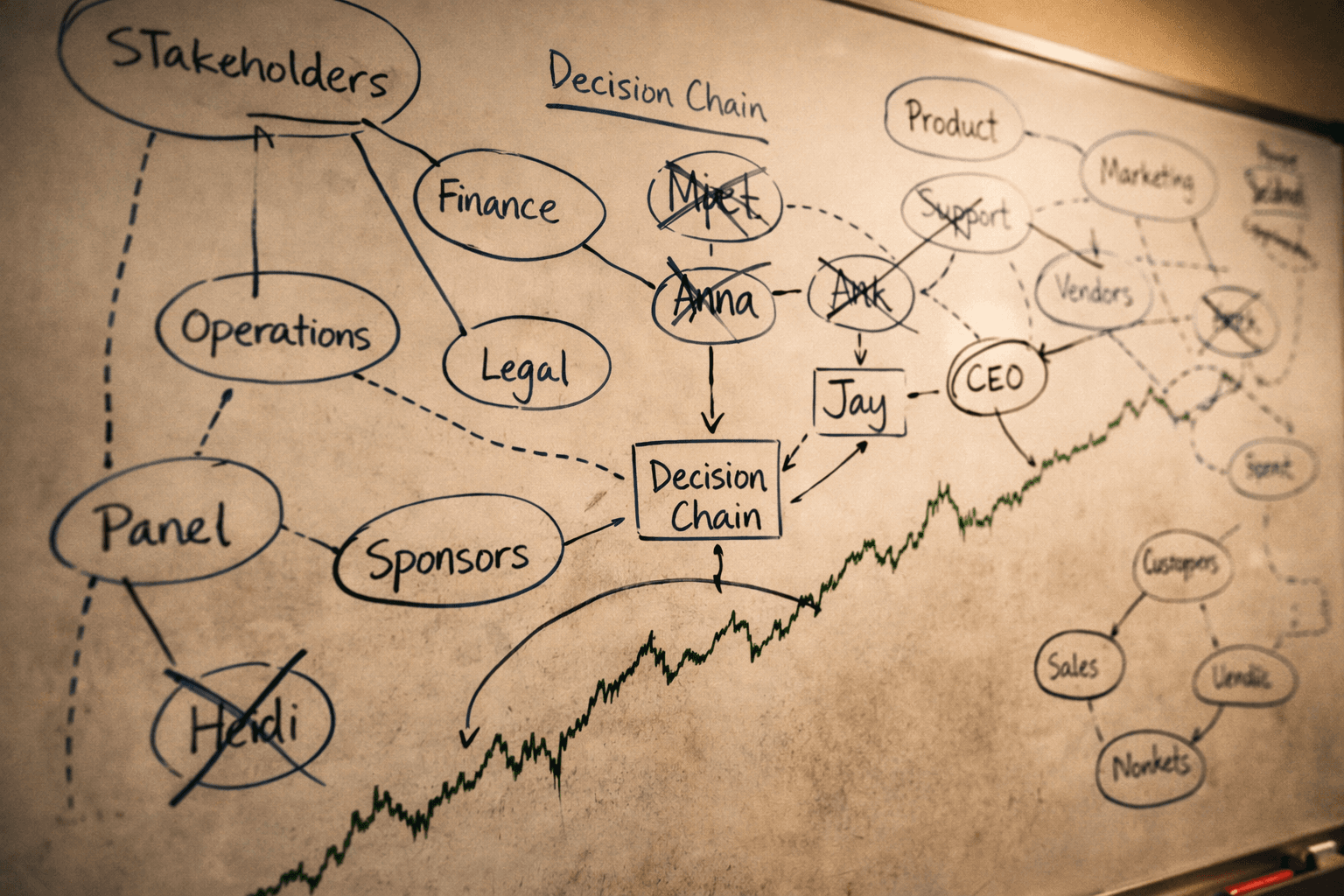
In Part 5, Jack screamed in a parking lot. He wanted to go back to the island because he couldn't survive the world without it. He was a man who had lost his purpose and mistaken the loss for a death sentence.
He goes back. They all go back. And the island, which has never been sentimental about the people it summons, gives Jack exactly what he asked for — one more chance to carry something that matters. The catch is the same catch it has always been: the carrying will cost him everything.
Season 6 takes Jack to the bottom of the world. Not metaphorically. There is a cave. There is a light. There is a stone plug holding the light in place. And there is a man who finally understands that some things cannot be fixed or escaped or screamed about in parking lots. They can only be held.
The Cork
Jacob — the island's guardian, the invisible hand behind every thread of the story — explained it once, simply, the way you explain something to someone who has to carry it next.
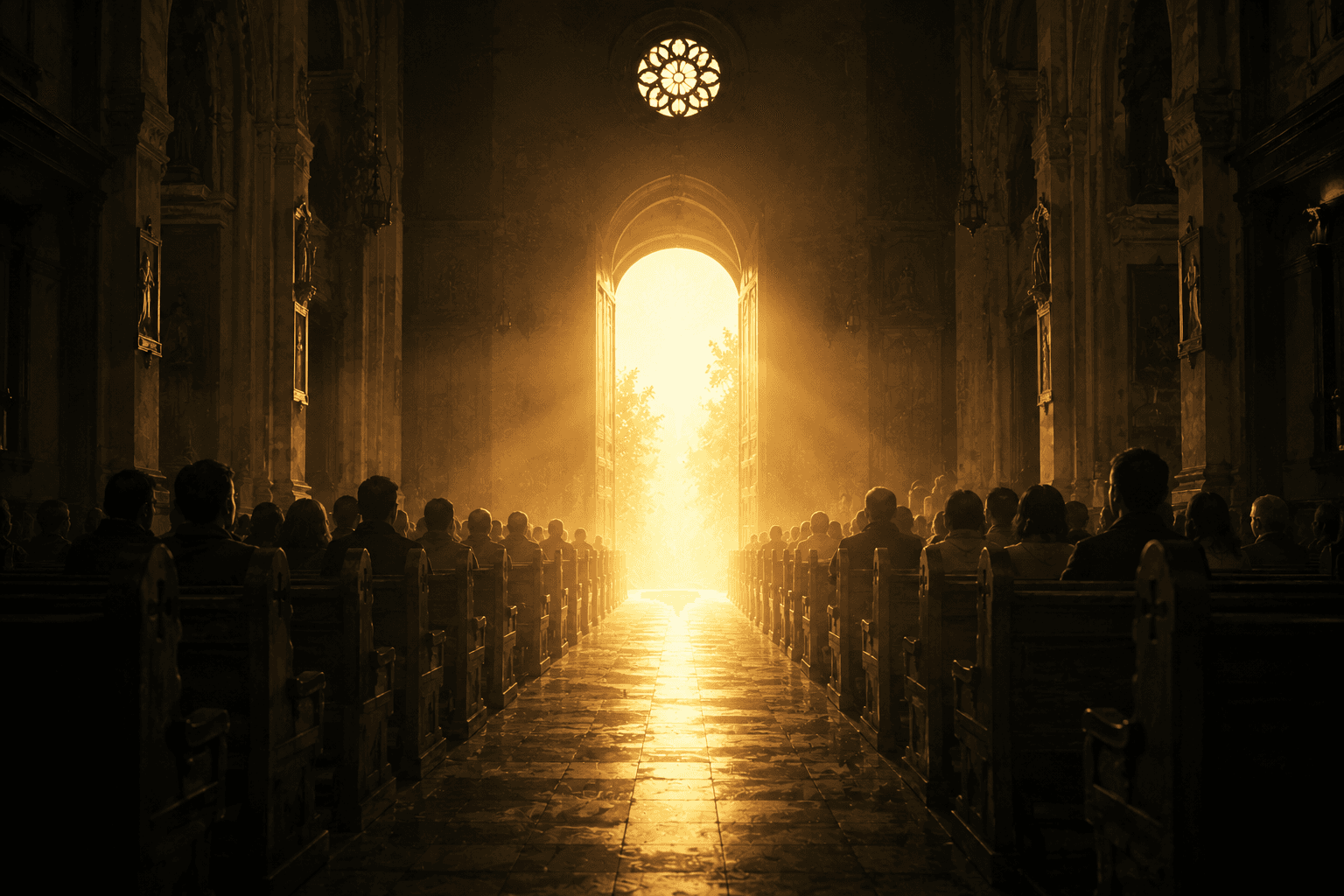
The island is a cork. Beneath it, at the bottom of a cave older than language, there is a light — warm, golden, ancient. The light is not explained. It is not given a scientific name or a theological framework. It is the thing underneath. The thing that, if extinguished, takes everything else with it. Every person, every place, every version of goodness that has ever managed to survive in a world that keeps trying to put it out.
The cork holds the light in place. Someone has to protect the cork. That is the job. That is the only job that has ever mattered on this island. Everything else — the hatches, the numbers, the smoke monster, the plane crash itself — was weather around this single fact.
The Man in Black wants the light out. He has wanted it out for centuries, because the light is the thing that keeps him trapped, and a man who has been trapped long enough will burn down the house to get through the door. He does not care what goes with it. He has been a prisoner so long that freedom and destruction have become the same word.
Jack watches this. Jack, who spent five seasons fixing things. Jack, who could not sit in a room with a broken faucet without reaching for a wrench. Jack, who carried the weight of every person on that beach because carrying weight was the only language his father ever taught him.
And for the first time in the show, Jack does not try to fix anything. He volunteers to hold it.
The Frodo Parallel
If you have read There and Back Again, you already know this shape.
A small person. A heavy thing. A journey into a cave. A cost the bearer may not survive. Tolkien and LOST, separated by half a century, writing in different countries, for different audiences, in different forms — landed in exactly the same place. Some burdens are not solved. They are carried to the fire, and the person who carries them does not come back the same way they went in.
Frodo said "I will take the Ring" at the Council of Elrond. Quietly. Without argument. The smallest voice in a room full of kings and warriors and immortals, offering to carry the thing none of them could be trusted with.
Jack says "I'll do it" at the mouth of a cave, standing next to the people he crashed into six years ago, offering to descend into a place no one fully understands, to protect a light no one can fully explain, for a reason that has nothing to do with science and everything to do with the thing he has been circling his entire life.
Both men volunteer not because they are brave enough. They volunteer because they finally understand that nobody else should have to.
The difference is this: Frodo carried the Ring because the Ring chose the least corruptible person in the room. Jack carried the cork because the island, after six years of breaking him open, had finally made a man who could hold something without needing to control it. Frodo's journey was about resisting the weight. Jack's was about learning to stop resisting it — to stop fighting, fixing, managing, and simply hold.
The Wound
Jack is stabbed before he reaches the source.
The Man in Black puts a knife into his side during their final confrontation on the cliffs. It is a killing wound — the kind that does not announce itself with drama but with a slow warmth spreading where warmth should not be. Jack knows. He has been a surgeon long enough to know. He looks at the wound the way a man looks at a clock when he has somewhere important to be and not enough time to get there.
He goes anyway.
Kate kills the Man in Black. Not Jack. The man of science, the leader, the one who always had to be the person who finished the fight — he doesn't finish this one. Kate shoots. Sawyer helps. Jack bleeds. The hero's final act is not a victory. It is a decision to keep walking toward the cave while his body is already deciding to stop.
He climbs down into the light with a hole in his side. He finds the cork displaced, the light fading, the island shaking itself apart. And he does the thing the title of this episode asks. He lifts it up. He puts the stone back. He holds it until the light returns.
There is no speech. No audience. No one watching. The man of science, alone in a cave at the bottom of the world, doing the last thing he will ever do — and doing it with hands that are already losing their grip.
He climbs back out. He knows what climbing out means. It means there is just enough time left to choose where to lie down.
What the Cork Looks Like
Most people will not descend into a glowing cave.
But most people, at some point, will realise that there is something only they can hold. A thing that, if they let go, does not simply fall — it takes other things with it. Other people. Other futures. The light goes out in rooms they will never see because they were the one standing between the darkness and the door.
A single mother working a second shift she does not have the energy for, because the alternative is her children learning what hunger feels like on a Tuesday. A son who moves back home to care for a father who no longer recognises him, who sits in a kitchen that smells like the childhood he is watching dissolve, and stays. A teacher in a school that has given up on half its students, who has not given up, who shows up every morning and holds the line between a child and the conclusion that nobody cares. A woman who keeps a family together through a crisis that would have broken most marriages, not because she is strong in the way people say the word, but because someone has to hold the cork and she looked around the room and nobody else was reaching for it.
These are not dramatic sacrifices. They do not arrive with orchestral music or a villain on a cliff. They arrive as Tuesdays. As alarm clocks. As the quiet decision, made again each morning, to keep holding something heavy because the alternative — letting it fall, letting the light go out, letting the people who depend on the cork discover what the world looks like without it — is not something the person holding it can live with.
The cork in your life will probably not glow. But you will know it by the weight. And by the fact that putting it down is technically possible and practically unthinkable.
The Man of Science Lets Go
Here is the thing about Jack that took six seasons to arrive at, and that the show delivers so quietly you could miss it.
Jack spent his entire life trying to control outcomes. Fix the patient. Save the marriage. Lead the survivors. Build the raft. Find the rescue. Go back. Every season is Jack grabbing something with both hands and squeezing until it either works or breaks, and when it breaks, grabbing the next thing harder.
The cork is the first thing Jack holds without trying to control. He does not fix it. He does not improve it. He lifts it back into place and lets it be what it is. The man who could not stop fixing things finishes his life by simply holding one.
That is the transformation the island was building. Not from man of science to man of faith — that was Locke's framework, and Locke's framework was hunger dressed as theology. Jack's transformation is quieter and harder: from a man who needs to fix things to a man who can hold them. From someone who carries weight because it proves his worth to someone who carries weight because it needs to be carried.
The difference sounds small. It is the difference between a life spent performing usefulness and a life spent being useful. Between carrying a burden so someone will see you carrying it, and carrying a burden because someone will suffer if you don't. Jack spent five seasons doing the first. He dies doing the second. And the show trusts its audience to feel the difference without explaining it.
The Bamboo Field
Jack walks out of the cave. He is bleeding. The island has stopped shaking. The light has returned. The cork is in place.
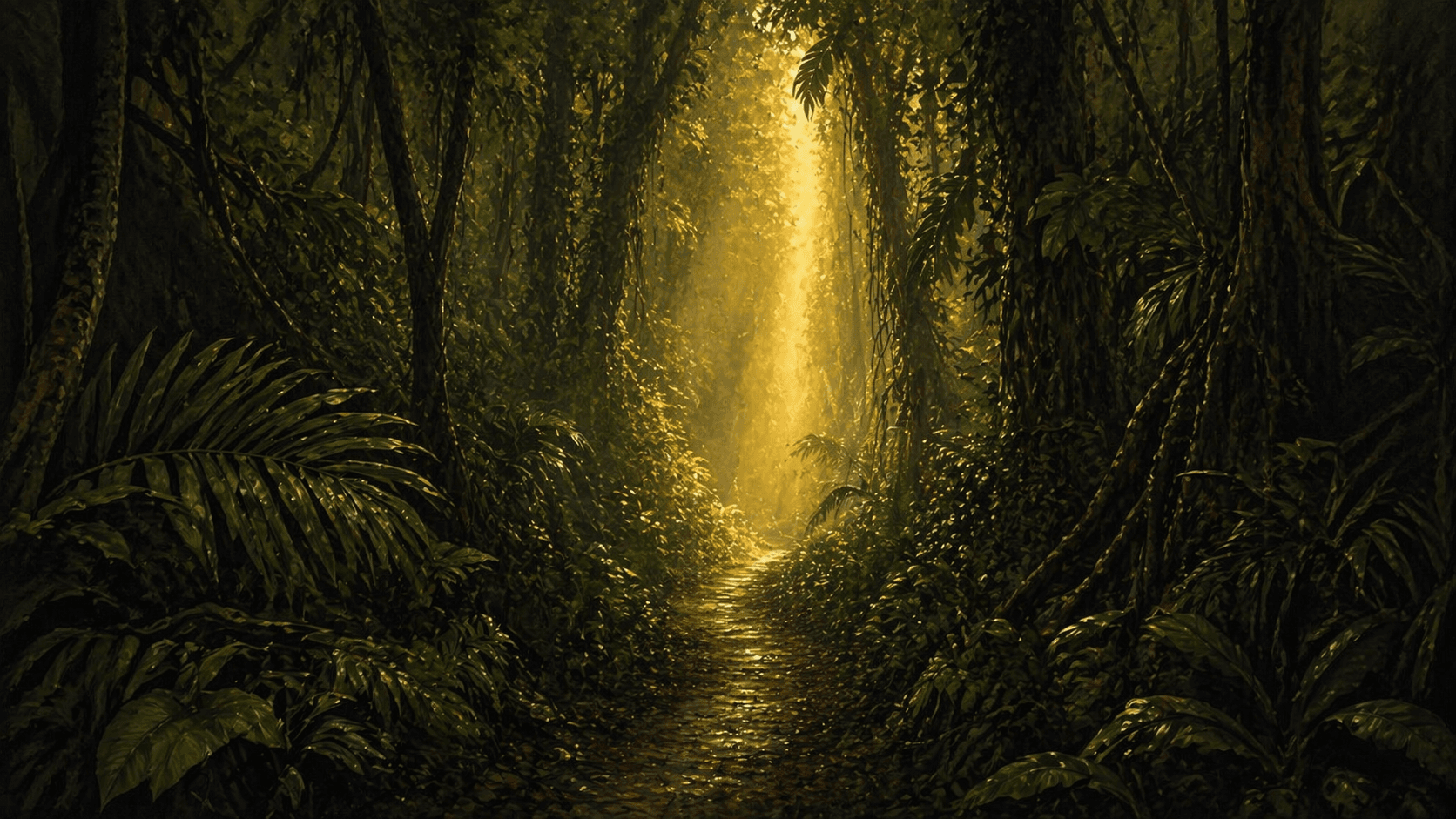
He walks through the jungle — the same jungle he ran through in the pilot, screaming, covered in someone else's blood, looking for people to save. He is not running now. He is walking the way a person walks when they know where they are going and that arriving is the last thing they will do.
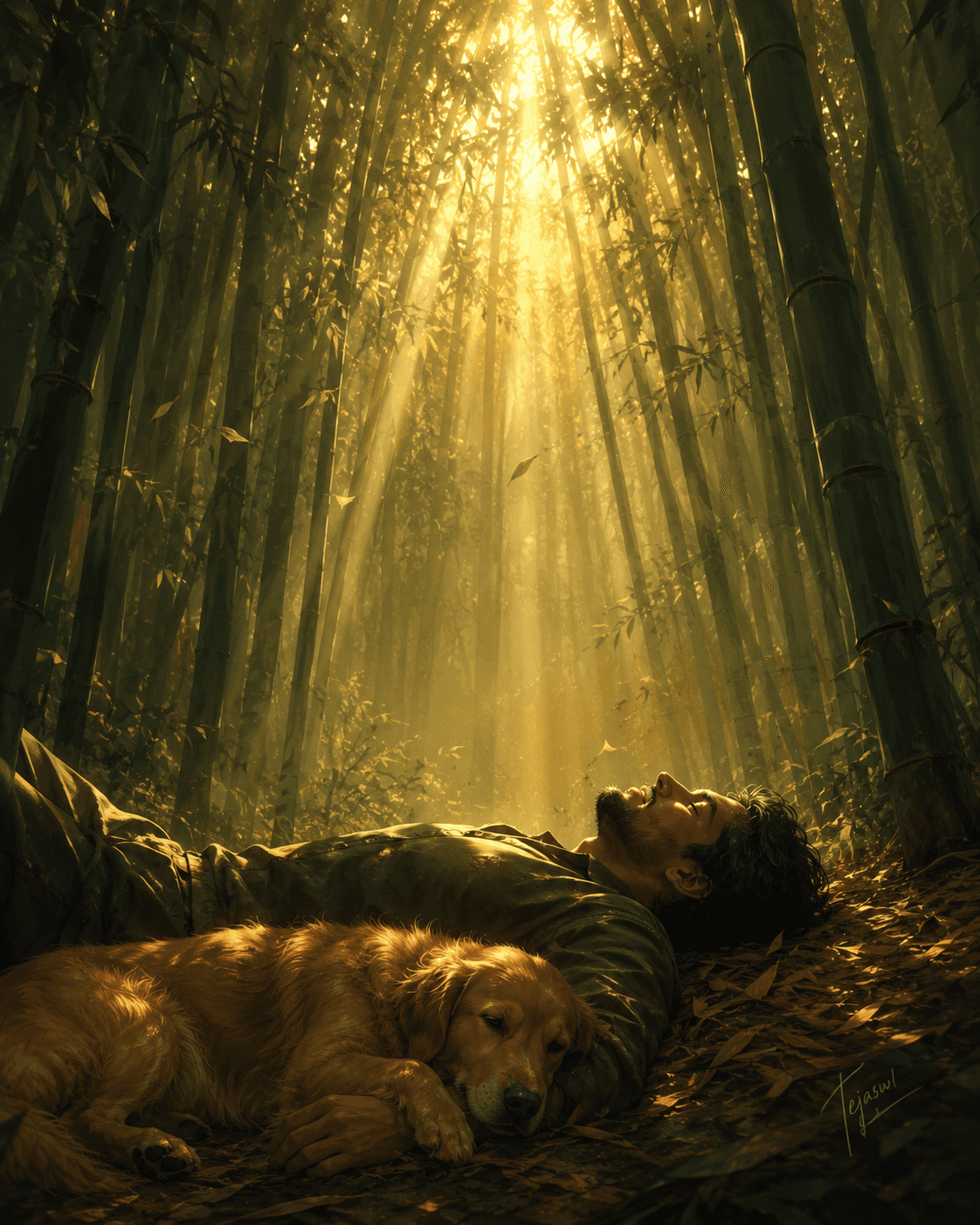
He finds the bamboo field. The same bamboo field where he woke up after the crash. The same patch of green where the first eye opened in the first episode, where a man who did not yet know what the island would ask of him blinked into the light and stood up and ran toward the sound of screaming.
He lies down. His back against the earth. His eyes on the sky through the bamboo. The circle closes.
And Vincent — the dog, the golden retriever, the one creature on the island who never lied, never manipulated, never asked for anything — trots out of the jungle and lies down beside him.
So that he does not die alone.
Live together, die alone. Jack said it in the first essay in this series. It was a rallying cry then — a speech on a beach, a man trying to hold strangers together through sheer force of will. It sounded like a rule. It was actually a prayer.
The prayer is answered here. Not by the survivors. Not by Kate or Sawyer or Hurley. By a dog. By an animal who does not understand purpose or sacrifice or the philosophy of letting go, but who understands — on some level older than language — that a person lying down alone in a field should not be alone.
The final shot of LOST mirrors the first. Episode one: Jack's eye opens. Episode 118: Jack's eye closes. The series begins with a man waking up on an island he did not choose, and ends with a man lying down on the same island because he finally chose it. Everything that happened between those two moments — every argument, every betrayal, every act of faith and science and love and hunger — was the distance between arriving somewhere by accident and belonging there on purpose.
Jack's eye closes. The bamboo sways. Vincent breathes beside him. And the man who could not stop fixing things is finally, fully, at rest.
The Question
This is not a story about dying.
Every essay in this series has ended with a question aimed at the living. Can we live together, or will we die alone? Can we hold both science and faith without pretending one of them has all the answers? Do we have a constant, and are we being one? What were the people we dismissed actually hungry for? What are the unfinished things still calling us back?
This one asks something simpler.
There is a cork in your life. Something that holds the light in place for people who may never know your name or see your face or understand what it costs you to keep holding it. It might be a family. A job nobody thanks you for. A promise you made to someone who can no longer hold you to it. A daily act of showing up that looks, from the outside, like nothing — and feels, from the inside, like the heaviest thing you have ever carried.
The question is not whether you can carry it forever. Nobody can. Jack couldn't. The question is whether you will lift it when your turn comes. Whether you will reach for the stone when the light is going out, knowing what it will cost, knowing that no one is watching, knowing that the people who benefit from your holding it may never understand that someone was holding it at all.
Some burdens are not solved. They are lifted, and held, and eventually passed on. The person who held them before you is resting now. The person who will hold them after you has not yet arrived.
In the meantime, there is a field. There is light through bamboo. There is a dog who will lie down beside you when the holding is done.
Lift it up.
Part 7: See You in Another Life, Brother