In Part 2, Aragorn stood at the river and watched Frodo's boat disappear. He couldn't follow. The road ahead demanded something different from him — a crown, a war, a destiny he'd spent his entire adult life dodging.
"I would have gone with you to the end," he said. "Into the very fires of Mordor."
He meant it. But the road split. And his road led toward the one thing he feared more than any Orc or Ringwraith — becoming the man he was born to be.
This part is about what keeps people from claiming what's already theirs — the fear, the patience, and the quiet dignity of a man who doesn't need a crown to know who he is.
The Man in the Corner
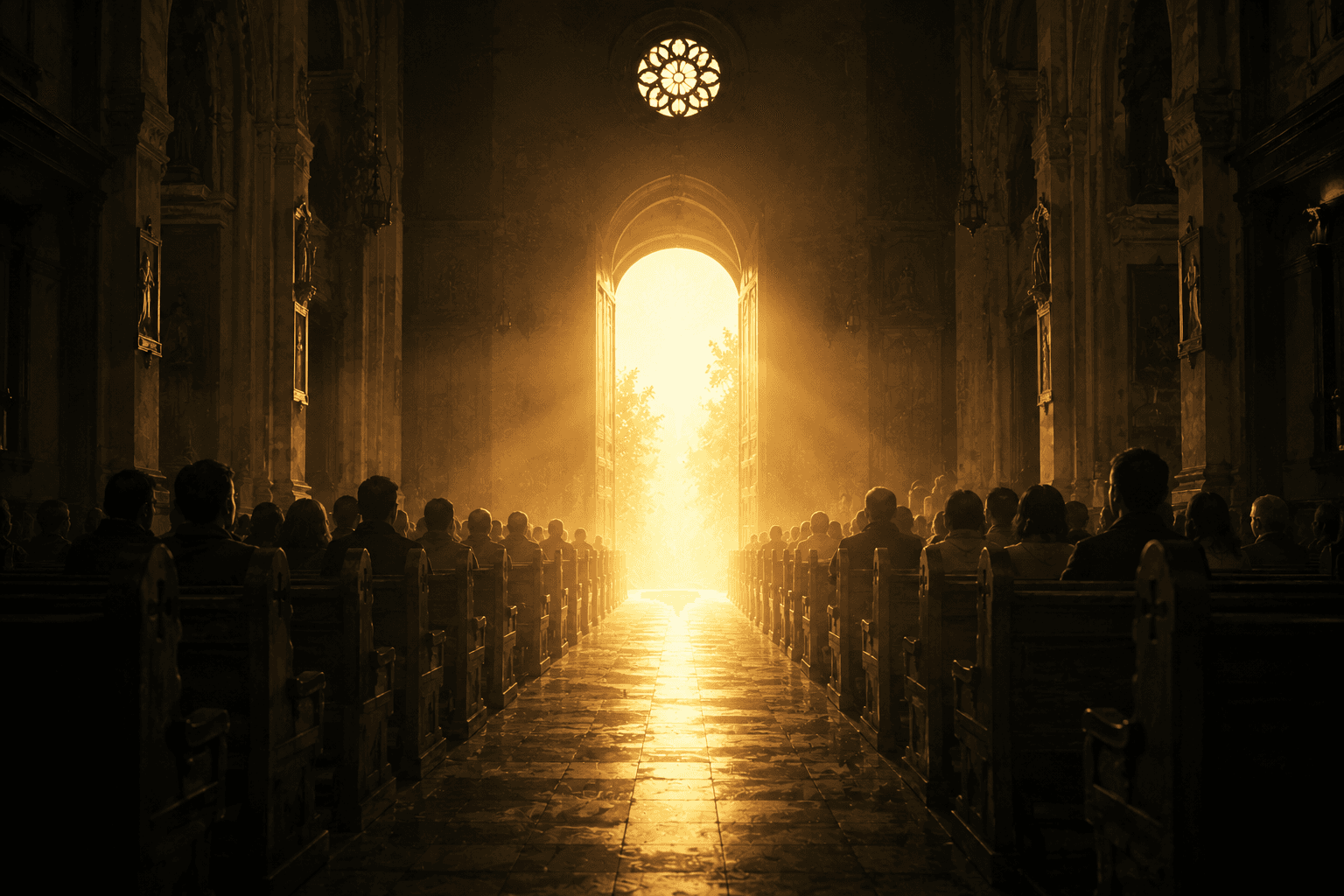
The first time we see Aragorn, he's sitting alone in the corner of the Prancing Pony, face hidden under a hood, pipe smoke curling above him, watching the door like a man who's been watching doors for a very long time.
The hobbits are terrified. The innkeeper warns them — he's one of them Rangers. Dangerous folk. Frodo sees a weather-beaten stranger who smells like the road and looks like trouble.
Strider. That's what they call him. A nickname for a man who walks far — which is what you'd call someone who has spent decades crossing the wilderness, sleeping under trees, guarding borders no one knows are guarded, refusing to be anything more than a shadow with a broken sword.
Elrond says it plainly: "He turned from that path a long time ago. He has chosen exile."
Exile. Not as punishment — as choice. Aragorn knows he's the heir of Isildur. He knows the throne of Gondor is his by right. He knows that a kingdom is rotting from within, waiting for a king who won't come.
And he wants nothing to do with it.
He chose the dirt and the rain and the anonymity of a ranger's life — the kind of life where no one looks at you and sees a bloodline, where your failures are your own and not a nation's. He chose to protect the Shire from the shadows precisely because hobbits would never know his name. He chose to be useful without being seen.
For eighty-seven years, that was enough.
You know this feeling. Maybe not a throne, but the thing you're qualified for that you refuse to claim. The promotion you didn't apply for because you've seen what it does to people. The responsibility you deflected because you watched someone you admire get hollowed out by it.
But here's the thing about Aragorn — and this is where most readings of his character stop too early. His exile isn't only fear. There's something else in it. Something quieter.
He doesn't claim the throne because he doesn't need to. He already knows who he is. A man who has fought more battles, walked more miles, and protected more lives in silence than most kings manage in a lifetime of ceremonies — why would he race to prove himself to men who've never left their walls? The throne is his by right. He doesn't need a coronation to know that. And there's a particular kind of dignity in the person who could take the seat of power at any moment and simply... doesn't. Not yet. Not because they're afraid, but because the moment isn't right, and they have nothing to prove to the people jostling for it.
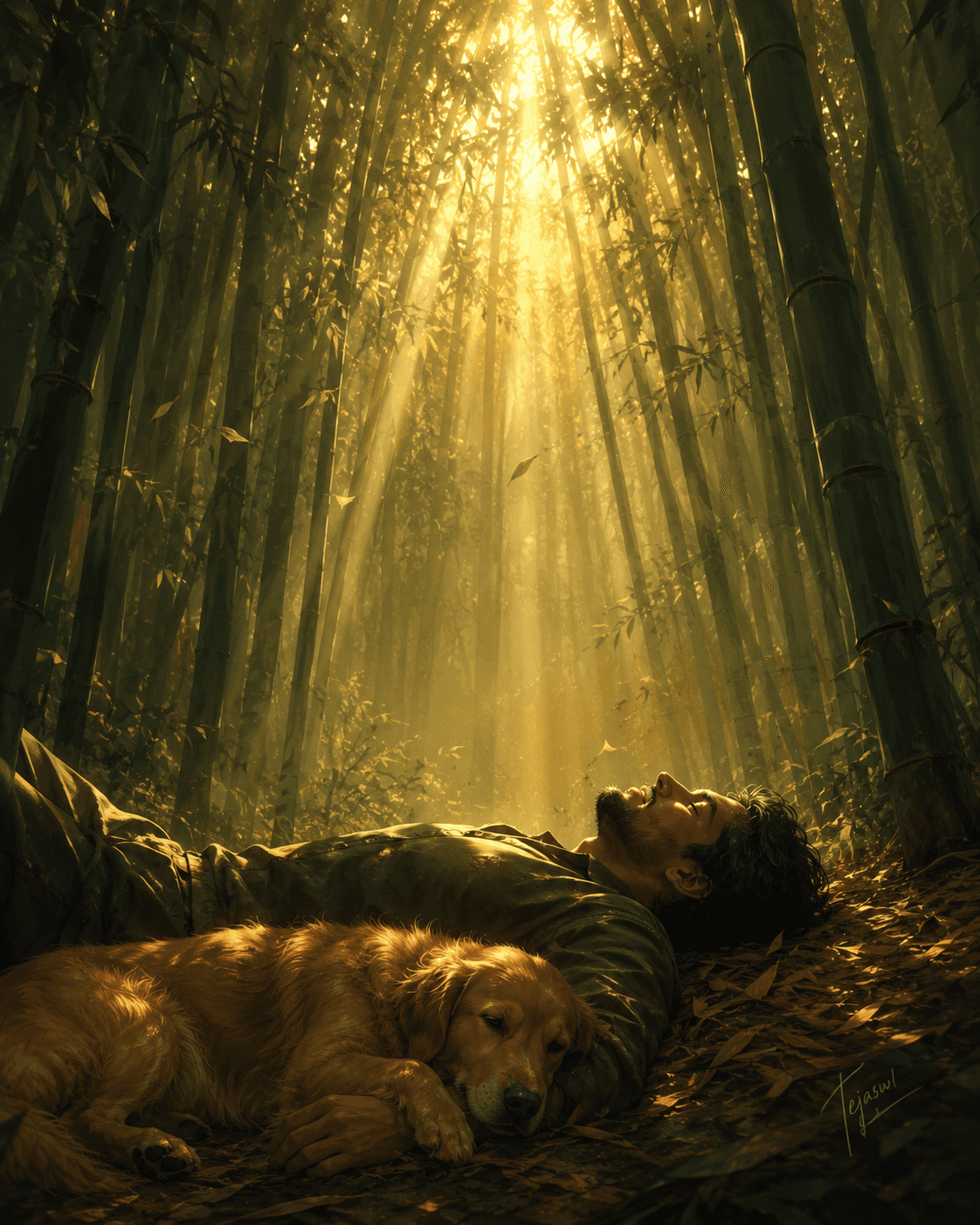
Think of it this way — Denethor sits on the Steward's throne in Gondor, burning with paranoia, clutching a position that was never his to keep. Lesser men around Aragorn wear titles, take credit, make noise. And the rightful king sleeps in the rain and says nothing. Because the work matters more than the title. Because sometimes the person the world needs most is the one standing guard in the dark while everyone else fights over the spotlight.
The Bloodline You Can't Outrun
"I do not know what strength is in my blood, but I swear to you I will not let the White City fall, nor our people fail."
Listen to the first half of that sentence. I do not know what strength is in my blood. He's not being humble. He's terrified.
Isildur — Aragorn's ancestor — stood on the slopes of Mount Doom three thousand years earlier. The Ring was in his hand. The fire was right there. All he had to do was let go. End the war. Destroy the thing that would haunt the world for millennia.
He couldn't. He looked at the Ring, and the Ring looked at him, and he claimed it. "No. The Ring is mine."
That one failure echoed across three thousand years. Sauron survived. The Ring survived. The entire war Aragorn is now fighting exists because his bloodline choked at the one moment that mattered.
Aragorn carries Isildur's sword — reforged, renamed, but still the same blade that cut the Ring from Sauron's hand and then failed to destroy it. Every time he draws that sword, he's holding a reminder. Your ancestor had the chance. He was weak. You carry his blood.
How many of us carry something like that? The inheritance of someone else's choices. Your father's temper that you swore you'd never repeat — until you heard it in your own voice at thirty-five. Your mother's anxiety that shaped the way you hold the world. The pattern you watched your parents fall into, and promised yourself you'd break, and then one quiet Tuesday caught yourself re-living with a sick weight in your stomach.
Aragorn doesn't just fear the crown. He fears what his blood does to people who hold power. The evidence is literally in his family tree. And Elrond — the man who watched Isildur fail, who was standing right there — looks at Aragorn with a gaze that carries three thousand years of doubt.
The heaviest thing Aragorn carries isn't a sword or a crown. It's the fear that the worst thing his ancestor did is already living inside him, waiting for the right moment to surface.
Arwen's Wager
And then there's the love story. The quietest, most devastating one Tolkien ever wrote.
"I would rather share one lifetime with you than face all the ages of this world alone."
Arwen is an elf. She's lived for centuries. She will live for centuries more — her father sailed to the Undying Lands, and she can follow. Immortality is hers by birthright. Elrond is practically begging her to take it. Leave Middle-earth. Live forever. Let the mortal ranger walk his mortal road alone.
She says no.
Think about what Arwen is choosing. She's choosing death. Illness. Aging. The slow fade of a body that was built to last forever, surrendered for a span of decades. She's choosing seventy or eighty years with this man over an eternity without him. Every sunrise she sees with Aragorn is one sunrise closer to her last one — and she knows it, and she stays.
"It is mine to give to whom I will. Like my heart."
Elrond tells her she's making a mistake. That when Aragorn dies — and he will die, because he's mortal — she'll be left alone in a world that has moved on, with no path back to the Undying Lands. She'll wither. She'll grieve. She'll experience the one thing no elf was meant to feel — an ending.
She chooses it anyway. Eyes open, fully aware of the cost.
Here's the thing that breaks me about Arwen's choice. She doesn't choose Aragorn because he'll become king. She chooses him while he's still Strider — still running, still afraid, still sleeping in the dirt. She sees the king before the crown exists, and she bets eternity on it.
That's the kind of love that changes people. The person who sees you — truly sees you — before you've become the thing everyone else is waiting for. Who loves the ranger, not the title. Who stays while you're still figuring it out. Who says I see what you're going to be, and I'm not going anywhere.
Aragorn spends the whole story terrified of becoming Isildur. Arwen looks at him and sees something Isildur never was — a man who doubts his own power. And in Tolkien's world, that doubt is precisely what makes him worthy of it.
The Crown That Finds You
Aragorn doesn't put on the crown until the very end. After Helm's Deep. After the Paths of the Dead. After the Black Gate. After watching friends die and cities burn and the world come apart under his feet.
He's been doing the work of a king for the entire story — making the calls no one else will make, leading men into battles he knows they might not survive, walking into a mountain full of cursed ghosts because Gondor needs an army and there is no other way to raise one.
The final battle. The army of the West marches to the Black Gate of Mordor — not to win, but to buy time. Aragorn knows this. Everyone knows this. They're outnumbered ten to one. Sauron's forces pour out of the gate like a flood. The eye turns toward them.
And Aragorn looks at his people — the soldiers who followed him, the friends who trusted him, the hobbits who once thought he was just a dangerous stranger in a tavern — and says one word.
"For Frodo."
Then he charges. Into an army he cannot beat, for a hobbit he cannot see, on a mountain he cannot reach. Because that's what the work looks like when there's nothing left to hide behind.
The coronation in Minas Tirith, when it finally comes, is the quietest climax in the trilogy. No battle. No enemy. Just a man kneeling to receive something he's been carrying in secret for decades — and a city full of people who finally see what Arwen saw all along.
Purpose doesn't arrive with trumpets. It arrives with exhaustion. The moment where running takes more energy than standing still. Where you realize you've been doing the job for years — you just refused the title because accepting it made the weight permanent.
Becoming
Here's what Tolkien understood better than almost anyone who's ever written about leadership: transformation isn't a moment. It's an accumulation.
Aragorn doesn't become king at his coronation. He becomes king on every cold night in the wild where he could have gone home and didn't. In every skirmish where retreat was the safer option and he chose the people behind him instead. On the Paths of the Dead, where he commanded ghosts to fight because the living couldn't do it alone. At the Black Gate, where he charged first.
You become who you are by doing the work before anyone gives you permission. Before the title exists. Before the world acknowledges what you've already been building in the dark. The crown doesn't create the king — it just makes visible what the road already made.
And somewhere in the back of your mind, you know your own version of this. The thing you've been running from. The role you've been filling without claiming it. The version of yourself that scares you — partly because of what it demands, and partly because you suspect it's who you've been all along.
The ranger becomes the king. The exile comes home. And the thing that finally stops him running isn't courage or destiny — it's the quiet realization that the people he loves need him to stand still.
Aragorn's story is permission to stop running.
But the road goes on. And on the slopes of Mount Doom, the smallest person in the story is about to fail at the one thing the whole journey was for. What saves him won't be strength or will or courage. It will be something no one — not even Gandalf — could have planned.
Part 4: There and Back Again — continue reading.