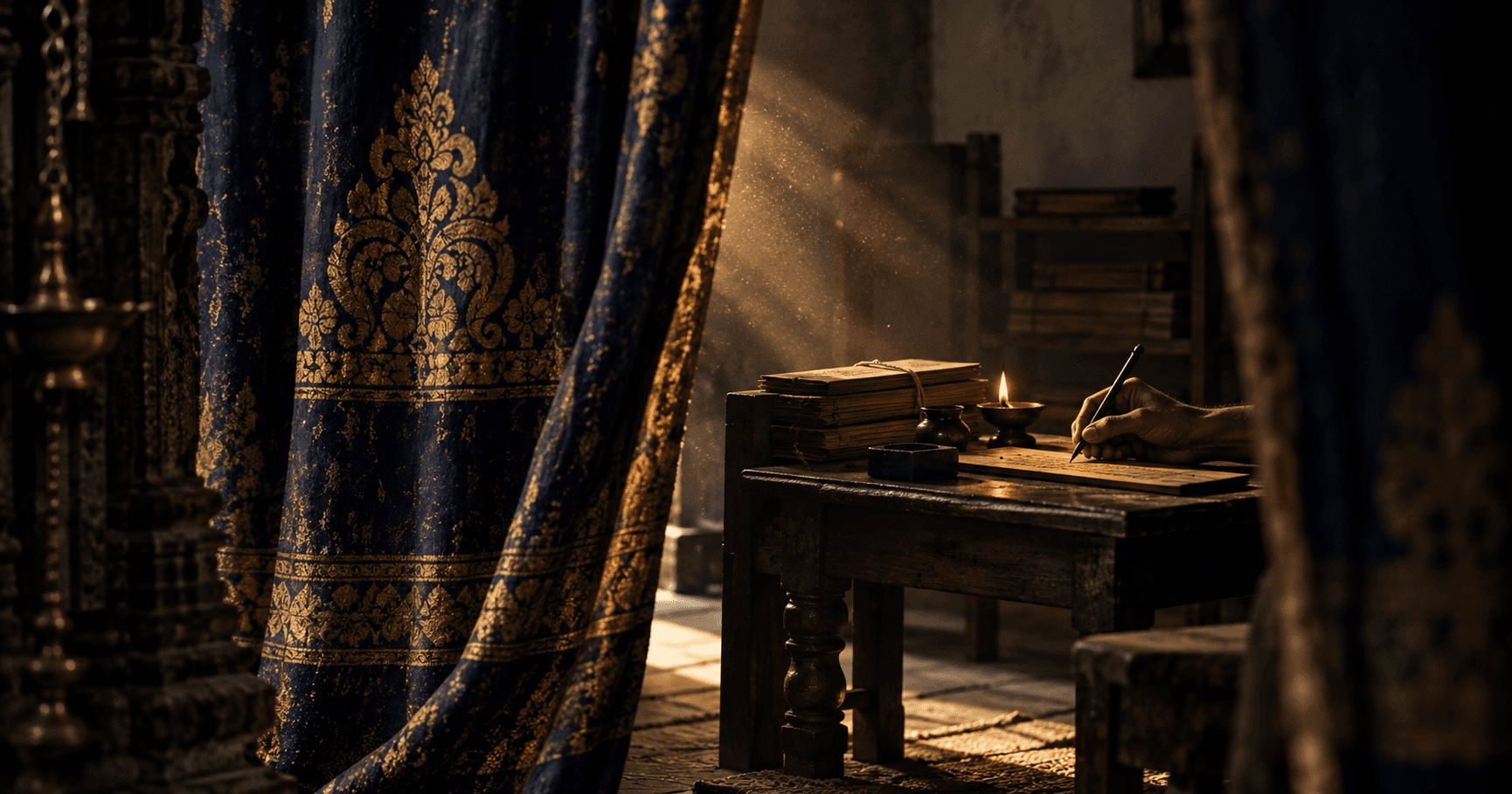
In 1848, a seventeen-year-old woman walked through the streets of Pune to teach children no one wanted taught.
She knew what was coming. Every morning, the route to the school brought the same reception — stones, cow dung, verbal abuse from people who believed she was committing a sin. A woman, married into a Mali caste family, daring to educate Dalit girls. The entire social order felt threatened.
So she carried a spare sari in her bag. She would arrive, change, and begin the lesson.
Her name was Savitribai Phule. The school she walked to every morning was the first school for girls in India.
Most people know Mahatma Phule — her husband, the great anti-caste reformer who saw the Brahminical order for what it was and spent his life tearing it down. Savitribai is often mentioned alongside him, a name in the same sentence, a companion in his story. But she was the one in the classroom. She was the one the stones were aimed at. She was the one who kept walking.
This article is about Savitribai and other women whose lives built the anti-caste movement from the ground up — women whose stories were never hidden, but somehow never carried forward with the same weight as the men who stood beside them.
Savitribai Phule: The Teacher Who Kept Walking
Savitribai was born on January 3, 1831, in Naigaon, a small village in Satara district, Maharashtra. She was married to Mahatma Phule at the age of nine — child marriage being the norm, not the exception. Mahatma Phule, then thirteen, did something almost no husband of that era would think to do: he taught her to read and write.
This was radical. In the 1840s, educating women was considered dangerous and educating lower-caste women was considered an assault on dharma. The dominant castes believed — and violently enforced the belief — that knowledge belonged to them alone. For a Shudra woman to learn letters was a violation of the order that had held for millennia.
Mahatma and Savitribai opened their first school on January 1, 1848, in Pune. Savitribai, barely seventeen, became the teacher. The students were Dalit and lower-caste girls — children who had never seen the inside of a classroom, whose families had never been allowed near one.
The backlash was immediate. Neighbors threw garbage. Men from upper-caste families hurled stones and dung at her as she walked to school. They screamed that she was polluting society, that she would bring ruin. The Phules' own family buckled under pressure — Mahatma's father Govindrao, unable to bear the social consequences, threw them out of the house.
And still she walked. Changed her sari. Taught the class.
She carried a spare sari because she knew what was coming. And she went anyway.
By 1851, the Phules were running three schools for girls in Pune. Savitribai was training other women to teach. She was building a system, not running a charity.
But education was only part of what she did.
She ran the Balhatya Pratibandhak Griha — a home for preventing infanticide. In an era when Brahmin widows who became pregnant (often through rape) faced death or were forced to kill their newborns to preserve family "honor," Savitribai created a place where they could give birth safely. She and Mahatma adopted Yashwant, the son of one such widow.
Think about what this means. A woman from the Mali caste — considered lower in the hierarchy — was providing refuge to Brahmin women abandoned by their own community. The caste system told her these women were above her. She responded by saving their lives.
Savitribai's letters to Mahatma Phule are among the earliest known writings by an Indian woman. Her poem "Go, Get Education" became a rallying cry for the movement. They reveal a thinker with her own analysis of caste, her own fury at injustice, her own vision for what education could do.
After Mahatma's death in 1890, Savitribai didn't retreat. She took over the leadership of the Satyashodhak Samaj — the truth-seekers' society Mahatma Phule had founded. She presided over meetings, spoke publicly, continued the work. A widow leading a social reform movement in 1890s Maharashtra — in a society that expected widows to disappear.
In 1897, the bubonic plague swept through Pune. Savitribai and Yashwant opened a clinic at Sasane Mala to treat patients from the Mahar and Mang communities — communities that the colonial and caste-Hindu medical establishment largely ignored. One day, she found a young Mahar boy sick with the plague. She carried him on her back to the clinic.
She contracted the plague from him. On March 10, 1897, Savitribai Phule died. She was sixty-six years old.
She had spent her entire adult life walking toward the people everyone else walked away from.
Fatima Sheikh: The Woman Who Opened the Door
When Mahatma's father expelled the Phules from his house, they had nowhere to go. The community had closed ranks. No one from their own caste would take them in — the social cost was too high.
Fatima Sheikh and her brother Usman Sheikh did.
Fatima was a Muslim woman in Pune. She and Usman opened their home to the Phules, and it was in their house that the school found its footing. Fatima provided shelter and then went further — she taught alongside Savitribai. A Muslim woman and a Mali-caste woman, teaching untouchable girls together in 1848 Pune.
Pause on that date. 1848. Nine years before the uprising of 1857. Decades before any formal women's education movement in India. In a city where caste and religious boundaries were enforced with violence, two women from different communities walked into a room and taught children the alphabet.
Fatima Sheikh faced the same abuse Savitribai did — the same stones, the same dung, the same threats. She faced it as a Muslim woman in a Hindu-majority city, which meant the hostility came from multiple directions.
What do we know about Fatima Sheikh beyond this? Painfully little.
That's the honest answer. Historical records about her are sparse to the point of near-absence. We know she existed. We know she taught. We know she and Savitribai worked side by side. But the details that bring a life into focus — her own words, her daily experiences, her thoughts — are largely lost.
In 2022, India Post released a commemorative stamp honoring Fatima Sheikh. It took 174 years. A woman who co-founded some of India's first schools for girls received official national recognition more than a century and a half after the fact.
Her story matters precisely because so little of it survives. It tells us something about which lives get documented and which don't. The men who threw stones at these women left more of a historical footprint than the women who endured the stones and taught the class.
Jhalkari Bai: The Warrior in the Folk Songs
In 1857, while the British were besieging Jhansi, a woman from the Kori caste — one of the Dalit communities — fought in the army of Rani Lakshmibai.
Her name was Jhalkari Bai.
Born around 1830 in Bhojla village near Jhansi, Jhalkari Bai was known in her community for her physical courage from childhood. The stories passed down in Bundeli folk tradition describe her killing a leopard that attacked her village, fighting off dacoits, training in combat. When she married Puran Kori, a soldier in Lakshmibai's army, she joined the women's brigade — the Durga Dal.
During the siege of Jhansi in March and April 1858, Jhalkari Bai fought on the front lines. The most famous account — and this is where documented history blurs into folk memory, so I'll be honest about the boundary — holds that she impersonated the Rani to confuse the British forces, giving Lakshmibai time to escape the fort. Some versions say she was captured. Others say she died fighting.
What is beyond doubt: she was a Dalit woman who fought in one of the defining battles of 1857, and her story has been kept alive for generations — in Bundeli folk songs, in Dalit community memory, in oral traditions that parents passed to children long before anyone thought to write them down.
Rani Lakshmibai is in every Indian school textbook. Jhalkari Bai is in almost none. The same battle, the same fort, the same year. The queen's story was carried into national mythology. The Dalit soldier's story survived in the songs of her community.
Lakshmibai's courage is beyond question. The question is why one woman's heroism became the version children learn while another's was left to folk songs and community memory. The answer has less to do with evidence and more to do with who was writing the textbooks and whose stories they thought mattered.
In recent decades, Jhalkari Bai has become an important figure in Dalit pride movements. Statues have been erected. Books written. But she remains largely outside the mainstream narrative of 1857 — a footnote at best in the history that schoolchildren are taught.
The folk songs remember her. The syllabus still hasn't caught up.
Muthulakshmi Amma: The Doctor Who Changed the Law
Muthulakshmi Amma's life begins with a contradiction that the caste system itself created.
She was born in 1886 in Pudukkottai, Tamil Nadu. Her father was a Brahmin college principal. Her mother was from the devadasi community — women dedicated to temples, who were in practice sexually exploited by upper-caste men under the cover of religious tradition. The system was caste-sanctioned sexual slavery dressed in sacred language.
Muthulakshmi grew up knowing both worlds. She had her father's caste privilege in some spaces and her mother's stigma in others. This double consciousness shaped everything she did.
She became the first woman admitted to Maharaja's College in Pudukkottai, then the first woman to earn a medical degree from Madras Medical College in 1912. She practiced medicine, but her ambitions ran far beyond the hospital.
In 1926, she was nominated to the Madras Legislative Council — becoming the first woman legislator in British India. From that seat, she launched the campaign that would define her public life: the abolition of the devadasi system.
The devadasi system worked like this: girls — often from specific Dalit and lower-caste communities — were "married" to a temple deity, which in practice meant they were sexually available to upper-caste men. The religious framing made it nearly impossible to challenge without being accused of attacking faith itself.
Muthulakshmi challenged it anyway. She introduced bills, built coalitions, argued the case publicly and in the legislature. The resistance was fierce — from temple authorities, from men who benefited from the system, from traditionalists who accused her of destroying culture. The fight took more than two decades. The Tamil Nadu Devadasis (Prevention of Dedication) Act wasn't passed until 1947.
She also fought to raise the age of consent for marriage, pushed for women's access to healthcare, and in 1954, founded the Cancer Institute at Adyar, Chennai — today one of India's premier cancer treatment and research centers. She was awarded the Padma Bhushan in 1956.
In Tamil Nadu, Dr. Muthulakshmi Amma is remembered and revered. The DMK government named the state's maternity benefit scheme after her — the Dr. Muthulakshmi Reddy Maternity Benefit Scheme, launched by Kalaignar in 1989, which today provides ₹18,000 in financial assistance to pregnant women across the state. The inter-caste marriage assistance scheme also bears her name. July 30, her birthday, is observed as Hospital Day. The Cancer Institute she founded at Adyar remains one of India's foremost cancer treatment centers, now a 450-bed hospital with its own College of Oncologic Sciences.
Within Tamil Nadu, she is part of the living memory of the Dravidian movement — a movement that recognized early that caste liberation and women's liberation were the same fight. Beyond Tamil Nadu, though, few know her name. The first woman legislator in British India, the doctor who dismantled a system of religious sexual exploitation, the founder of a cancer institute that has served patients for seven decades — and most of the country has never heard of her.
Why These Stories Matter Now
Four women. A teacher who carried a spare sari. A Muslim woman who opened her door when no one else would. A Dalit soldier whose heroism lived in folk songs for over a century. A doctor who fought temple-sanctioned exploitation from inside the legislature.
Some of their stories were suppressed. Many were deliberately kept from us. And the ones that survived were never carried forward with the same care as the stories of the men who stood beside them. History has a narrower lens for women — and for women from oppressed communities, the lens narrows further still.
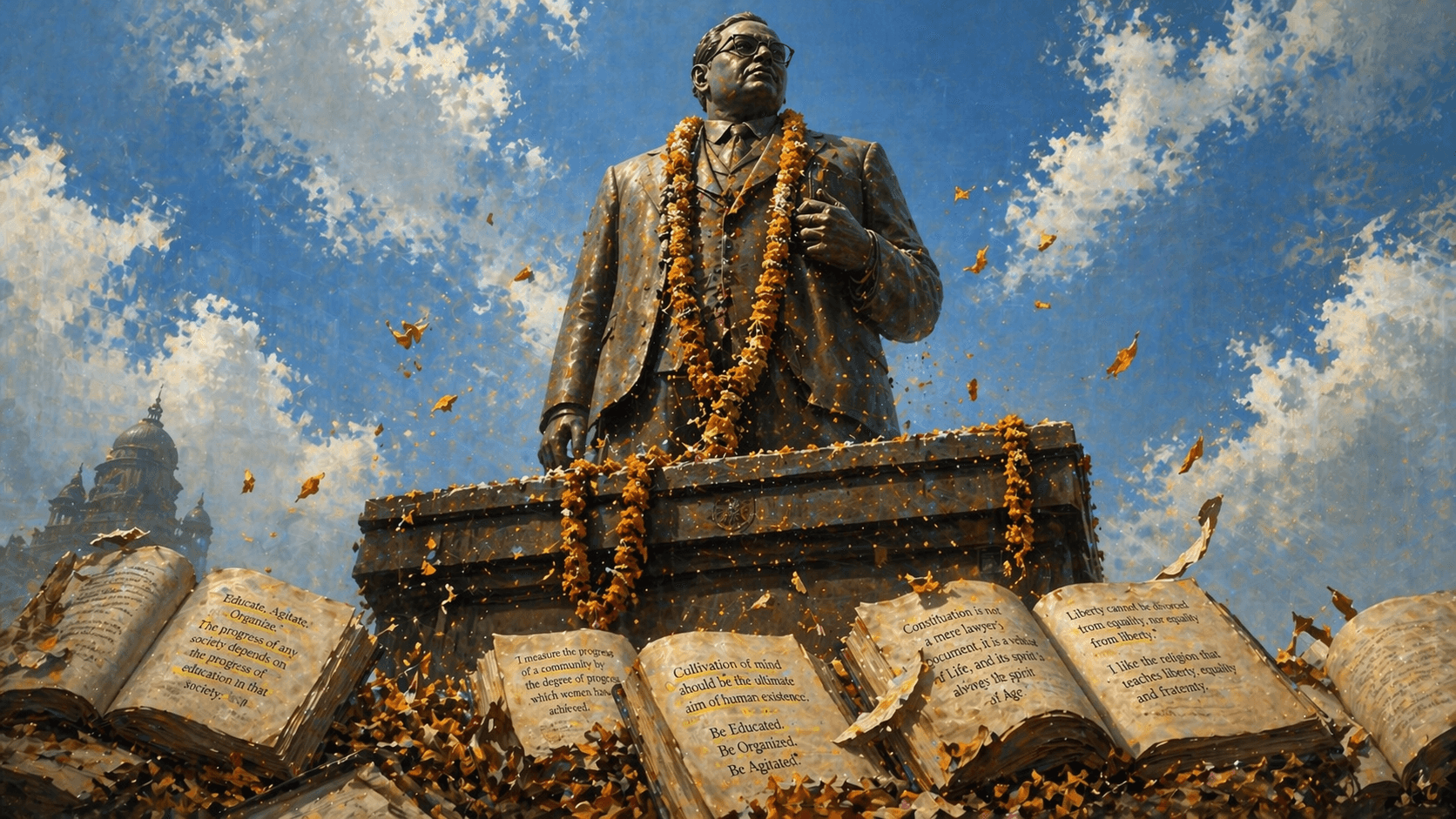
This matters because when we tell the story of social justice in India only as the story of great men — Phule, Ambedkar, Periyar — we accidentally narrow a story that was always broader than we learned. Savitribai was in the classroom. Fatima opened the door. Jhalkari fought on the walls of Jhansi. Muthulakshmi changed the law. These were the contributions that made everything else possible — and they deserve to be told that way.
Their stories were never lost. They were waiting for us to carry them forward.
The next time we recite the names — Phule, Ambedkar, Periyar, Anna, Kalaignar — we should make sure the list is longer. Savitribai. Fatima. Jhalkari. Muthulakshmi. And many more whose stories deserve their own telling.
Nagammai, who marched in the Vaikom Satyagraha, edited Kudi Arasu, and organized women to shut down toddy shops across Erode — the entire anti-arrack movement in the region was, by all accounts, in the hands of the women she mobilized. Maniammai, who led the Dravidar Kazhagam as its president after Periyar's death, carrying the Self-Respect Movement forward when it would have been easy to let it become a memory. Muvalur Ramamirtham Ammaiyar, herself a survivor of the devadasi system, who wrote Dasigalin Mosavalai — a novel that tore the veil off the exploitation she had lived through — and was jailed during the 1938 anti-Hindi agitation. Annai Meenambal Sivaraj, a Dalit woman who grew up in Burma, returned to lead the Scheduled Castes Federation in South India, and was the one who first gave E.V. Ramasamy the title "Periyar." Saminathan Dharmambal — Veera Tamizh Thaai — a Siddha practitioner who organized the 1938 Progressive Women's Association conference and founded institutions to teach Tamil to children who were being pushed toward English. Pandita Ramabai, who broke from Brahminical orthodoxy in Maharashtra, became one of the first women Sanskrit scholars, and built refuge homes for widows and abandoned women. Rukmini Lakshmipathi, the first and only woman minister of the Madras Presidency, who served in the legislature when the idea of a woman in government was still treated as an experiment.
They walked so the movement could run. The least we owe them is their names.
This piece is part of the Social Justice series. Read the previous articles: Social Justice is a Right, Not Charity and Fellow Untouchables.