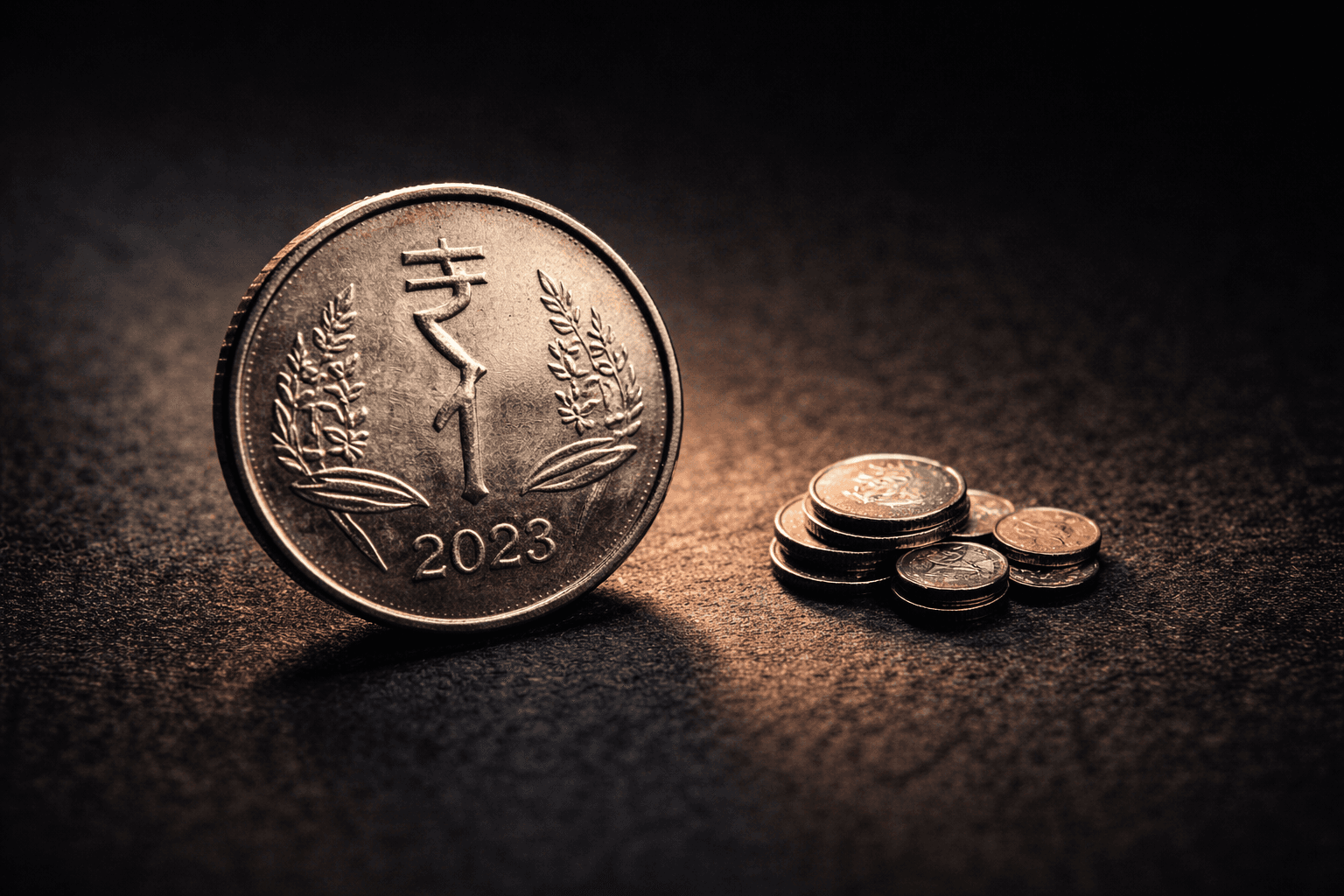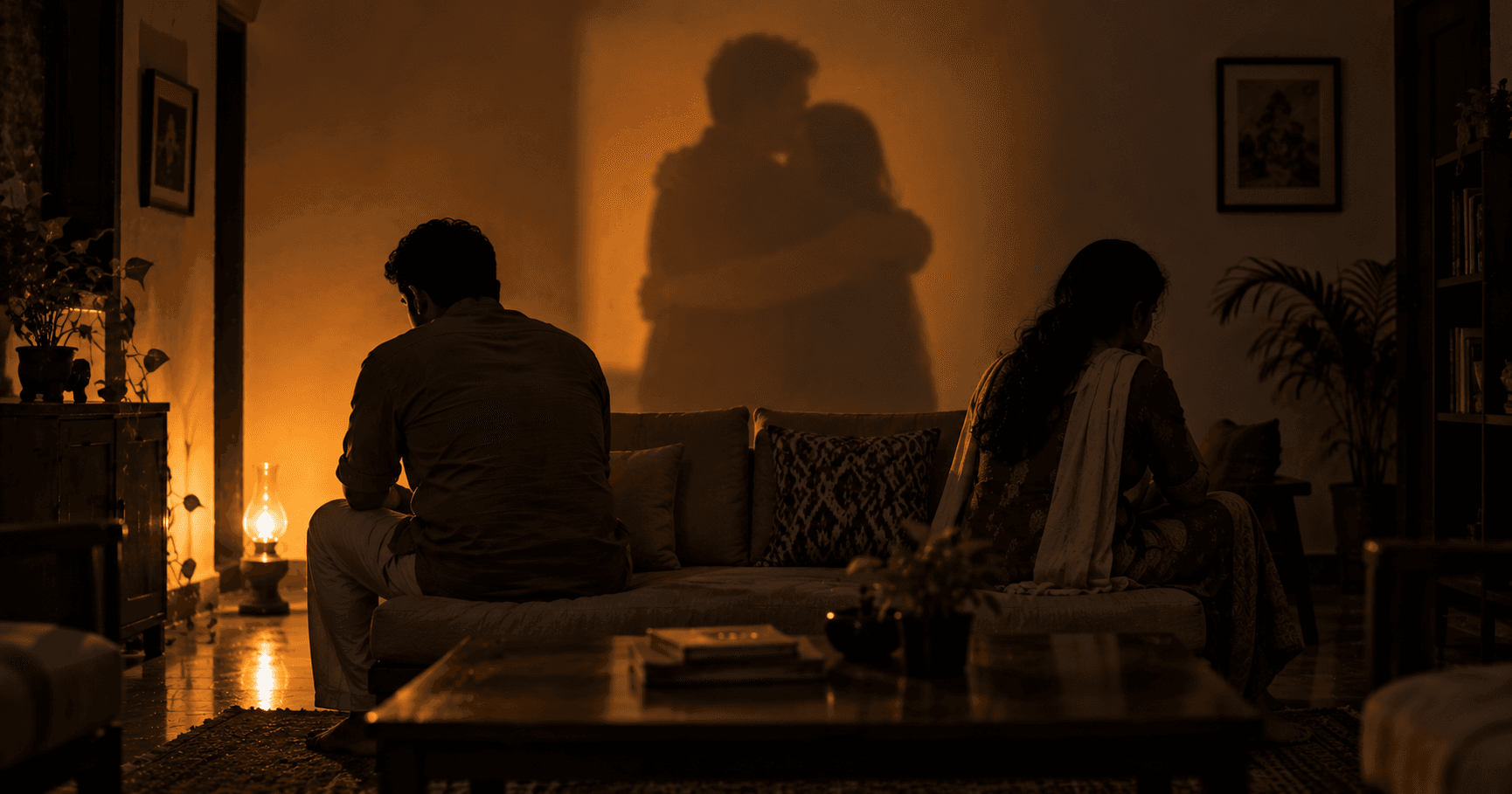
Anitha scored 1,176 out of 1,200 in her Class 12 exams. 98 percent. Centum in Physics. Centum in Mathematics. 199 in Chemistry. 194 in Biology. She was the only student in Ariyalur district to score perfect marks in both Physics and Maths.
Her father, Shanmugham, was a daily-wage laborer at Gandhi Market in Tiruchirappalli. Her mother had died when she was young. The family earned less than one lakh a year. They lived in a house without a toilet.
In 2013, the Supreme Court had struck down NEET as unconstitutional, and the UPA government at the Centre left it alone — states continued running their own admissions. Then the BJP came to power. In April 2016, a five-judge Supreme Court bench restored NEET. By August 2016, the BJP government gave it permanent legislative force through Section 10D of the Indian Medical Council Amendment Act, making it mandatory for every state. Tamil Nadu fought back — Jayalalithaa wrote letters to the Prime Minister opposing NEET, but after her demise, the erstwhile AIADMK government surrendered to the Union. MK Stalin was arrested leading anti-NEET protests, and after the DMK came to power in 2021, the Assembly passed a NEET exemption bill with near-unanimous support. The BJP was the only party to walk out. The bill went to the Governor, who sat on it for months before returning it. The Assembly re-passed it. It went to the President. In March 2025, the President withheld assent — no reasons given. CM Stalin called it a dark chapter in federalism. The DMK has since moved the Supreme Court.
The exemptions never came — blocked at every turn by the Union Government. But in 2017, when Anitha sat for NEET, none of this had happened yet. She had studied the state board syllabus, in a government-aided school, without coaching. She scored 86 out of 720.
She said in an interview before she died: "From the village where I am from, except two or three people, no one wrote NEET. Even they didn't make it. They are also talented. When people like us don't have the means or the opportunities to attend coaching classes, we can only prosper using what we have."
On September 1, 2017 — nine days after the Supreme Court dismissed Tamil Nadu's plea for exemption — Anitha took her own life. She was seventeen years old. Her brother had already bought her MBBS textbooks. Her veterinary science classes were supposed to start on Monday.
A child scored 98 percent in her board exams. She wanted to be a doctor. She came from a family that could not afford coaching. The system that claimed to measure merit did not measure her at all. It measured her poverty and found her unworthy.
Anitha is the name we remember. At least twenty NEET aspirants have died by suicide in Tamil Nadu in the years since. Most of their names never made the news.
The System Behind the Score
Here is how NEET works in practice.
In 2024, approximately 24 lakh students registered for NEET. About 23 lakh appeared. The total number of MBBS seats in India is roughly 1,15,500 — of which only about 59,000 are in government medical colleges. That means one in twenty gets any seat. One in forty gets a government seat.
Now look at who gets through.
The Justice A.K. Rajan Committee, constituted by the Tamil Nadu government in 2021, studied over 80,000 responses and produced the most comprehensive data available on how NEET actually works. The findings are devastating.
In the years since NEET was introduced, 99 percent of students who qualified had received private coaching. NEET coaching has become a ₹5,750 crore industry in Tamil Nadu alone — over 400 coaching centers that mushroomed after 2016, feeding on the desperation of families trying to buy their children a chance.
The cost of that chance: ₹30,000 for a crash course. ₹1,50,000 for a one-year program. Up to ₹4,50,000 for a four-year long-term coaching package. 95 percent of Tamil Nadu State Board students cannot afford it. Nearly 97 percent of government school students come from families earning less than ₹1,00,000 a year.
Before NEET, 65 percent of students admitted to government medical colleges in Tamil Nadu were from rural areas. After NEET, that number dropped to 50 percent. State Board students went from 95 percent of applicants to 64 percent. CBSE students surged from 3 percent to 32 percent. Students writing NEET as repeaters — multiple attempts over multiple years of paid coaching — went from 12 percent of admissions to 71 percent.
Read those numbers again. The exam that claims to find the most meritorious students is systematically filtering out rural students, government school students, State Board students, and first-generation learners. It is selecting for access to coaching, English-medium schooling, CBSE curricula, and the financial ability to spend years preparing for a single test.
This is what a "national standard" looks like when applied to a country where the starting lines are separated by centuries of accumulated inequality.
What Merit Actually Means
In 2020, Harvard professor Michael Sandel published The Tyranny of Merit. His argument is devastating in its clarity: the idea of meritocracy generates hubris among the winners and humiliation among the rest. Those who succeed come to believe they fully earned their success — that luck, circumstance, privilege, and public investment played no part. Those who fail are told the failure is theirs alone.
Sandel calls credentialism the last acceptable prejudice. The insistence that a college degree — from the right college, through the right exam — is the only route to a respectable life. The sorting is economic, but the judgment is moral. Those who make it through are virtuous. Those who don't are lacking.
"A perfect meritocracy banishes all sense of gift or grace," Sandel writes. "It diminishes our capacity to see ourselves as sharing a common fate."
In 2023, Mary Blair-Loy and Erin Cech published Misconceiving Merit, based on a study of over five hundred STEM professors at a top American research university. They found that the very belief in meritocracy — the conviction that the system rewards talent and effort fairly — actively perpetuates the exclusion of underrepresented groups. When people believe the system is fair, they stop questioning the outcomes. They look at a room full of upper-caste faces and conclude that this must be what merit looks like.
Merit is a tyranny, invented by the privileged to make sure that the privileges stay only with them.
NEET fails the multidimensional construct of merit on every axis. It does not measure aptitude for medicine. It does not measure empathy, clinical reasoning, or the ability to serve communities that need doctors most. It measures access to coaching. It measures which syllabus your school followed. It measures whether your family could afford four years of preparation. And then it calls the result "merit."
Inside the Fortress
If the entrance exam is rigged, what happens inside the institutions is worse.
A 2023 investigation published in Nature — one of the most respected scientific journals in the world — found that at the top five IITs and IISc Bangalore, 98 percent of professors are from upper castes. Not 70 percent. Not 80 percent. Ninety-eight.
The mandated reservation for faculty is 27 percent for OBCs, 15 percent for SCs, 7.5 percent for STs. Across all 23 IITs, the actual numbers: 80 percent General, 11.2 percent OBC, 6 percent SC, 1.6 percent ST. Fifteen of twenty-three IITs have zero Scheduled Tribe faculty. IIT Mandi has zero SC faculty. IIT Goa and IIT Dharwad have zero OBC faculty.
At TIFR — the Tata Institute of Fundamental Research, designated an "Institution of Excellence" and conveniently exempted from reservation — 100 percent of professors are upper caste. One hundred.
Between 2018 and 2023, 39 students died by suicide across the IITs. Parliamentary data shows that 58 percent of student suicides across IITs, NITs, and central universities were from SC, ST, OBC, and minority communities — despite these communities making up a smaller proportion of enrollment. In seven leading IITs, 60 percent of dropouts were from marginalized communities, with SC/ST dropout rates reaching 72 percent.
Darshan Solanki was eighteen years old, a first-year Chemical Engineering student at IIT Bombay. He died on February 12, 2023. His sister told investigators that classmates would say "dalit aaya... dalit aaya" — look, the Dalit is here — after they learned his caste.
How did they learn his caste? They asked his JEE rank. In the IIT system, your rank is a proxy for your category. Everyone knows what score ranges correspond to which reservation category. An internal survey at IIT Bombay found that 37 percent of SC/ST students had been asked their exam ranks specifically to identify their caste. The question "What was your rank?" is never innocent. It is a sorting mechanism dressed as casual conversation.
This is what Prof. Sandel calls credentialist prejudice — using exam performance as a license to discriminate. The rank becomes the caste marker. The coaching-fed score becomes the measure of human worth. And those who entered through reservation are marked as lesser, to be tolerated at best, driven out at worst.
IIT Bombay's committee found "no specific evidence of direct caste-based discrimination" in Darshan's case. The same institution where 37 percent of SC/ST students reported being interrogated about their ranks. The fortress investigates itself and finds no problem.
The Money Gate
Here is where the myth of merit collapses entirely.
In January 2026, the National Board of Examinations slashed qualifying cutoffs for NEET-PG (postgraduate medical admissions) to fill over 18,000 vacant seats. The cutoff for SC/ST/OBC candidates dropped to the zeroth percentile — meaning candidates with negative marks could qualify.
A candidate with minus 12 marks out of 800 was allotted a seat to pursue an MD in Physiology at a government medical college. Negative marks. A medical degree.
For MBBS undergraduate seats, thirty-two deemed universities now charge total tuition exceeding ₹1 crore for the full course. Add hostel, mess, and university fees, and the total crosses ₹1.5 crore by graduation. Illegal capitation fees — donations demanded under the table — run an additional ₹10 lakh to ₹50 lakh on top.
If you have money, you can get a medical seat with a score that would get a poor student laughed out of the system. The same people who scream about "merit" when it comes to reservation have nothing to say about management quota seats going to candidates with single-digit or negative marks — as long as the check clears.
This is the reality of "merit" in Indian medical education. A Dalit girl from Ariyalur scores 98 percent in her board exams and is told she isn't good enough. A student with negative marks in NEET-PG gets an MD seat because the system needs to fill its quota and the money is right. One of them died. The other will practice medicine.
Tell me again how merit works.
The Reservation They Don't Protest
For decades, upper-caste groups have attacked SC/ST/OBC reservation as anti-merit, anti-national, and the ruination of Indian excellence. Every year, social media fills with outrage about "quota students" taking seats from "deserving candidates." Protests. Petitions. Prime-time debates. The anger is bottomless.
Then, in January 2019 — months before a general election — the BJP government passed the 103rd Constitutional Amendment. It created a 10% reservation for Economically Weaker Sections. The fine print: EWS explicitly excludes SC, ST, and OBC communities. Since everyone else already has a reservation category, the EWS quota is, by design, a reservation exclusively for upper castes.
The streets were silent. No protests. No outrage about merit being destroyed. No candlelight marches for excellence.
The income threshold for EWS eligibility is ₹8 lakh per year. Here is the absurdity that should end any serious conversation: the OBC "creamy layer" cutoff — the ceiling above which OBCs are excluded from reservation because they are considered too well-off — is also ₹8 lakh. The same number. Used to say OBCs at ₹8 lakh are too rich for reservation, and upper castes at ₹8 lakh are too poor to survive without it.
And how many upper-caste families fall below this threshold? 99 percent of rural and 95 percent of urban general-category households earn less than ₹8 lakh. The EWS quota does not target a narrow band of genuinely poor upper-caste families. It covers virtually the entire general category. It is a blanket caste reservation dressed in the language of economics.
The Sinho Commission data tells you who India's poor actually are. Of 31.7 crore people below the poverty line, SC/ST/OBC communities constitute 82 percent. The general category accounts for 5.4 percent. The EWS quota excludes the 82 percent and reserves seats for the 5.4 percent.
And then comes the scam. The National Medical Commission flagged that 148 EWS-category students secured postgraduate medical seats in management and NRI quota seats — seats costing approximately ₹1 crore per year. Students whose families supposedly earn less than ₹8 lakh paying crores for medical seats. In 2025, over 200 EWS students took seats in deemed medical colleges where total MBBS costs cross ₹2 crore. The system runs on fraudulent income certificates — accountants working overtime to make affluent families look poor on paper. In Chhattisgarh, a BJP leader's niece was caught securing an MBBS seat with a fake EWS certificate.
Justice Ravindra Bhat, dissenting in the Supreme Court's 3-2 verdict that upheld EWS, wrote a hundred-page opinion that should be required reading for anyone who uses the word "merit" in this country:
"The exclusionary clause strikes a death knell to the equality and fraternal principle which permeates the equality code."
"Our Constitution does not speak the language of exclusion."
He called the amendment Orwellian. The majority disagreed. The review petition was dismissed.
Upper-caste Hindus — 22.3 percent of the population — own 41 percent of India's total wealth. Fifty percent of Brahmins and 44 percent of Baniyas fall in the richest wealth quintile. SC communities own 7.6 percent. ST communities own 3.7 percent. These are the groups that the 103rd Amendment decided needed reservation.
In Tamil Nadu, Chief Minister Stalin refused to implement EWS. He convened an all-party meeting that formally rejected the 103rd Amendment, calling it "caste discrimination among the poor." The DMK filed a review petition in the Supreme Court. Tamil Nadu already runs a 69 percent reservation — protected under the Ninth Schedule — covering BC, MBC, SC, and ST communities. Adding 10 percent EWS would push total reservation to 79 percent, leaving 21 percent unreserved. More importantly, the DMK's argument is ideological: reservation exists to address social backwardness rooted in caste. Reducing it to an income certificate is a mockery of the principle — and a backdoor for the very communities who have dominated India's institutions for millennia to claim victim status.
The people who built the caste system now want protection from it. And they want it without giving up a single rupee of the ₹1 crore management quota seats their children still buy.
The Hypocrisy Abroad
In June 2020, the California Department of Fair Employment and Housing filed the first caste discrimination lawsuit in American history. The defendant was Cisco Systems. A Dalit Indian-American engineer at Cisco's San Jose headquarters alleged that two upper-caste supervisors — after learning his caste background — subjected him to lower pay, isolation from coworkers, and retaliation when he reported the discrimination.
This was not an isolated incident. A 2016 survey by Equality Labs of over 1,500 South Asian Americans found that 67 percent of Dalits reported caste-based workplace harassment in the United States. Sixty percent experienced caste-based derogatory comments. Twenty-five percent reported physical assault based on caste.
Caste traveled. It followed the diaspora into Silicon Valley offices, university departments, and corporate boardrooms.
When California Senator Aisha Wahab introduced SB 403 to add caste as a protected category in anti-discrimination law, the organized opposition came from the Hindu American Foundation and the Coalition of Hindus of North America. Governor Newsom vetoed the bill in October 2023. The same organizations that fight against caste protections in America are politically aligned with forces that oppose reservation in India.
Here is the pattern: the same upper-caste Indians who cry about "merit" being destroyed by reservation in India benefit from diversity and minority representation programs when they move to the United States, the UK, or Australia. They are counted as underrepresented minorities in hiring. They check the "Asian" or "South Asian" box. They take the seats that affirmative action created — seats that were fought for by Black, Latino, and Indigenous communities — while actively opposing any protection for the Dalits and Adivasis they left behind. The hypocrisy is industrial-scale.
One Nation, One Lie
The argument for NEET, CUET, and every "one nation, one exam" scheme follows the same logic: standardization equals fairness. One test for everyone. Level playing field.
This argument only works if you believe that a student in Ariyalur and a student in South Delhi start from the same place. That a child in a government school studying in Tamil and a child in a CBSE school studying in English are taking the same exam in any meaningful sense. That a family earning less than a lakh a year and a family spending four lakhs on coaching are competing on equal terms.
They are not. And everyone who pushes this argument knows they are not.
When CUET was introduced for central university admissions, girls' enrollment at Delhi University dropped 37.75 percent in the first year — from 54,818 to 34,120. The exam is computer-based, disadvantaging students from rural areas with poor digital infrastructure. Coaching costs ₹35,000 to ₹70,000. The students who can least afford another barrier are the ones who lose first.
Arignar Anna understood this decades ago when he asked: just because there are more crows than peacocks, should crows become the national bird? Uniformity across a diverse, unequal country is just the efficient scaling of oppression. It takes the existing hierarchy — where some communities have had thousands of years of social capital, education, networks, and economic power — and locks it in place with a standardized score.
One exam. One syllabus. One language of power. And then the winners call it merit.
The Debt
Michael Sandel ends The Tyranny of Merit with a call for humility. "Humility is the beginning of the way back from the hard ethics of success that drives us apart."
In India, humility is not enough. Humility does not bring back Anitha. Humility does not fill the 83 percent vacant ST faculty positions in central universities. Humility does not explain to Darshan Solanki's family why an eighteen-year-old heard "dalit aaya" in the corridors of an institution that claims to be world-class.
What is needed is honesty. The honest admission that "merit" as constructed by NEET, JEE, CUET, and every standardized gatekeeping exam in this country does not measure talent. It measures privilege. It measures which family you were born into, which school you could afford, which language you were taught in, which coaching center your parents could pay for, and whether your caste gave you the social capital to walk into an exam hall believing you belonged there.
The honest admission that when 98 percent of professors at the top IITs are upper caste, the institution has not found the most meritorious candidates. It has reproduced the caste system with a new vocabulary.
The honest admission that a system where a student with negative marks can buy an MD seat while a student who scored 98 percent in her boards dies because she couldn't afford coaching — that system has nothing to do with merit. It is a marketplace where privilege is laundered through exam scores.
Merit, as India practices it, is a door that opens for those who already have the key — and a wall for everyone else.
Anitha's brother said something after her death that has stayed with me: "Apparently, change can only happen if someone dies. I'm not saying this because I'm Anitha's brother, but in Tamil Nadu, it has always been like this."
He is right. And he should not have had to be.
The system does not need reform. It needs to be named for what it is. Merit in India is tyranny — invented by the privileged, maintained by the privileged, and defended by the privileged every time someone dares to question it.
Until we stop worshipping this lie, Anithas will keep dying. And every one of their deaths will be called an unfortunate tragedy instead of what it actually is: the system working exactly as designed.
This piece is part of the Social Justice series. It draws on the work of Michael Sandel (The Tyranny of Merit), Mary Blair-Loy and Erin Cech (Misconceiving Merit), the Justice A.K. Rajan Committee report, NCRB data, Nature journal investigations, and the documented experiences of students fighting a system that was never built for them.
Read the previous articles: Social Justice is a Right, Not Charity, Fellow Untouchables, and The Women Who Built the Movement.