In February 1959, Martin Luther King Jr. visited a high school in Trivandrum, Kerala. The students were children of families once classified as untouchables—people condemned by birth to the lowest rung of India's caste hierarchy.
The principal introduced him.
"Young people, I would like to present to you a fellow untouchable from the United States of America."
King was shocked. He had dined with Prime Minister Nehru. He had been garlanded at airports. He had traveled halfway across the world as a celebrated leader. Why would this principal call him an untouchable?
But then his mind drifted back to America.
He thought of twenty million Black Americans smothering in an airtight cage of poverty. He thought of rat-infested slums in the richest nation on earth. He thought of his own children, judged not by the content of their character but by the color of their skin. He thought of restaurants where he could not eat, hotels where he could not sleep, schools where his children could not learn.
And he said to himself: "Yes, I am an untouchable, and every Negro in the United States of America is an untouchable."
In that moment, in a school in southern India, King understood something fundamental. America had its own caste system. It was called race. And the forces he was fighting back home were not so different from the forces that had oppressed millions in India for millennia.
Today is Martin Luther King Jr. Day. It is a day to remember his dream. But it is also a day to remember that the dream was never his alone.
The Same Wound, Different Names
Thirteen years before King's visit, in 1946, another letter crossed the ocean.
Babasaheb Ambedkar, the foremost leader of India's Dalits, wrote to W.E.B. Du Bois, the towering African American intellectual and co-founder of the NAACP. Ambedkar had read Du Bois's writings. He had seen the parallels.
"I belong to the Untouchables of India and perhaps you might have heard my name," Ambedkar wrote. "There is so much similarity between the position of the Untouchables in India and of the position of the Negroes in America that the study of the latter is not only natural but necessary."
Du Bois replied within weeks. He sent Ambedkar a copy of the petition the National Negro Congress was preparing for the United Nations—a document demanding international recognition of America's human rights abuses against Black citizens. He wrote: "I have every sympathy with the Untouchables of India."
Ambedkar hoped to do the same for Dalits. He understood that their struggle was not merely local. It was part of a global fight against systems that ranked human beings by birth—systems that told some people they were born inferior and must remain so.
This was not the first such connection. In 1873, Mahatma Phule—the great anti-caste reformer of Maharashtra—dedicated his book Gulamgiri (Slavery) to "the good people of the United States as a token of admiration for their sublime, disinterested and self-sacrificing devotion in the cause of Negro Slavery."
Phule saw what Ambedkar saw, what Du Bois saw, what King would see: the wound was the same. Only the names differed.
Three Men, One Fight
Martin Luther King Jr. was born in 1929 in Atlanta, Georgia—a city where Black people could not drink from the same fountains as whites, could not sit in the same sections of buses, could not vote without facing violence. He became a Baptist minister, and in 1955, he led the Montgomery Bus Boycott after Rosa Parks was arrested for refusing to give up her seat. For 381 days, Black citizens walked rather than ride segregated buses. They won.
From there, King led marches, faced fire hoses and police dogs, was jailed repeatedly, and delivered speeches that moved a nation. His "I Have a Dream" speech in 1963 remains one of the most powerful calls for equality ever made. He was awarded the Nobel Peace Prize in 1964. Four years later, he was assassinated.
Babasaheb Ambedkar was born in 1891 into the Mahar caste—classified as untouchable. In school, he was made to sit outside the classroom. He could not drink from the common water source. When his family traveled, bullock cart drivers would throw them off upon learning their caste. Despite this, he became the first from his community to earn a college degree, then earned doctorates from Columbia University and the London School of Economics.
He led the Mahad Satyagraha in 1927, where thousands of Dalits marched to drink water from a public tank—an act of defiance against centuries of exclusion. He demanded separate electorates for Dalits at the Round Table Conferences, arguing that oppressed communities needed independent political power. Gandhi opposed him and fasted unto death; Ambedkar was forced to compromise.
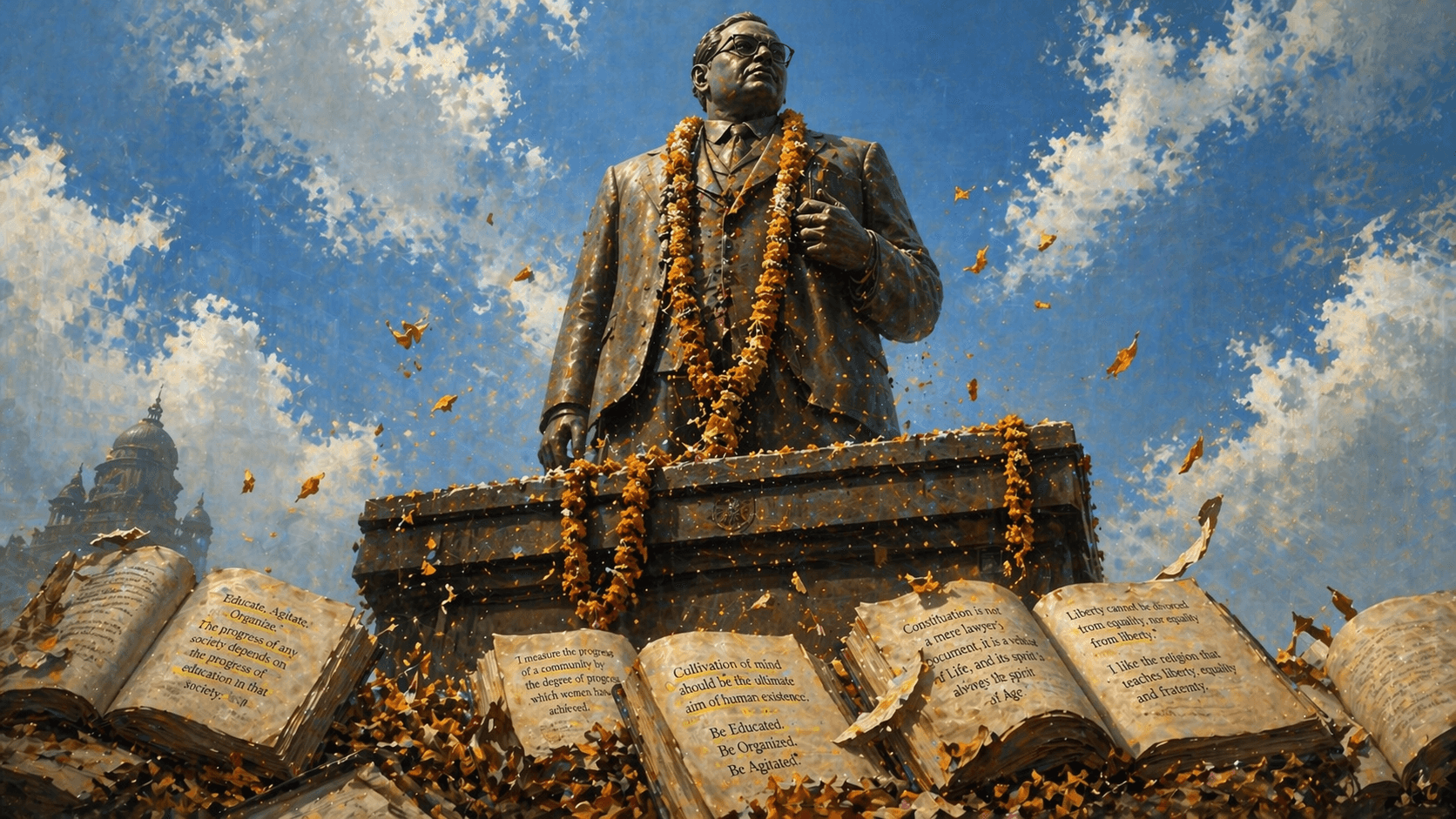
Yet Ambedkar's greatest achievement came after independence: he chaired the committee that drafted India's Constitution. He wrote into it the abolition of untouchability, the right to equality, and the framework for reservation—affirmative action for communities denied education and opportunity for millennia.
Periyar E.V. Ramasamy was born in 1879 in Tamil Nadu. Unlike King and Ambedkar, he came from a relatively privileged caste. But witnessing discrimination at the Kalighat Temple in Varanasi and experiencing the hypocrisy of upper-caste reformers radicalized him. He left the Congress party, rejected religion as a tool of oppression, and founded the Self-Respect Movement.
Periyar understood that caste was maintained through religious sanction. Priests claimed divine authority for hierarchy. Scriptures declared some humans inferior by birth. To fight caste, you had to fight the structures that sanctified it.
He was not against faith. He was against the weaponization of faith. He fought for widow remarriage, for intercaste marriage, for women's education—all things forbidden by religious orthodoxy. The Dravidian movement he sparked transformed Tamil Nadu and continues to shape its politics today.
Three men, three continents of struggle, one understanding: dignity cannot be granted by those who denied it. It must be demanded, organized, and won.
What They Knew
These three leaders—King, Ambedkar, Periyar—operated in different contexts. King faced Jim Crow segregation enforced by law and terror. Ambedkar faced a caste system embedded in religious texts and social practice for over two thousand years. Periyar faced the intertwining of caste with religion, language, and regional identity.
Yet they understood the same truths.
First: oppression is structural, not individual. It is not enough to change hearts. You must change laws, institutions, and the distribution of power. King fought for the Civil Rights Act and the Voting Rights Act. Ambedkar wrote protections into the Constitution. Periyar demanded proportional representation in government jobs and education.
Second: the oppressed must lead their own liberation. King did not wait for white moderates to grant freedom. Ambedkar did not accept Gandhi's paternalistic vision of upper castes "uplifting" Dalits. Periyar rejected the Congress party's Brahminical leadership. Each built movements rooted in the communities they served.
Third: dignity is non-negotiable. King refused to accept "wait" as an answer. Ambedkar refused to die a Hindu, converting to Buddhism because Hinduism as practiced offered no place for his people's dignity. Periyar refused to treat religious authority as beyond question.
Why This Matters Today
In America, the legacy of slavery and segregation persists. Black Americans are disproportionately incarcerated, disproportionately poor, disproportionately killed by police. The dream King spoke of remains deferred. The backlash against civil rights—voter suppression, attacks on affirmative action, the denial of systemic racism—continues.
In India, caste atrocities have increased 46% since 2013. Dalit students die by suicide in elite institutions, driven by discrimination and isolation. Reservation positions remain unfilled. Newsrooms, corporate boards, and the judiciary remain dominated by upper castes. The Constitution Ambedkar drafted is under pressure from those who never accepted its vision of equality.
The struggles are not identical. But they are connected. Both involve systems that rank human beings by birth. Both are maintained by those who benefit from hierarchy. Both require constant vigilance to defend the gains already won.
In 1967, a year before his assassination, King connected the dots explicitly:
"Segregation is evil because it stigmatizes the segregated as an untouchable in a caste system. And this is why I am convinced that we have the moral mandate to work to get rid of this unjust and evil system."
He had learned this in Trivandrum. He carried it with him until Memphis.
The Unfinished Work
King was 39 when he was killed. Ambedkar was 65 when he died, just weeks after converting to Buddhism with 400,000 followers. Periyar lived to 94, long enough to see the Dravidian movement reshape Tamil Nadu.
None of them saw their work completed. None of them expected to.
The fight for dignity is not a project with an end date. It is a continuous struggle against systems that reassert themselves, against those who benefit from hierarchy and resist its dismantling. Each generation must take up the work.
Today, that work continues. In America, movements like Black Lives Matter carry forward King's legacy, demanding accountability for police violence and systemic racism. In India, Dalit activists, writers, and organizers fight for the full implementation of constitutional protections, for an end to atrocities, for representation in institutions that shape discourse.
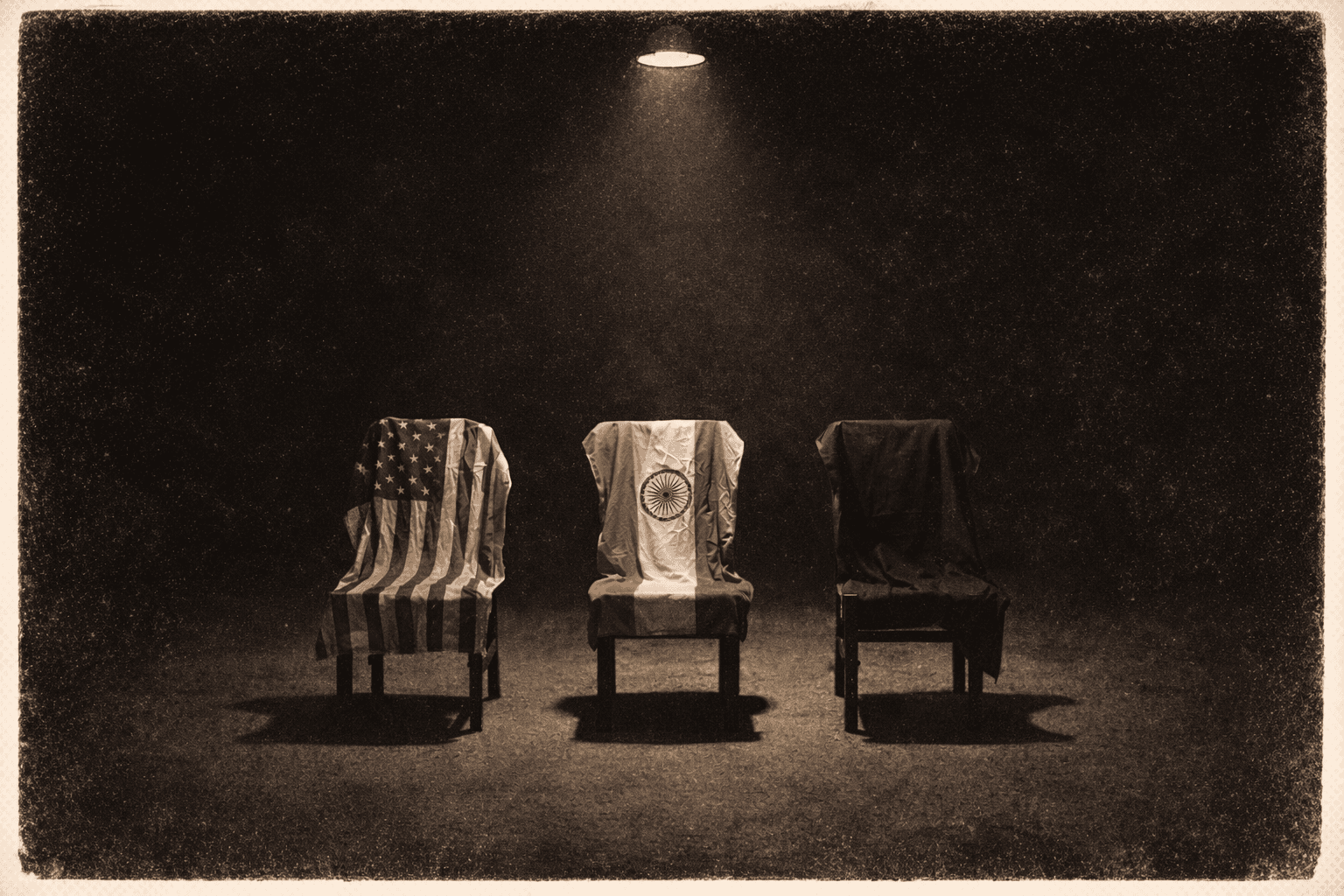
The solidarity that Ambedkar sought with Du Bois, that King recognized in Trivandrum, that Phule expressed in 1873—this solidarity remains essential. Caste and race are different in their histories and mechanisms. But they are both systems of graded inequality. They both tell some humans they are worth less than others by accident of birth. They both must be fought.
On this Martin Luther King Jr. Day, remember his words. Remember his dream. But remember also the school principal in Kerala who saw in King what King had not yet seen in himself.
A fellow untouchable. A fellow fighter. A fellow human being demanding what should never have been denied.
The work is unfinished. It falls to us to continue.
Martin Luther King Jr. Day is observed on the third Monday of January each year, honoring King's birthday on January 15, 1929. This piece is written in solidarity with all those who continue the fight against caste, race, and every system that ranks human dignity by birth.