On the first of February 1968, it rained in Memphis.
Echol Cole and Robert Walker were working the back of a garbage truck. When the rain came down hard they climbed into the barrel of the truck, because there was nowhere else for them to wait it out. Somewhere in there the compactor started. It crushed them both.
They were thirty years old, give or take. The city of Memphis was not clear on this, and the city of Memphis was not especially troubled by its own lack of clarity, because Cole and Walker were classified as hourly labourers and the classification carried no pension, no insurance, and no particular obligation to know how old a man was when you buried him.
Everyone in that workforce already knew what the classification meant. Not long before, twenty-one Black men from the sewers and drains division had been sent home in the rain without a full day's pay. The white crews that day were allowed to stay and wait it out.
Eleven days after the compactor, thirteen hundred sanitation workers walked off the job.
What the sign was arguing with
The man who led them out was T.O. Jones, who had done the work himself and now ran a new and almost weightless union local. He did not call the national office for permission. He simply took the men out, and then spent weeks trying to keep a strike alive against a mayor who had no intention of recognising that he was negotiating with anybody at all.
The demands were plain enough to fit on an index card. Recognise the union. Raise the wage. Pay the overtime. Promote on merit, regardless of race.
And the men carried a sign.
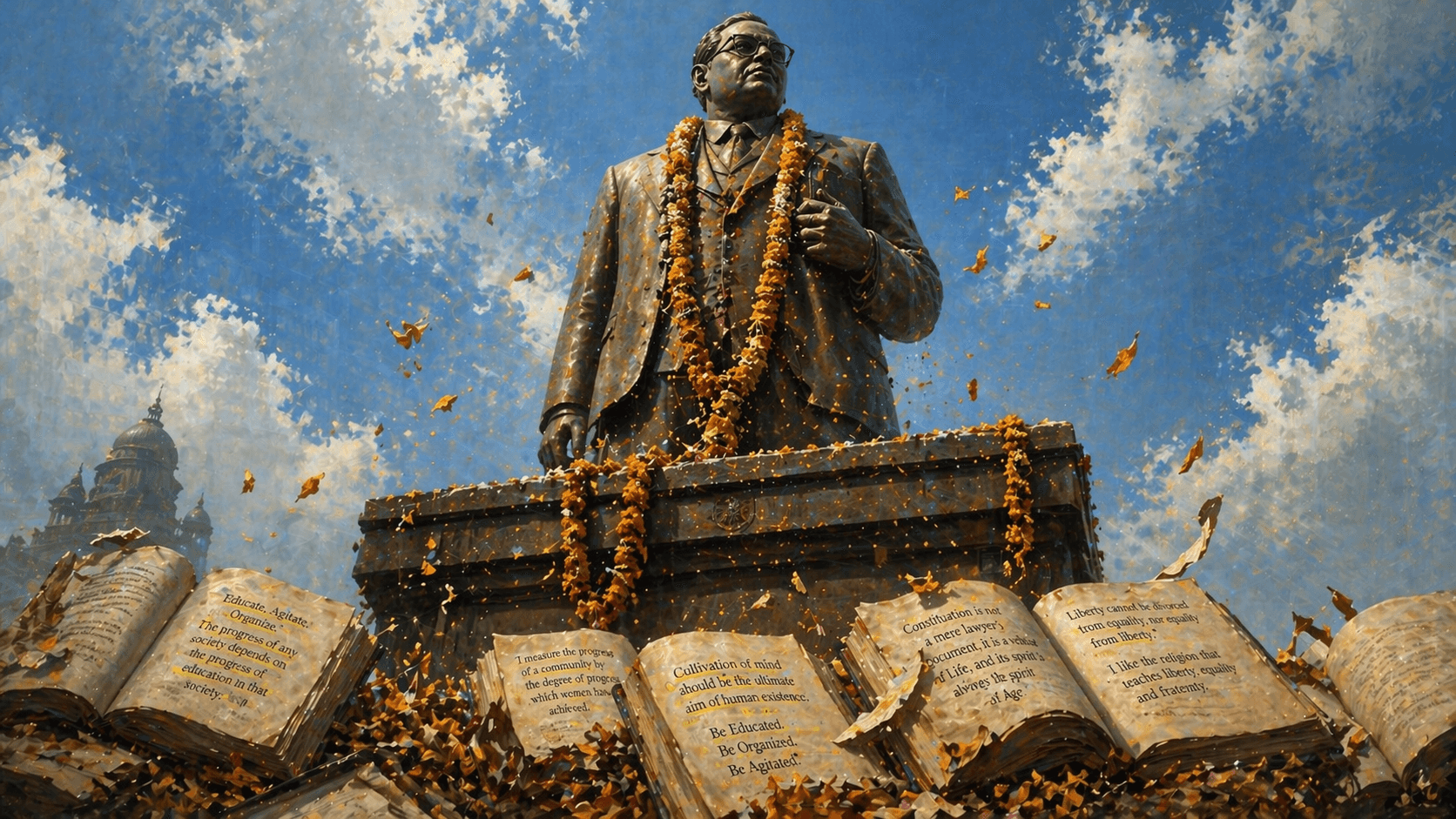
I AM A MAN
Four words, hand-lettered, held up at chest height in photograph after photograph until the photographs became the thing everyone remembers about Memphis.
It is worth sitting with how strange a sentence that is to have to carry through a street. It makes no demand. It cites no statute. It asks for no specific sum of money. It is a claim of bare existence, which is a thing you only have to assert out loud when someone with more power than you has organised an entire municipal payroll around the position that it might be arguable.
Martin Luther King came to Memphis for these men. He came back a second time when the first march went badly. On the fourth of April he was shot on the balcony of the Lorraine Motel, in a city he was in for a garbage strike.
Twelve days later Memphis recognised the union and raised the wages.
That was the last campaign. Not the speeches we quote every January, not the mountaintop in the abstract — a dispute about whether the men who carry away a city's waste are employees of that city, and whether their widows get anything.
A sewer in Chennai, this month
On the fourth of October, a contract worker went down into an underground sewer at Kolathur, in Chennai. He died of asphyxiation. Two of the men with him lost consciousness. The contract manager was charged, including under the law that is supposed to have ended this.
A month before that, near Kallakudi in Tiruchirappalli district, a man went into a septic tank at a private house and the gas took him. Another man went in after him to pull him out. The gas took the second man too.
Reports this month count six sanitation workers dead in Tamil Nadu in the space of ten days.
These are not historical sentences. They were written this autumn, about this October, in the state I live in.
The answer our government gives
Here is where the comparison stops being a comparison and starts being something worse.
Memphis in 1968 at least conceded that Cole and Walker had existed. The argument was over what they were owed. The Union government's position on manual scavenging in India is more ambitious than that. Asked in Parliament, it has stated that no report of the practice has been received from any state or union territory.
No reports received. Therefore no practice. Therefore no practitioners.
This is a practised move, and it has been visible for a decade. In 2016 the National Commission for Scheduled Castes called senior state officials to a review meeting and asked them for two numbers: how many dry latrines each state had, and how many manual scavengers. Telangana returned 1,57,321 dry latrines and zero manual scavengers. Himachal Pradesh, 854 and nil. Karnataka, 24,468 and 302. Madhya Pradesh, 39,362 and 36. Bihar found eleven people in the whole state. Haryana reported nil for both.
The question those officials were left holding is the one The Hindu put in print at the time: whether several hundred thousand dry latrines across India had been cleaning themselves.
The Socio-Economic Caste Census of 2015 had already counted 1,80,657 households making their living from exactly that work.
The deaths are harder to make vanish, so they are filed under a different heading. The 2013 Act draws a line between manual scavenging, which is officially extinct, and hazardous cleaning, which is a man entering a sewer or a septic tank without protective equipment and which is very much alive. A death in a sewer becomes a hazardous cleaning fatality, and a hazardous cleaning fatality is a workplace accident, and a workplace accident is nobody's caste problem.
The National Human Rights Commission has recommended widening the definition so the two halves come back together. They remain apart.
Memphis carried a sign saying I am a man. Here the reply is filed before the sentence is finished. There is no such person. There has not been for years. It says so in the record.
The arithmetic nobody agrees on
In July this year the government told Parliament that 332 workers had died cleaning sewers and septic tanks since January 2021.
The Safai Karamchari Andolan, which has been counting these deaths for three decades and attending the funerals, puts the figure for the same window at 593.
Two hundred and sixty-one men, in the gap between one number and the other.
Memphis fought to be counted as men. These men cannot manage to be counted at all. The arithmetic loses them on the way out, the same way the payroll lost them on the way in.
Not treated as a human while he lived. Not a number when he died.

The pattern repeats year by year. For 2024 the Andolan counted 116; the official figure came in at 54. For 2025 the Andolan counted 121; the ministry recorded 46. The National Commission for Safai Karamcharis keeps its own series, and even that series is quoted at different totals in different places, which tells you something about how carefully it is maintained.
I am not going to pretend to resolve this. The honest position is that India does not know how many men it has killed in its sewers, that the people who count most carefully are volunteers and activists rather than the state, and that the gap itself is the finding. A country that wanted the number would have it. Counting is cheap. We count cattle.
One organisation tracking the deaths described the rate as one every forty-five hours. Whichever set of numbers you accept, the unit of measurement is days.
The table Tamil Nadu tops
I write a great deal about what Tamil Nadu gets right, and I believe most of it. So I will give this its own paragraph rather than bury it.
On the National Commission's cumulative record since 1993, Tamil Nadu stands highest in the country at 253 deaths, ahead of Gujarat at 183 and Uttar Pradesh at 133. The Centre's figures for this year put Tamil Nadu third, with 38.
The state that argues, correctly, that it leads the country on school enrolment and maternal mortality and household electrification also leads it here. Both things are true at once, and a politics that can only hold the first one is a politics I have no use for.
Some of that ranking may be the counting itself. The Commission assembles its figures from what states report, plus media coverage and complaints that reach it — so a state with working journalism, open complaint channels and officials who write things down will post a higher number than a state where a man dies in a tank and the paperwork never starts. Tamil Nadu has, at least once, counted more of its own dead than the Union government credited it with: the state's own figure stood at 145 while the Centre recorded 43 for Tamil Nadu. In a table built this way, transparency costs you places.
I will take that caveat seriously and decline the comfort in it. Better bookkeeping can move a state up a table. It cannot put a man back on the ladder. One death in this state is a shame on this count, and there have been hundreds.
The Dravidian movement's whole claim is that dignity is measurable. This is a measurement, and we have failed it.
A century after Periyar made self-respect the first word of Tamil politics, we are still lowering Arunthathiyar men into gas on a rope. Every party that has held Fort St George has said the practice must end. Machines have been bought, pilots launched, photographs taken at the handover. Men are still going down. The movement that taught this state to refuse the temple, the well and the street has left untouched the one place where caste still decides who dies young, and successive governments of every colour have had the majorities, the budgets and the decades to finish it.
A shame on the collective conscience of Tamils.
It stays one until the last man comes up out of a tank alive.
Who goes down
Ask who these men are and the answer arrives with no ambiguity at all.
A detailed review of sewer and septic tank deaths found that 94% of the families of the dead belong to Scheduled Caste communities. In the north the work falls to Valmiki families. In Tamil Nadu the documented cases include Arunthathiyar families, the oppressed caste within the oppressed castes, the community that has been handed this particular work for as long as anyone has been writing it down.
They are rarely employed by anybody, in the legal sense. They are engaged through contractors, by municipalities and by private households, which means that when a man dies in a tank there is a chain of people each of whom can point to someone else. The contractor says he was temporary. The corporation says he was the contractor's. The householder says he just called a number.
This is the same architecture Memphis used. Cole and Walker were hourly men, not city employees in any way that generated an obligation. Sixty years and nine thousand miles apart, the oppressor caste and the segregated South independently arrived at the same administrative trick: keep the man off the payroll and you keep his death off the books.
The three per cent
Hold that next to something this state did in 2009.
Kalaignar Karunanidhi's government took three percentage points out of Tamil Nadu's 18% Scheduled Caste reservation and ring-fenced them for Arunthathiyars alone — in college seats and in government posts, on a preferential basis, with anything left unfilled returning to other Scheduled Caste candidates. It followed a one-man commission under Justice Janarthanam, which found the community at roughly 16% of the state's Dalit population and nowhere near that share of the places reservation was supposed to deliver. The Act came into force on 29 April 2009, covering seven communities under one name: Arunthathiyar, Chakkiliyan, Madari, Madiga, Pagadi, Thoti, Adi Andhra.
What the commission found is worth setting out in full, because it is the whole argument of this article in one table. Arunthathiyars were about 16% of the state's Scheduled Caste population by the 2001 Census. They held 8.76% of engineering places. Around 7.3% of the seats in medicine, dentistry and paramedical courses. In the state services, 7.14% of Group A posts and 6.72% of Group B — representation the state itself described as grotesquely inadequate.
There was exactly one category where they were over-represented. Group D, at around 32.4%.
The government explained why in its own statement of objects and reasons for the Act, in a sentence I have not been able to put down since I read it. Most of them, it said, were scavengers — requiring no educational qualifications.
So the law and this article are about the same men. In 2009 the state of Tamil Nadu wrote down, in a statute, that the reason this community filled the bottom grade of the public payroll was that it had been given the filth to carry. The three per cent was an attempt to move a people out of the only category the state had ever reliably let them fill.
It worked, unevenly. Engineering admissions in the SC(A) category rose from 1,193 in 2009-10 to 3,944 by 2023-24 — about 230%, roughly 15% a year. In MBBS the count went from 107 in 2018-19 to 193 in 2023-24, an 80% rise, though total medical seats in the state grew 82% across the same years, so most of that is the seats expanding rather than the share shifting. Dentistry is where the share genuinely moved: SC(A) candidates went from about 1.5% of the total to 3% in five years.
And the ceiling has never been reached. Three percentage points of eighteen is 16% of the Scheduled Caste quota, and the community's share of SC engineering students has run below that throughout — 8.7% in 2016-17, 14.6% at its best in 2019-20.
The state has also barely looked. When an RTI request asked the welfare department for fifteen years of outcomes under its own landmark law, no consolidated figures came back. The medical education directorate had not collected SC(A) data at all between 2009-10 and 2017-18. One recruitment board could account for its sub-quota hiring; the public service commission declined on a fee technicality.
It also survived the law. The standing objection to a quota inside a quota was that no state had the power to draw one, a position the Supreme Court itself had taken in 2004. In August 2024 a seven-judge bench reversed that by six to one and upheld sub-classification. Tamil Nadu had been right for fifteen years before the court caught up.
The resistance was never really in the assembly, where the bill passed unanimously. It came from inside Dalit politics, where the three per cent was attacked as a way of splitting a bloc — and that is graded inequality doing precisely what Ambedkar said it does. Caste works as a ladder rather than a wall. Almost everyone on it has somebody below them, which means a community being held down can still be recruited to help hold down the one beneath it. Legislating through that is the part worth remembering.
Now put the two facts in one room.
Seventeen years of a dedicated quota. Three times the engineering admissions. A constitutional bench standing behind it. And the men dying in this state's septic tanks are still, overwhelmingly, from that same community — the one whose presence in Group D the state explained, in writing, by saying they were scavengers.
The argument that reservation has run long enough collapses on contact with a septic tank.
Three per cent, for seventeen years, set against a caste order that has been assigning this work to these families since before the relevant records begin. The quota is doing exactly what it was built to do, at the speed a small instrument works against a very old machine. Seventeen years have not undone what a hundred generations built, and nobody sensible expected them to.
What follows from that is more of it. Wider, deeper, and running for as long as the thing it corrects keeps putting men in holes.
The law is already written
It would be convenient if the problem were a missing statute.
Manual scavenging was prohibited in 1993. It was prohibited again, more thoroughly, in 2013. In 2014 the Supreme Court ordered the practice eradicated, the workers rehabilitated, the work mechanised, and ten lakh rupees paid to the family of every worker who dies in a sewer or a tank.
In October 2023, in Dr. Balram Singh v. Union of India, the Court raised that compensation to thirty lakh and issued a long list of directions on phasing the work out and supporting the families left behind. Justice S.R. Bhat, writing for the bench, held the Union and the states duty-bound to eradicate the practice, and put the stakes in a sentence no government has answered since: claims of fraternity, equality and dignity among citizens remain an illusion while a sizeable section of society is forced to enter sewers for a living and die trapped in them. Each of us, he wrote, owes a debt to a segment of the population that has remained unseen, unheard and muted.
In December 2024 the Court asked the Union government to come back and explain why so little had happened. In January 2025 it ordered the practice stopped outright in six metropolitan cities, Chennai among them.
Men died in Chennai sewers after that order. One of them died this month.
So the law exists, the compensation figure exists, the judgments exist, and men are still being lowered into gas on a rope. The missing ingredient was never legislative.
Ten years of meetings
Set the announcements end to end and a pattern shows up that is worse than neglect, because neglect at least has the honesty of doing nothing.
2016. The dry latrines that clean themselves, and a commission noting that spending under the rehabilitation scheme had been negligible for three years running.
2018. Delhi's monitoring committee, created under the 2013 Act and required by that Act to meet twice a year, holds its first meeting nine months after being formed — convened after five men died cleaning a tank at one sewage plant and another died in a pit. The water utility is to receive two hundred sewer-cleaning machines within two months.
2019. At a follow-up meeting, experts suggest examining the feasibility of placing sensors in manholes, so that the gas inside could be measured before a man goes down. Feasibility. Of sensors. Meanwhile a robot built by a start-up in Thiruvananthapuram is already working in Kerala, Tamil Nadu and Andhra Pradesh, with eighty sanitation workers trained to operate it.
December 2019. A ministry reply counts 282 deaths cleaning sewers and septic tanks since 2016, built from the FIRs states chose to file. Tamil Nadu is top of that list too, with 40.
October 2023. The Supreme Court judgment, the thirty lakh, the fourteen directions.
December 2024. The same Court, on the same case, says it will go to any extent to get its own 2023 judgment complied with, come what may.
July 2025. A minister tells the Lok Sabha that no reports of manual scavenging have been received from any state or union territory.
October 2026. Six men die in Tamil Nadu in ten days, and a water board invites tenders for thirteen machines.
Ten years of review meetings, monitoring committees, feasibility studies, social audits, status reports, compliance deadlines and schemes with acronyms. The men who went down in 2016 are dead. So are the men who went down last month.
The second man
Of all the details in all of this, the one I cannot put down is the rescuer.
It appears again and again in the reports. One man goes into the tank. He stops answering. And a second man — a colleague, a brother, somebody standing at the top with no mask and no harness and no training and no idea what hydrogen sulphide does to a body in ninety seconds — goes in after him, because the alternative is to stand there and listen.
Both bodies come up.

That second man is the whole argument, as far as I am concerned. Nobody goes down a manhole after a friend because a contractor told him to. He goes because he is a person, with the full set of attachments and obligations that being a person involves, standing at the edge of a hole that the state has decided contains nobody.
What it would take
The machines exist, and this state has had them for years.
Researchers at IIT Madras built a robot that breaks up the hardened sludge inside a septic tank, turns it to slurry and pumps it out while the operator stays above ground. It was designed in consultation with sanitation workers. The first two units were handed over in 2022, to self-help groups led by two women, Nagamma and Ruth Mary, whose husbands had died doing this work by hand. Ten units were planned across Tamil Nadu. Under the previous government the deployment went further, into Chennai's high-risk zones in partnership with the city water board, inaugurated by the then Deputy Chief Minister, Udhayanidhi Stalin.
Then this month, after the run of deaths, the water board invited tenders for thirteen machines that clean sewer lines without anybody entering them — desilting units, jet-rodding units, suction units.
Thirteen machines, after six deaths in ten days.
So the machines were never the obstacle. Two widows have been operating one since 2022. Each government that has touched this has bought a few more, held the function, and left office with men still going into tanks on a rope. The question is the one Memphis asked in 1968 and never stopped asking. Is this work treated as something the city owes its people, with equipment and wages and insurance and a name on a roll — or as something that happens somewhere below street level, done by somebody whose caste makes him available, procured by the unit when the newspapers get loud?
Thirteen is a procurement decision. The number of sewers is not thirteen.
This is a country that put a spacecraft into orbit around Mars for about four hundred and fifty crore rupees. Seventy-four million dollars — less than a Hollywood studio spent making Gravity, a film about being stranded in space, and roughly a ninth of what the American orbiter that reached Mars the same week had cost. Our own engineers. Our own money. First attempt.
So let nobody stand in front of a grieving family and say the funds are short or the engineering is hard. The money is there. The brains are there. We sent them to Mars and parked them in orbit on a budget a studio would call a rounding error. What has been missing for seventy-nine years is the decision — the plain, unglamorous, politically unrewarding decision that a man suffocating in a drain at Kolathur is as much a national emergency as a probe making orbit.
That decision belongs to every government this country has. The Union government and every state government, each in its own jurisdiction and all of them together, with no exemption for the poor state, no credit for the one that bought thirteen machines, and no alibi for anybody. A republic that can reach another planet and cannot keep a man alive in its own drains has made a choice about which of those two things it cares to be measured on.
The sentence that is still being argued
King's last campaign was about garbage. Not about a dream, in the end, and not about a mountaintop — about whether the men who clean a city's filth are men of that city.
Memphis settled that strike. It recognised the union and raised the pay, twelve days after killing its most famous visitor by failing to protect him.
We have not settled ours. We have done something cleverer. We have written the men out of the category, so that the question of what they are owed never properly arises, and every death becomes an accident in a sector that officially has no workers.
There is a sentence being held up, still, at chest height, at the mouth of every one of those manholes.
Somebody should put it on a sign.