The instinct is to hand the problem over. Describe the feature, let the agent write it, read the diff.
Then the diff is four hundred lines, it looks plausible, and reviewing it means reverse-engineering the thinking that produced it. By the time we understand what it assumed, we've done the design work anyway — backwards, and under pressure to approve.
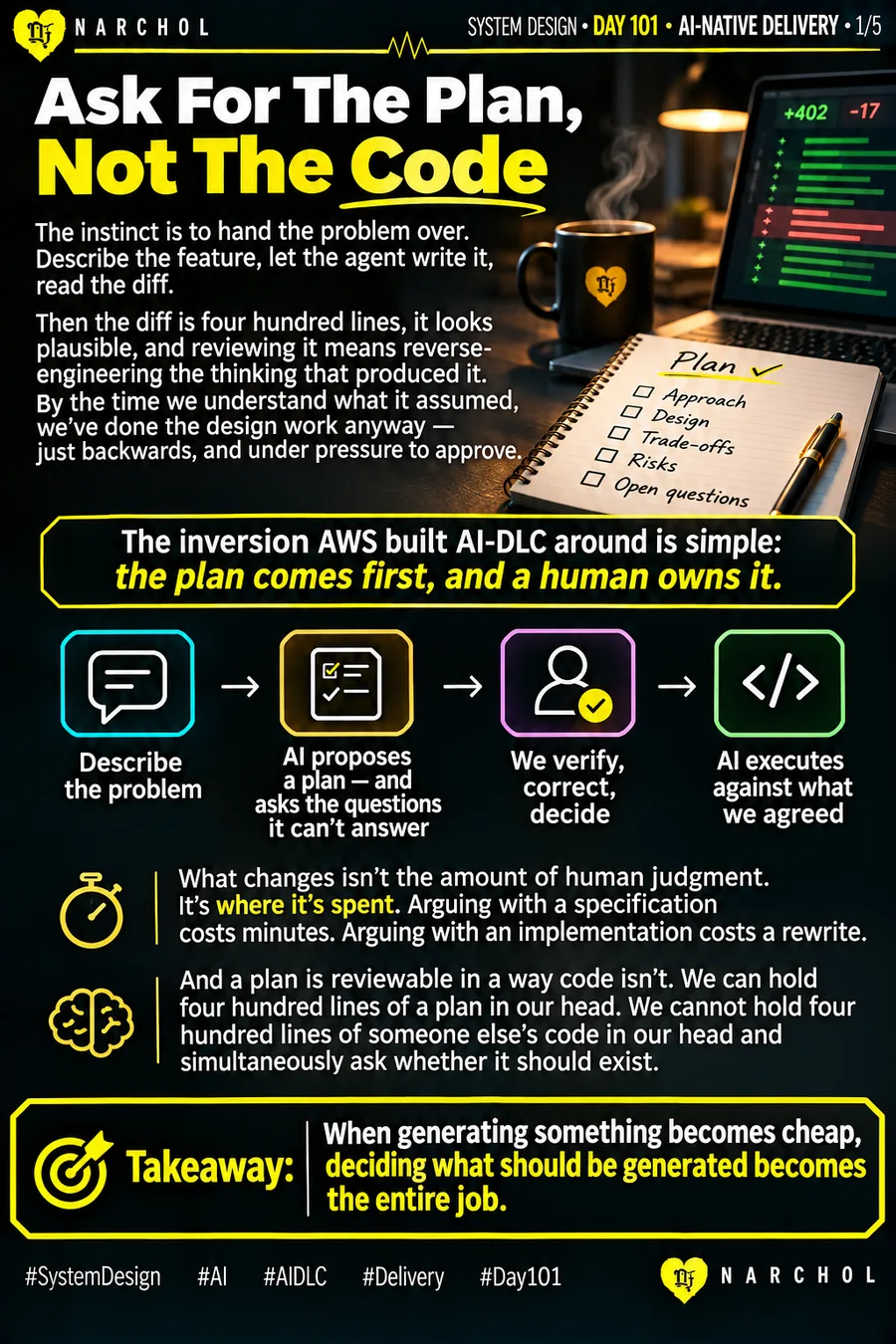
The inversion AWS built AI-DLC around is simple: the plan comes first, and a human owns it. Describe the problem. The AI proposes a plan and asks the questions it can't answer by itself. We verify, correct, decide. Then it executes against what we agreed.
The amount of human judgment doesn't drop. What changes is where it gets spent. Arguing with a specification costs minutes; arguing with an implementation costs a rewrite.
And a plan is reviewable in a way code isn't. We can hold four hundred lines of a plan in our head. We cannot hold four hundred lines of someone else's code in our head and at the same time ask whether it should exist at all.
When generating something becomes cheap, deciding what should be generated becomes the entire job.