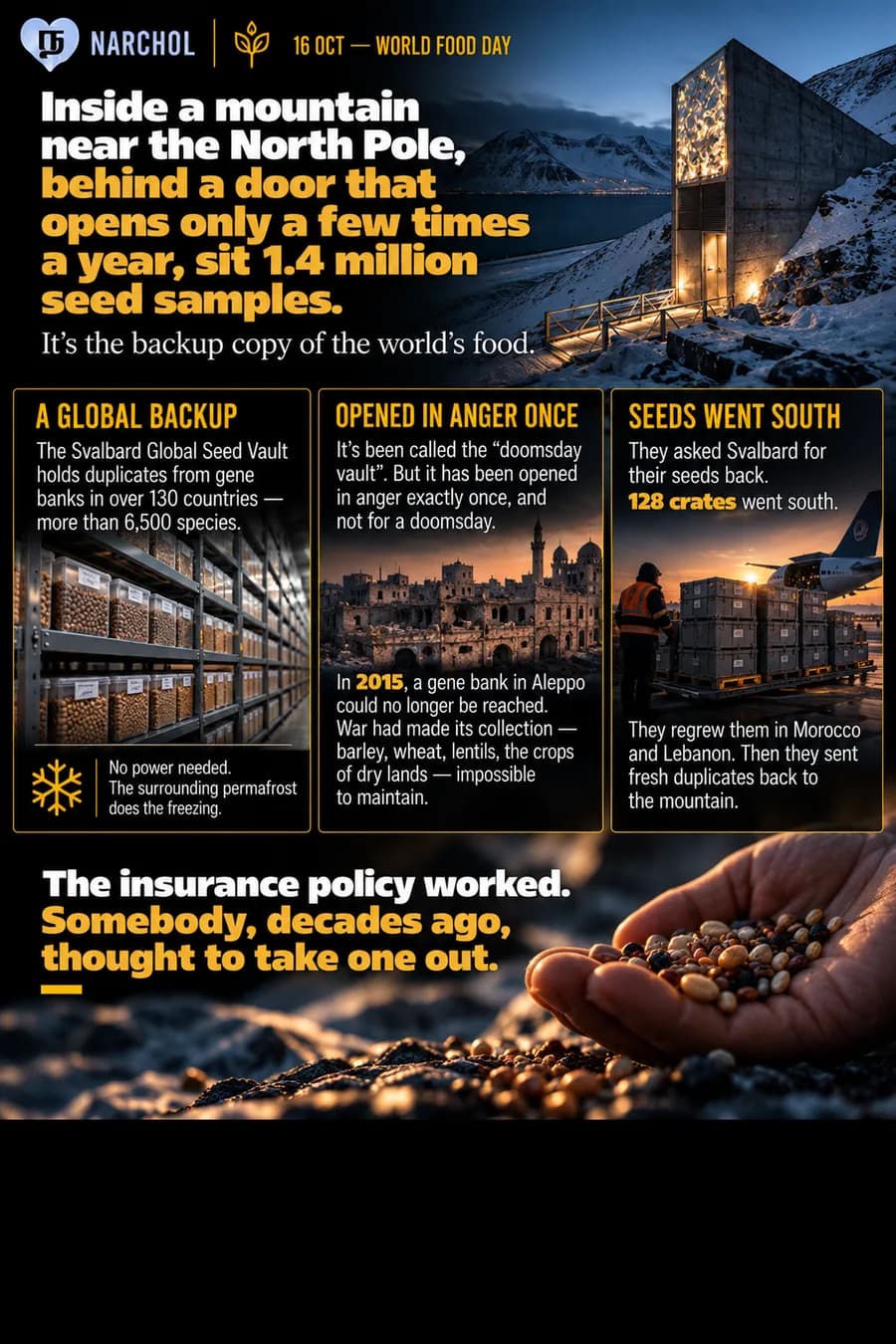
Inside a mountain near the North Pole, behind a door that opens only a few times a year, sit 1.4 million seed samples. It is the backup copy of the world's food.
The Svalbard Global Seed Vault holds duplicates from gene banks in over 130 countries — more than 6,500 species. No power is needed to keep them cold. The surrounding permafrost does the freezing.
It gets called the doomsday vault, and it has been opened in anger exactly once, and not for a doomsday. In 2015 a gene bank in Aleppo could no longer be reached. War had made its collection — barley, wheat, lentils, the crops of dry lands — impossible to maintain.
They asked Svalbard for their seeds back. 128 crates went south. Researchers regrew them in Morocco and Lebanon, then sent fresh duplicates back to the mountain.
The insurance policy worked. Somebody, decades ago, thought to take one out.