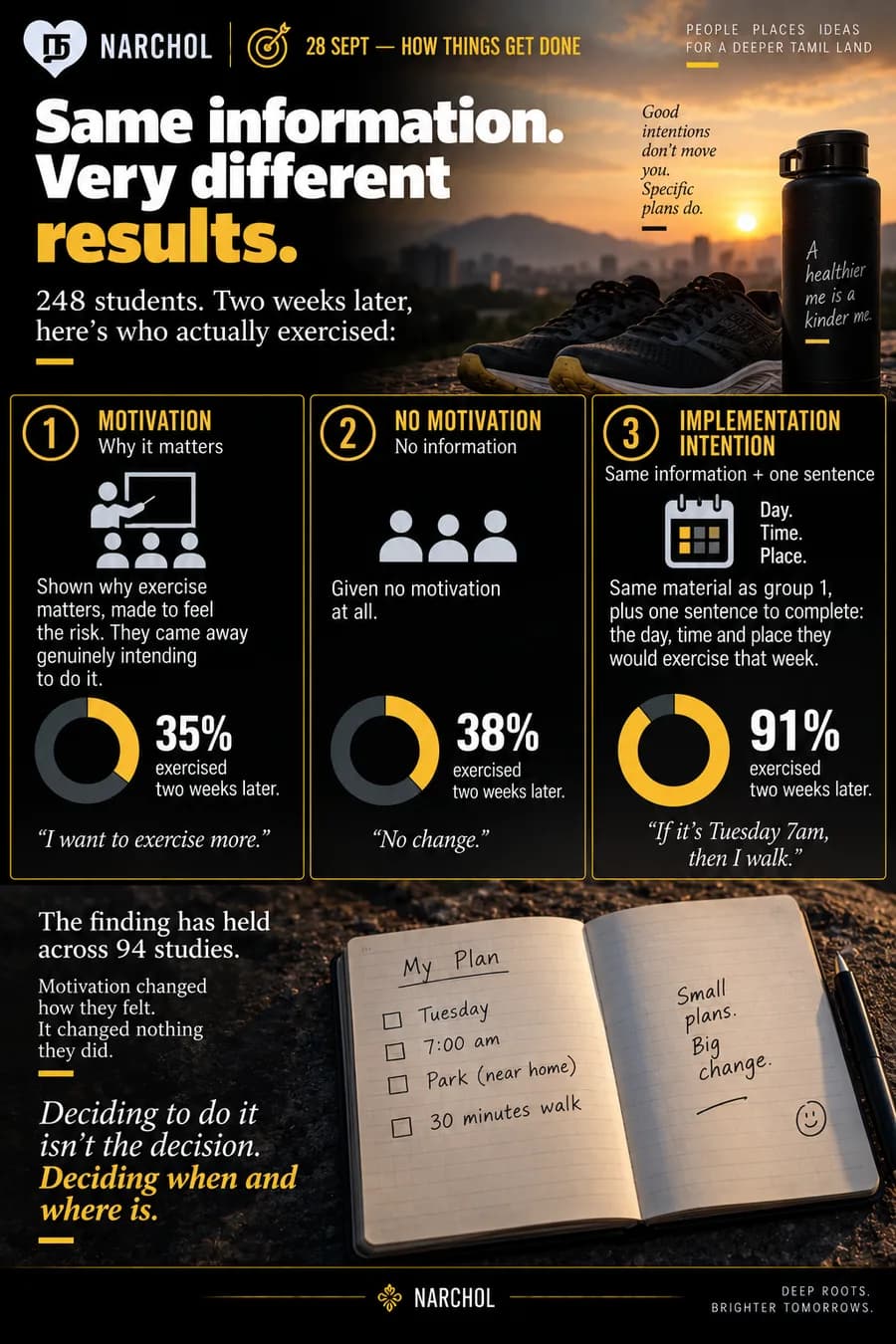
248 students, three groups, one question two weeks later: who actually exercised?
The first group was shown why exercise matters and made to feel the risk. They came away genuinely intending to do it. 35% exercised.
The second group was given nothing at all. 38%.
The third group got the same material as the first, plus one sentence to complete — the day, the time and the place they would exercise that week. 91%.
The finding has held across 94 studies. Motivation changed how the first group felt and changed nothing they did. One specific plan, Tuesday 7am at the park near home, moved almost everybody.
The sentence works because it hands the decision to a cue out in the world, instead of leaving it with your future self, who will be tired and busy and open to negotiation.
Deciding to do it isn't the decision. Deciding when and where is.