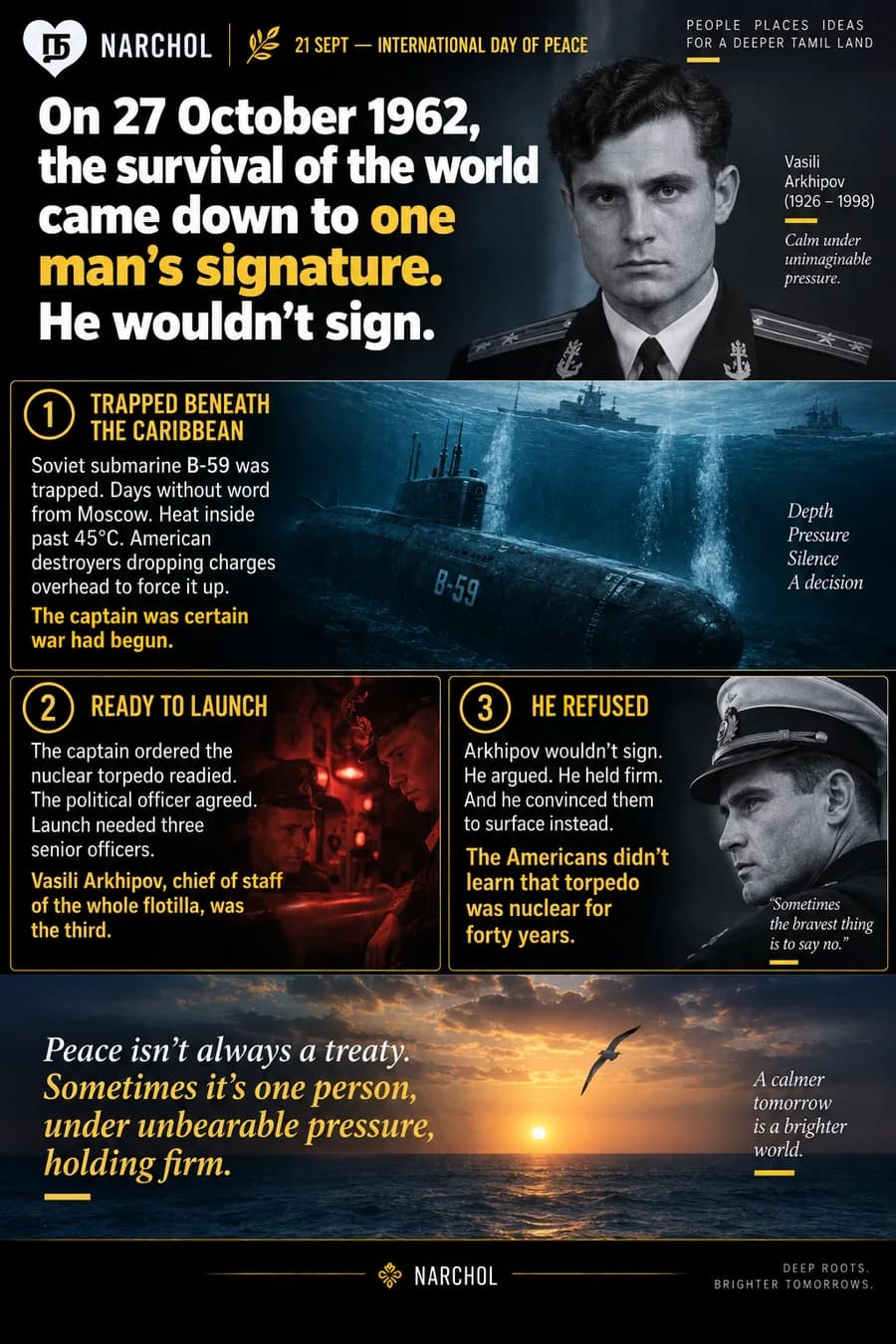
On 27 October 1962, at the worst hour of the Cuban missile crisis, a Soviet submarine called B-59 sat trapped beneath the Caribbean. Days had passed without word from Moscow. The temperature inside had climbed past 45°C. American destroyers were dropping charges overhead to force it up, and the captain concluded that the war had already started.
He ordered the nuclear torpedo readied. The political officer agreed. Launching needed three senior officers, and the third was Vasili Arkhipov, chief of staff of the whole flotilla, who happened to be aboard that particular boat.
He wouldn't sign. He argued, he held firm, and he convinced them to surface instead.
The Americans did not learn that the torpedo had been nuclear for another forty years. One man, exhausted and outnumbered by the certainty in the room, declined — and that is the entire reason there is anything to write this on.
Peace isn't always a treaty. Sometimes it's one person, under unbearable pressure, holding firm.