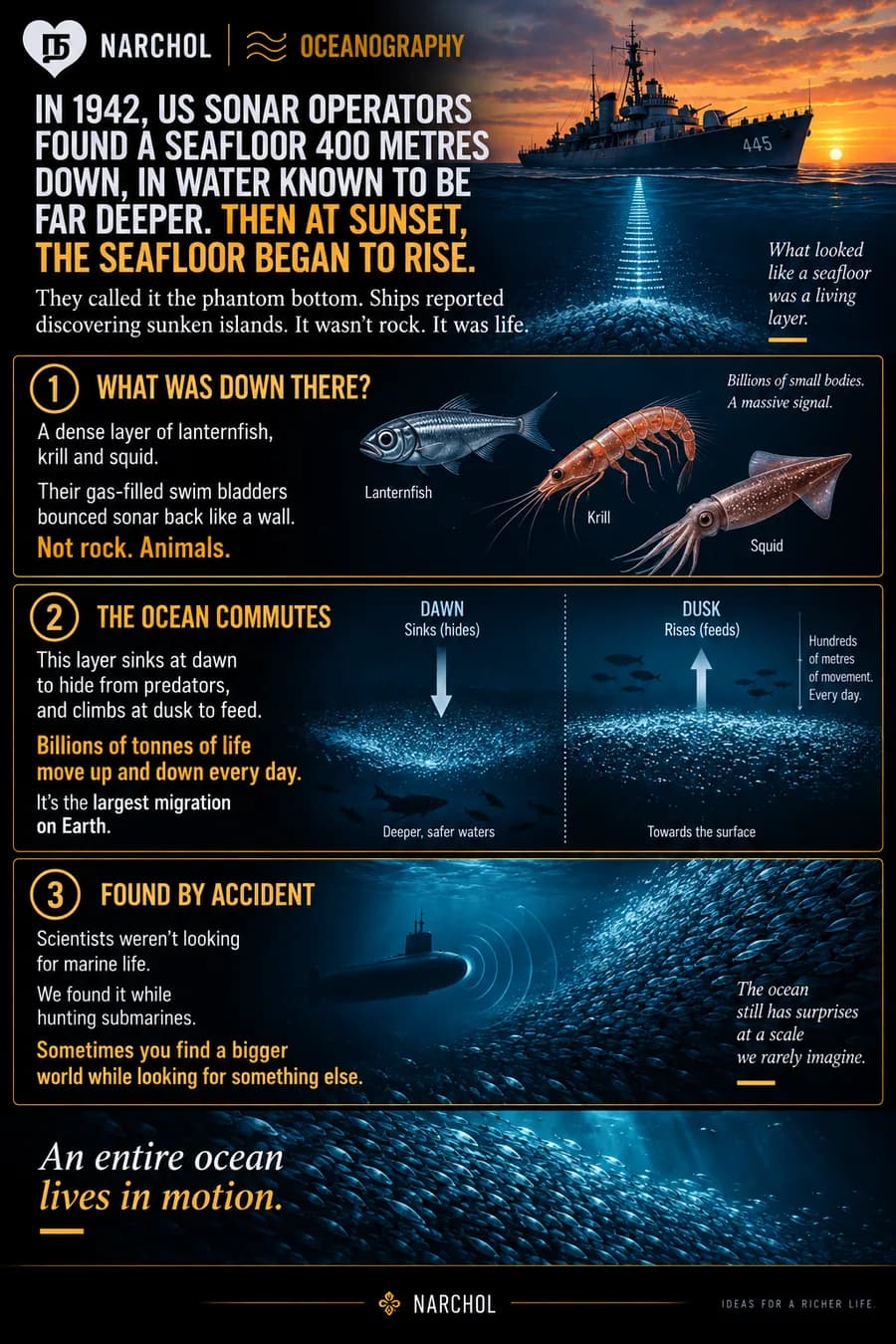
In 1942, US sonar operators found a seafloor 400 metres down, in water known to be far deeper. Ships reported discovering sunken islands. Then at sunset, the seafloor began to rise.
They called it the phantom bottom. It was a dense layer of lanternfish, krill and squid, their gas-filled swim bladders bouncing sonar back like a wall. Not rock. Animals — billions of small bodies returning one massive signal.
The layer sinks at dawn to hide from predators and climbs at dusk to feed. Billions of tonnes of life moving hundreds of metres up and down, every single day. It is the largest migration on Earth, and it happens nightly, unseen.
Nobody was looking for it. Scientists weren't hunting marine life in 1942; they were hunting submarines, and the ocean answered a question they hadn't asked.
Sometimes you find a bigger world while looking for something else.