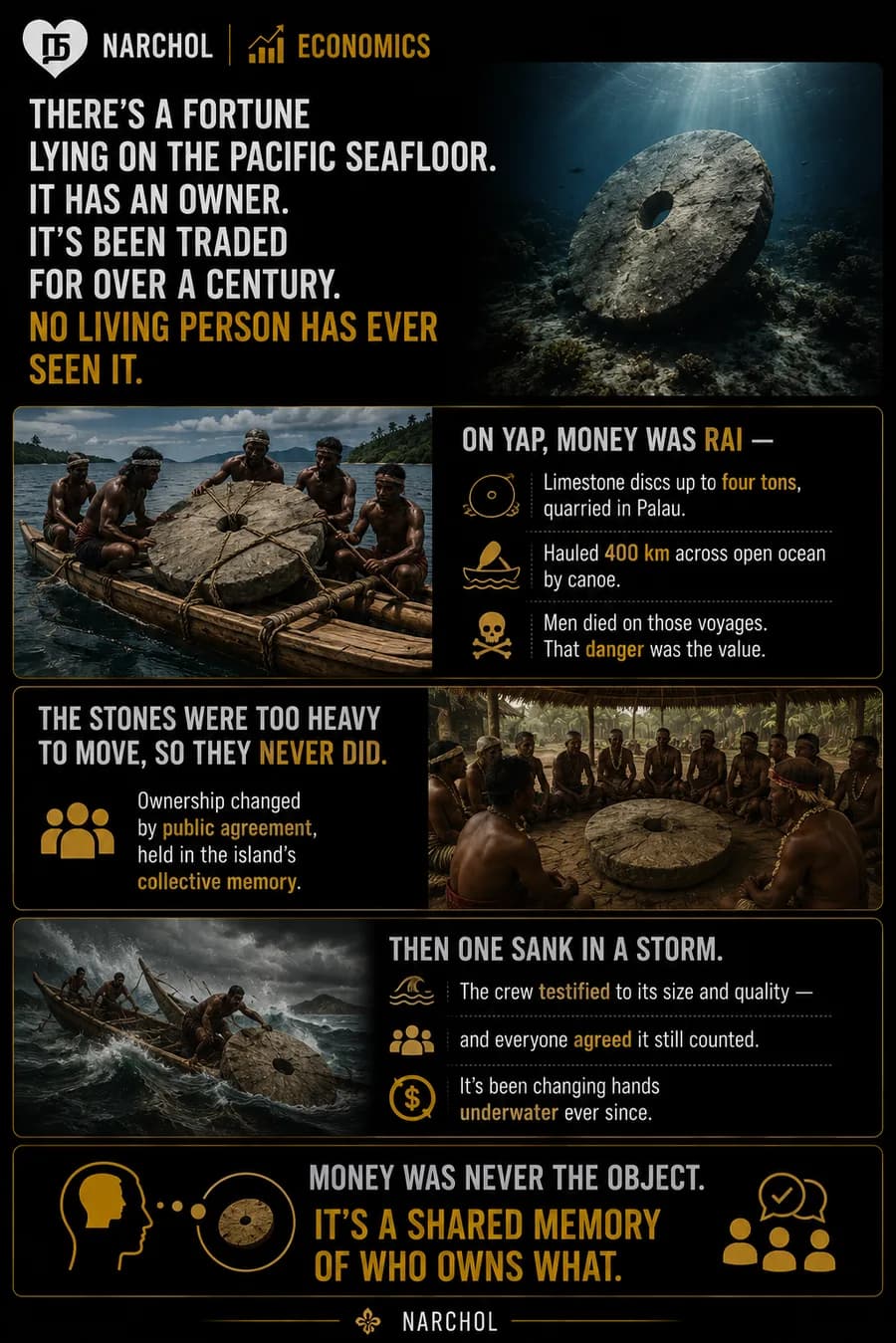
There is a fortune lying on the Pacific seafloor. It has an owner. It has been traded for over a century. No living person has ever seen it.
On Yap, money was rai — limestone discs, some up to four tons, quarried in Palau and hauled four hundred kilometres across open ocean by canoe. Men died on those voyages, and that danger was the value. Limestone is common. Surviving the trip for it was not.
The stones were too heavy to move, so they never did. Ownership changed by public agreement, held in the island's collective memory. The disc stayed where it stood while the claim on it moved from family to family.
Then one sank in a storm on the way home. The crew testified to its size and quality, everyone agreed it still counted, and it has been changing hands underwater ever since.
Which is the part economists keep returning to — a ledger nobody can audit, backed by nothing but consensus, settling transactions for an asset none of the parties will ever touch.
Money was always a shared memory of who owns what. The stone was only ever the reminder.