Even though you'd die without one and not the other.
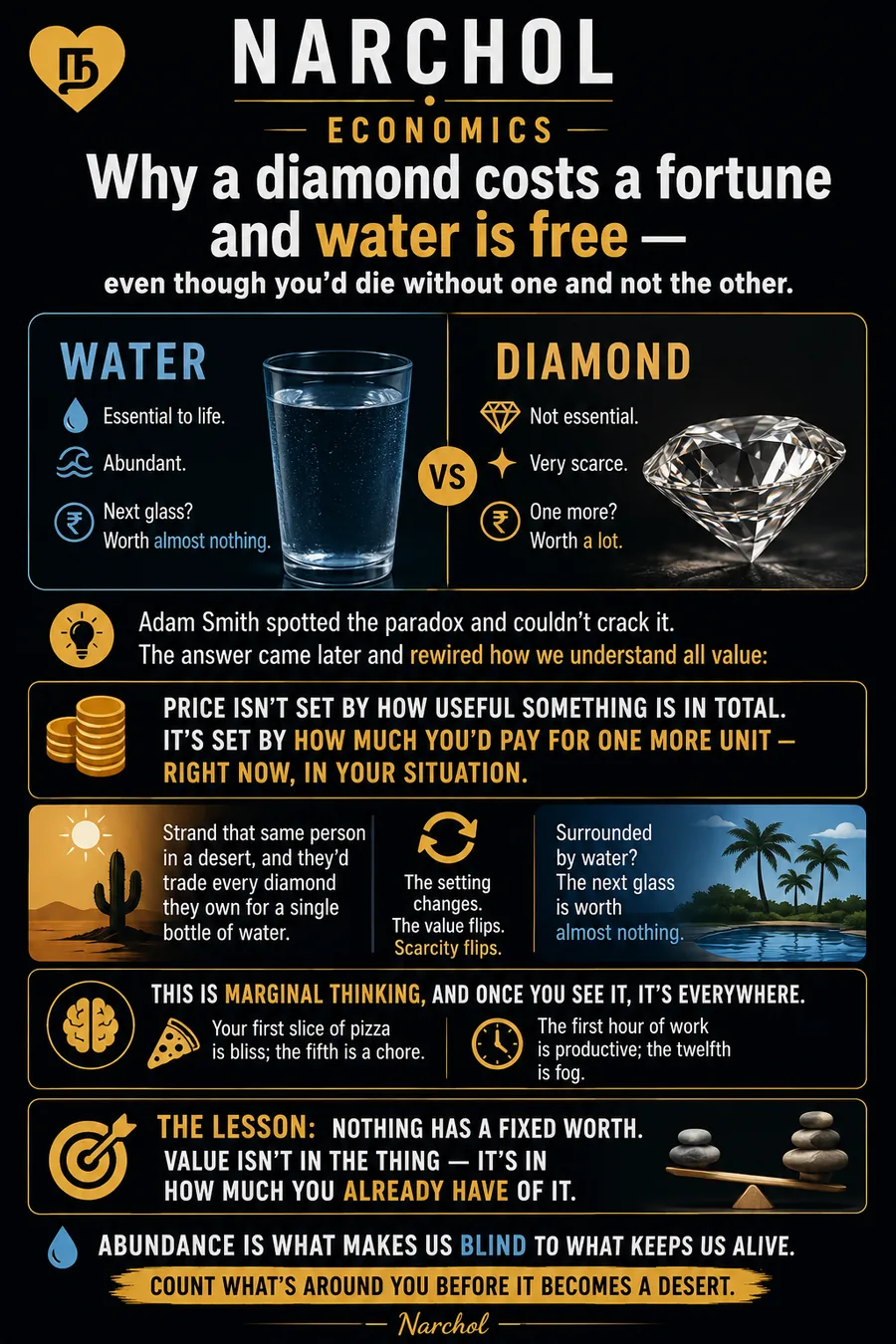
Water: essential to life, abundant — and the next glass is worth almost nothing. Diamond: not essential, very scarce — and one more is worth a lot.
Adam Smith spotted the paradox and couldn't crack it. The answer came later, and rewired how we understand all value: price isn't set by how useful something is in total. It's set by how much you'd pay for one more unit — right now, in your situation.
Strand that same person in a desert, and they'd trade every diamond they own for a single bottle of water. The setting changes. The value flips. Scarcity flips.
This is marginal thinking, and once you see it, it's everywhere. Your first slice of pizza is bliss; the fifth is a chore. The first hour of work is productive; the twelfth is fog.
Nothing has a fixed worth. Value isn't in the thing — it's in how much you already have of it.