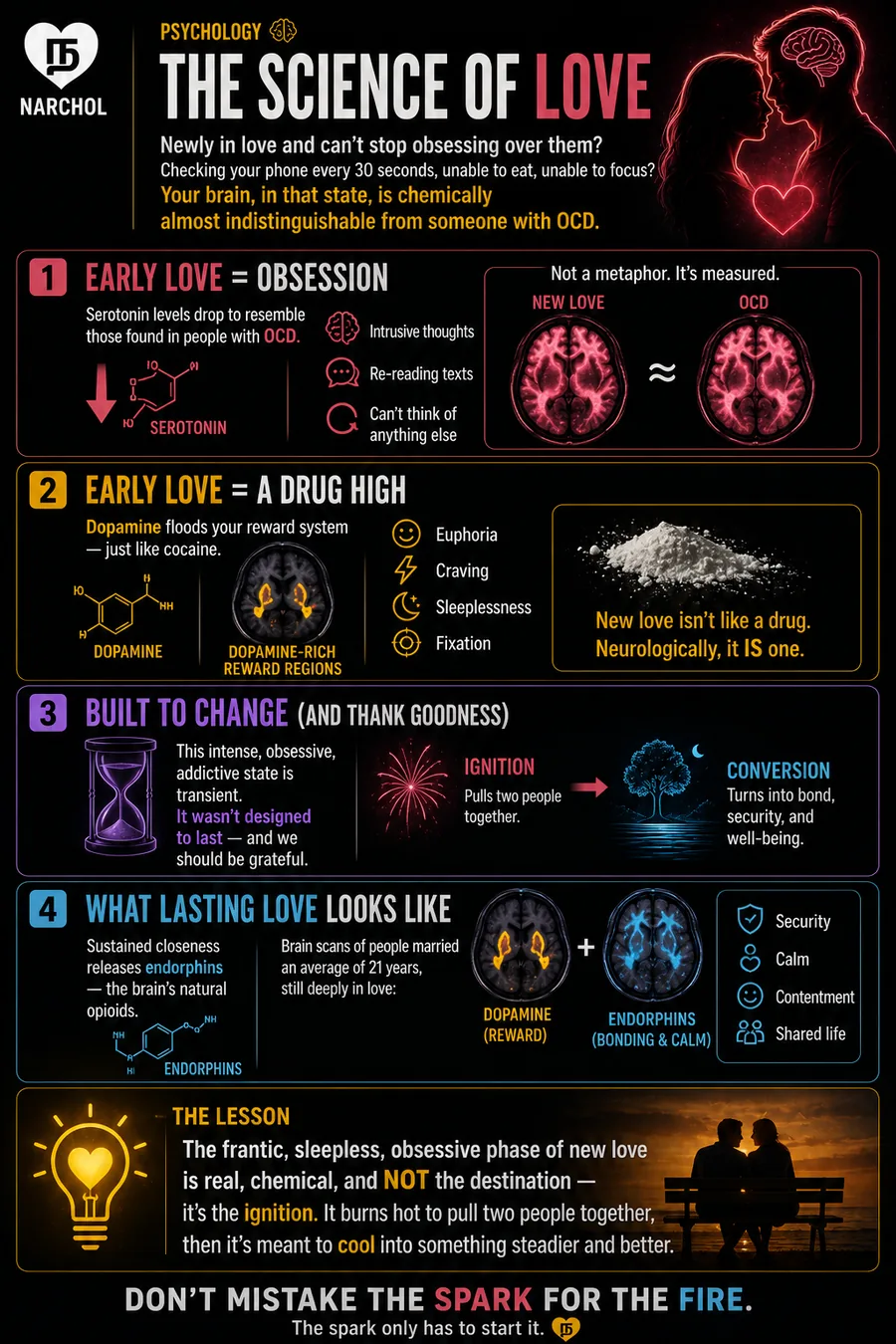
Newly in love and can't stop obsessing over them? Checking your phone every thirty seconds, unable to eat, unable to focus? Your brain, in that state, is chemically almost indistinguishable from someone with OCD.
Early love = obsession. Serotonin levels drop to resemble those found in people with OCD. Intrusive thoughts, re-reading texts, unable to think of anything else. Not a metaphor — it's measured.
Early love = a drug high. Dopamine floods your reward system, just like cocaine. Euphoria, craving, sleeplessness, fixation. New love isn't like a drug. Neurologically, it is one.
Built to change — and thank goodness. This intense, obsessive, addictive state is transient. It wasn't designed to last, and we should be grateful. Ignition pulls two people together; conversion turns it into bond, security and well-being.
What lasting love looks like. Sustained closeness releases endorphins — the brain's natural opioids. Brain scans of people married an average of twenty-one years and still deeply in love show dopamine and endorphins together: reward plus bonding and calm. Security, contentment, a shared life.
The frantic, sleepless, obsessive phase of new love is real, chemical, and not the destination — it's the ignition. It burns hot to pull two people together, then it's meant to cool into something steadier and better.