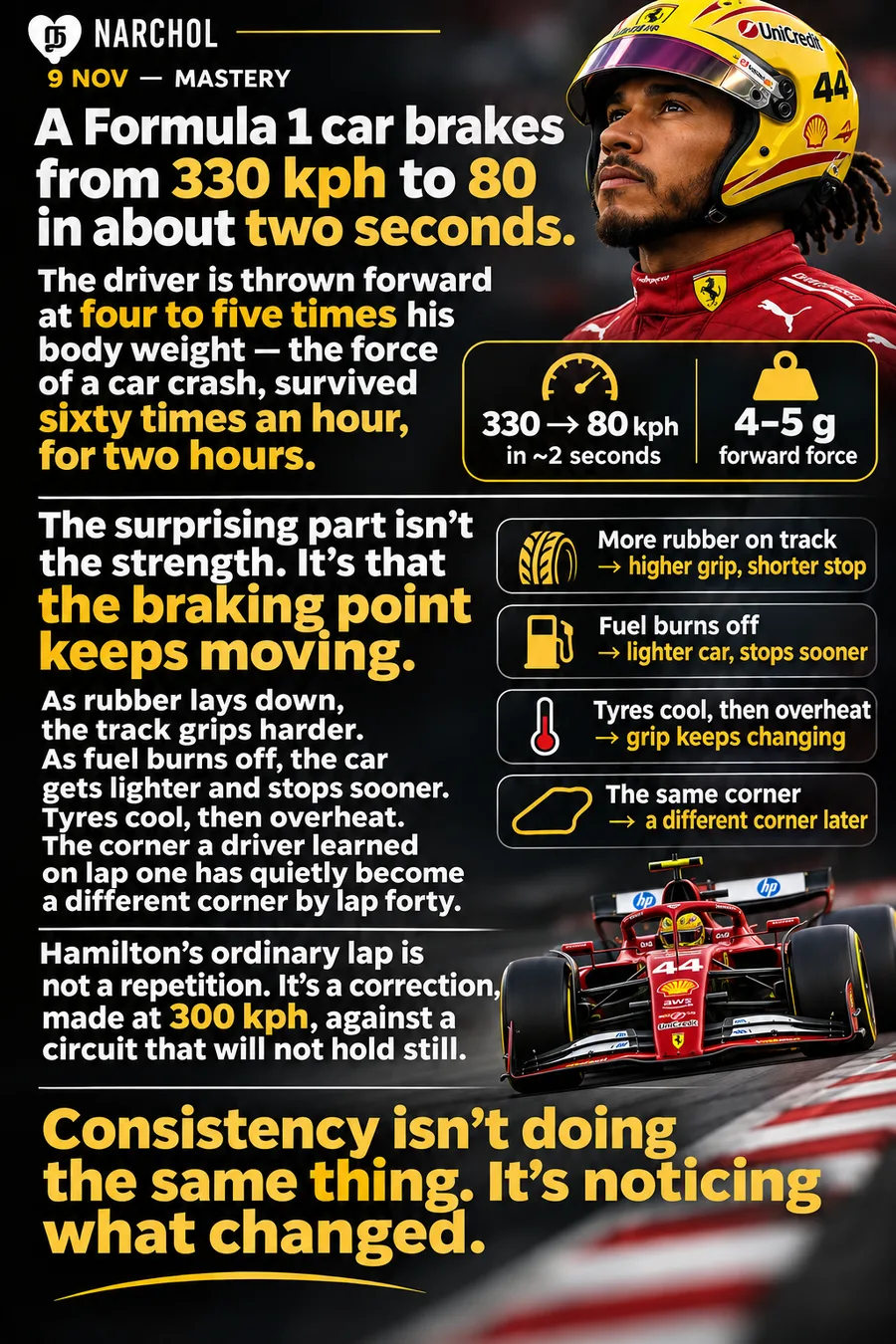
A Formula 1 car brakes from 330 kph to 80 in about two seconds. The driver is thrown forward at four to five times his body weight — the force of a car crash — survived sixty times an hour, for two hours.
The strength is the easy part to admire. The harder part is that the braking point keeps moving.
As rubber lays down, the track grips harder and the car can stop later. As fuel burns off, the car gets lighter and stops sooner. Tyres cool, then overheat, and the grip changes again. The corner a driver learned on lap one has quietly become a different corner by lap forty, and nothing announces it.
So an ordinary Hamilton lap is a correction, made at 300 kph, against a circuit that will not hold still. Forty-odd of them in a row, each adjusted for conditions that moved since the last one.
On the timing screen the laps look identical. That identical-looking number is the output of forty different sets of inputs, read correctly each time.
Consistency isn't doing the same thing. It's noticing what changed.