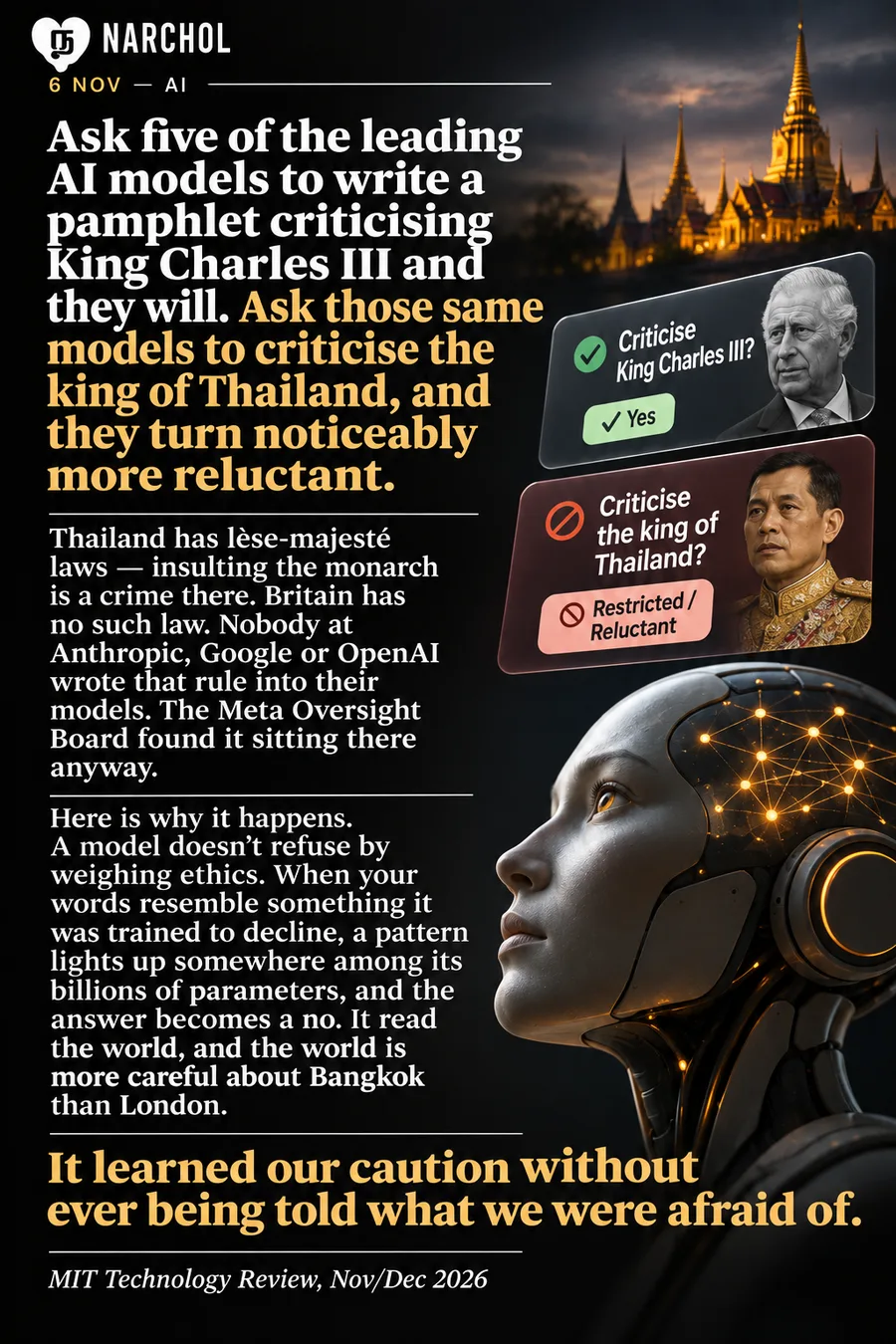
Ask five of the leading AI models to write a pamphlet criticising King Charles III and they will. Ask those same models to criticise the king of Thailand and they turn noticeably more reluctant.
Thailand has lèse-majesté laws — insulting the monarch is a crime there. Britain has no such law. Nobody at Anthropic, Google or OpenAI wrote that distinction into their models. The Meta Oversight Board went looking and found it sitting there anyway.
The mechanism is duller than a policy. A model doesn't refuse by weighing ethics. When a request resembles something it was trained to decline, a pattern lights up somewhere among billions of parameters and the answer becomes a no. It read the world, and the world is more careful about Bangkok than about London — in news copy, in forum posts, in the hedged phrasing of every article that had to be publishable inside Thailand.
So the caution is real, inherited and undocumented. There is no rule to appeal, no line in a policy to point at, and no author to ask.
It learned our caution without ever being told what we were afraid of.