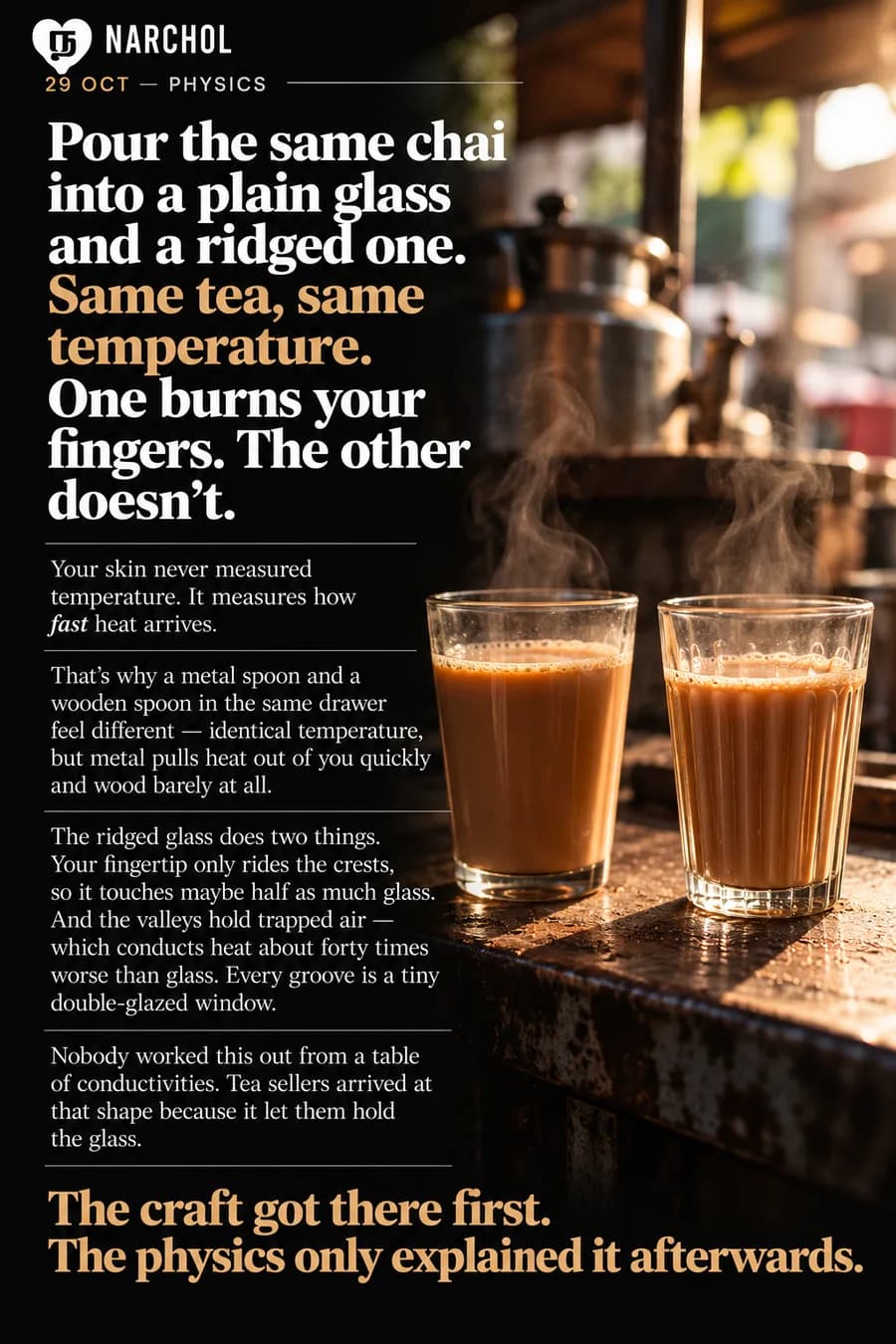
Pour the same chai into a plain glass and a ridged one. Same tea, same temperature. One burns your fingers and the other doesn't.
Skin never measured temperature. It measures how fast heat arrives. That is why a metal spoon and a wooden spoon lying in the same drawer feel so different — identical temperature, but metal pulls heat out of you quickly and wood barely at all.
The ridged glass works on that rate, twice over. A fingertip only rides the crests, so it touches perhaps half as much glass. And the valleys hold trapped air, which conducts heat about forty times worse than glass does. Every groove is a tiny double-glazed window.
Nobody worked this out from a table of conductivities. Tea sellers arrived at the shape because it let them hold the glass through a long morning, and the shapes that didn't were quietly dropped.
The craft got there first. The physics only explained it afterwards.