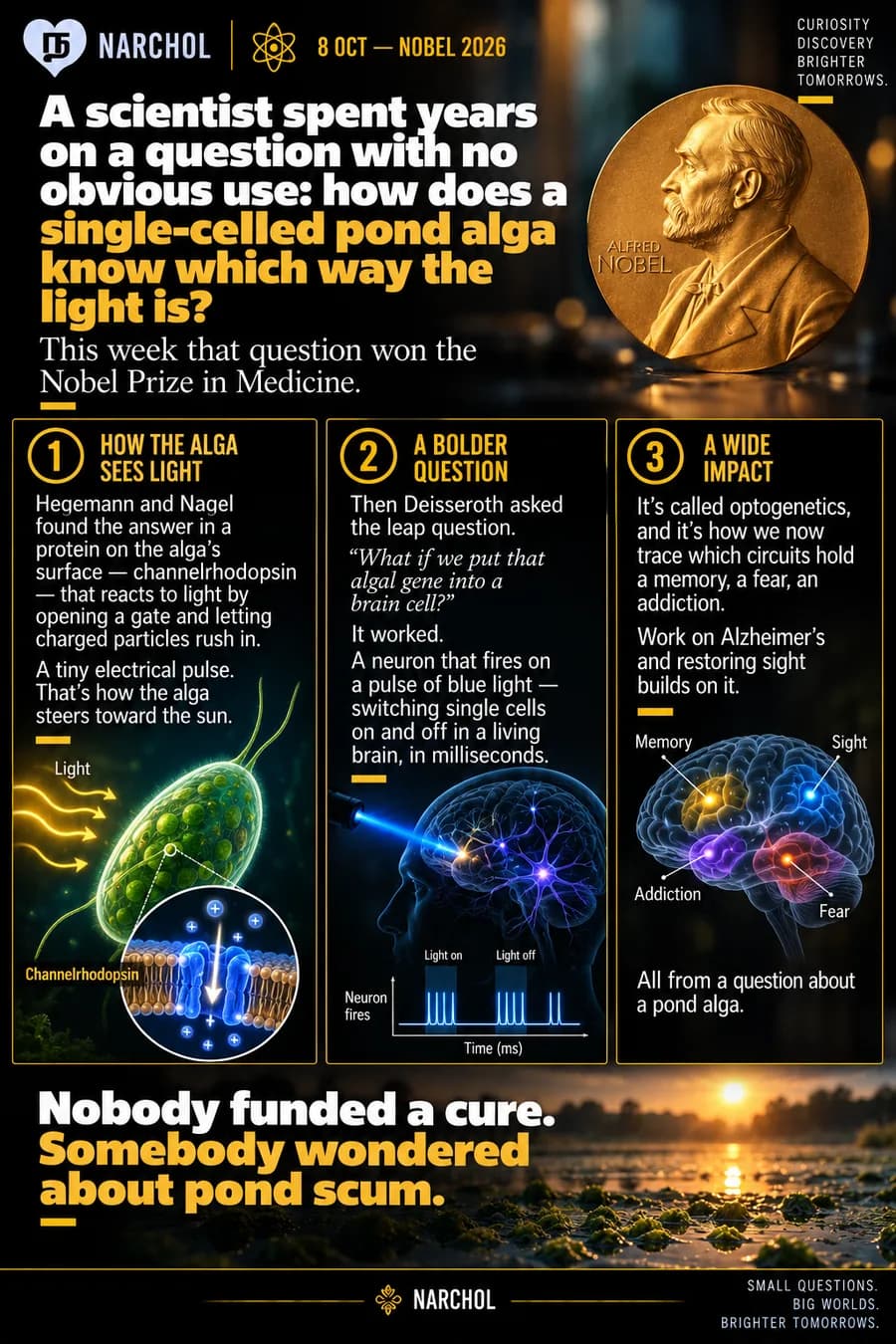
A scientist spent years on a question with no obvious use: how does a single-celled pond alga know which way the light is?
Hegemann and Nagel found the answer in a protein on the alga's surface. Channelrhodopsin reacts to light by opening a gate and letting charged particles rush in. A tiny electrical pulse — and that is how the alga steers toward the sun.
Then Deisseroth asked the leap question. What if we put that algal gene into a brain cell?
It worked. A neuron that fires on a pulse of blue light means single cells can be switched on and off in a living brain, in milliseconds. The field is called optogenetics, and it is how we now trace which circuits hold a memory, a fear, an addiction. Work on Alzheimer's and on restoring sight builds on it.
This week, the question about pond scum won the Nobel Prize in Medicine.
Nobody funded a cure. Somebody wondered about pond scum.