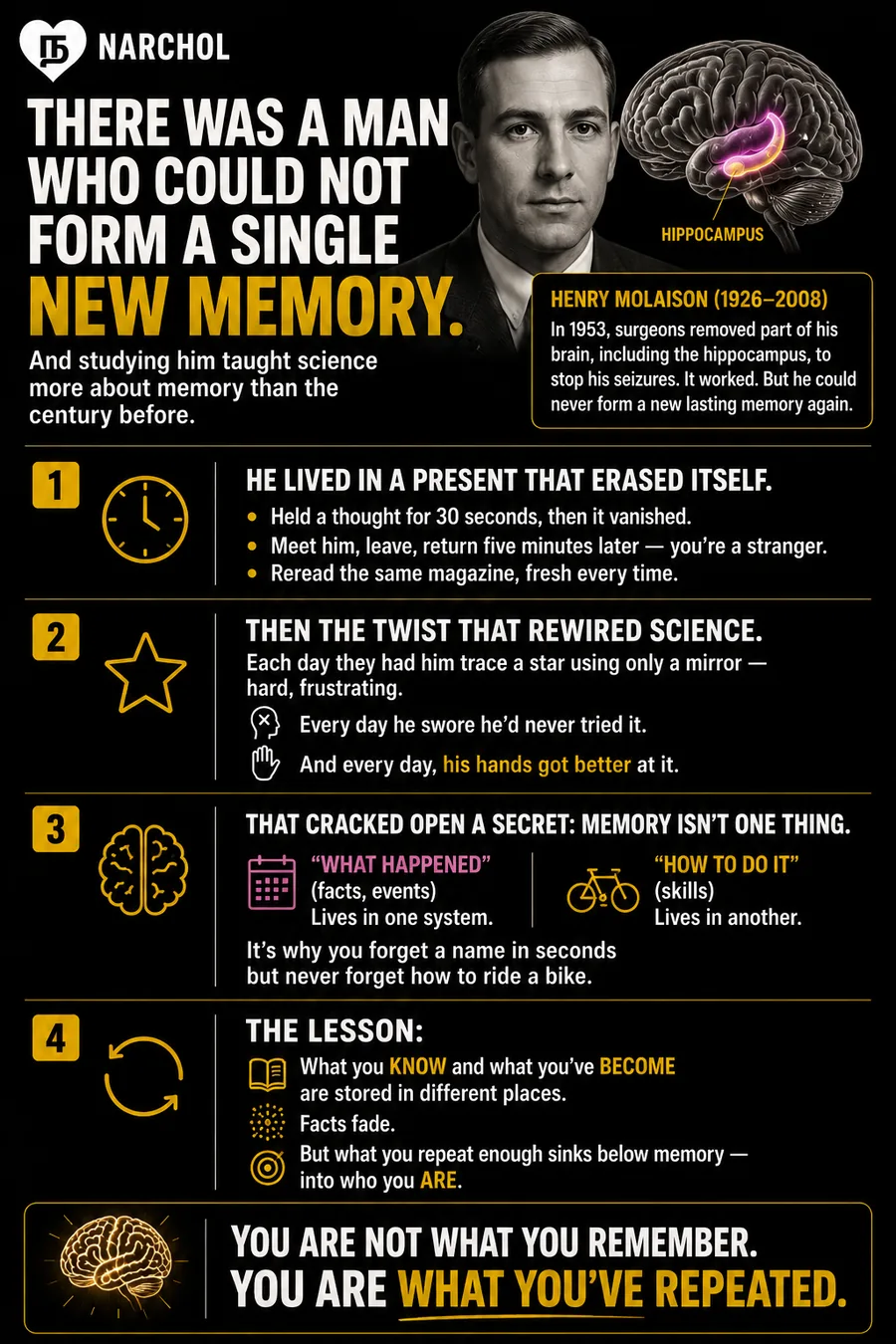
Henry Molaison, 1926–2008. In 1953, surgeons removed part of his brain — including the hippocampus — to stop his seizures. It worked. He could never form a new lasting memory again. Studying him taught science more about memory than the century before it.
He lived in a present that erased itself. He held a thought for thirty seconds, then it vanished. Meet him, leave, come back five minutes later and you're a stranger. He could reread the same magazine, fresh every time.
Then the twist that rewired science. Each day they had him trace a star using only a mirror — hard, frustrating work. Every day he swore he'd never tried it. And every day, his hands got better at it.
That cracked open a secret: memory isn't one thing. "What happened" — facts and events — lives in one system. "How to do it" — skills — lives in another. It's why you forget a name in seconds but never forget how to ride a bike.
What you know and what you have become are stored in different places. Facts fade. But what you repeat enough sinks below memory, into who you are.